

Key Takeaways
Option A
Whole Foods
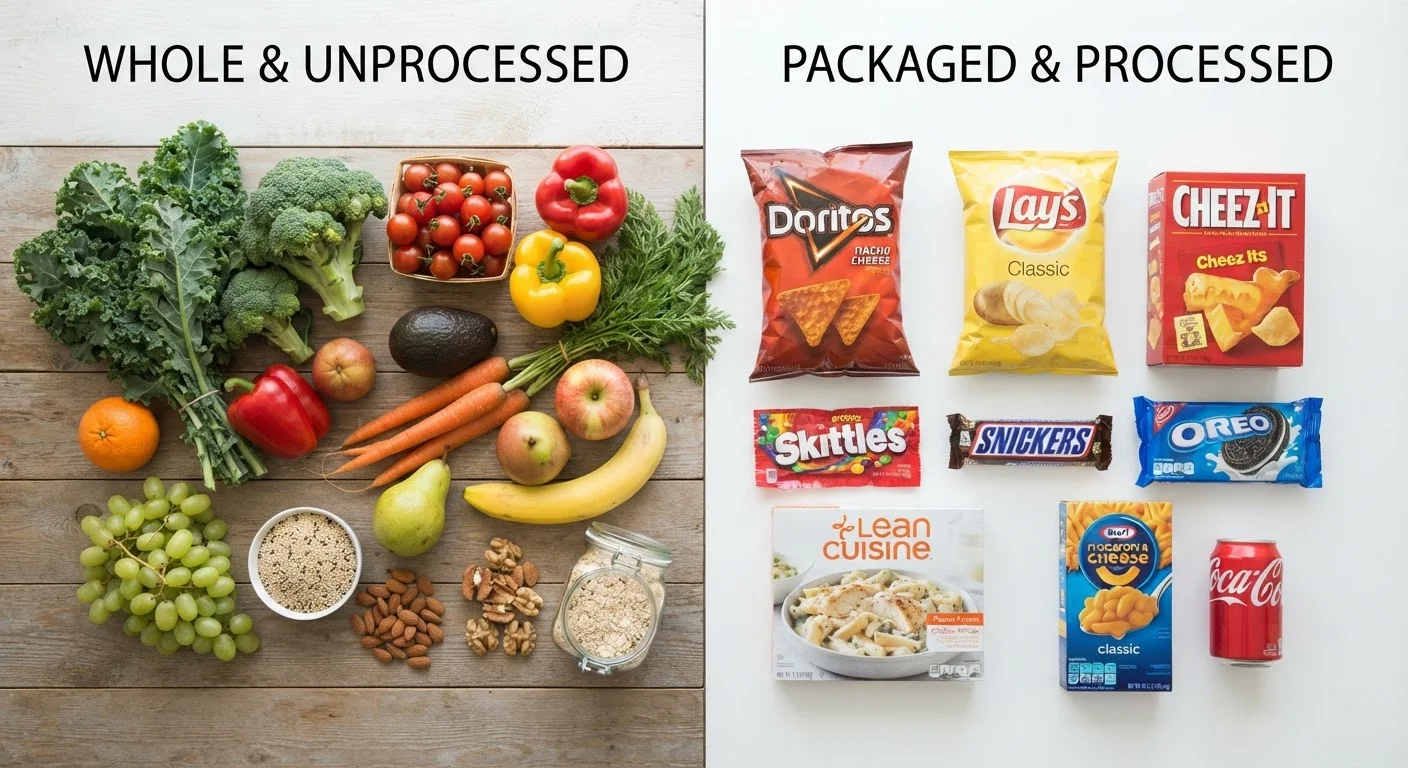
Foods in or close to their natural, unaltered state.
Best for: People seeking maximum nutrient density, fiber, and minimal additives in their everyday diet.
Option B
Processed Foods
Foods altered from their natural form through industrial or culinary methods.
Best for: People who need convenience, affordability, or longer shelf life — when chosen thoughtfully.
If you want to maximize nutrient density in your daily meals
Whole Foods
Whole foods offer fiber, micronutrients, and phytonutrients largely intact, with no added sugars, sodium, or preservatives to offset their benefits.
If time, budget, or access is a barrier to eating well
Processed Foods
Minimally processed options like canned legumes, frozen vegetables, or plain whole-grain bread can fit a healthy diet at lower cost and prep time.
If you are managing sodium, sugar, or saturated fat intake
Whole Foods
Whole foods put you in full control of what goes into your meals, making it easier to limit ingredients linked to chronic disease risk.
If you want a realistic, sustainable everyday eating pattern
Processed Foods
A moderate inclusion of low-additive processed foods alongside whole foods is realistic for most people and more sustainable than an all-or-nothing approach.
What Do These Terms Actually Mean?
The word whole food refers to any food eaten in — or very close to — its natural state. Think raw vegetables, fresh fruit, whole eggs, dry lentils, or plain oats. These foods have not undergone significant industrial alteration; what you see is essentially what grew or was raised.
Processed food is a much broader category. According to the NOVA food classification system — a widely referenced research framework developed by nutrition researchers at the University of São Paulo — food processing falls into four groups ranging from minimally processed (e.g., washed spinach, pasteurized milk) to ultra-processed (e.g., packaged snack cakes, flavored chips, ready-to-eat frozen meals loaded with additives). The critical insight here is that not all processing is equal. Freezing peas to preserve freshness is processing. So is manufacturing a product from refined flours, hydrogenated oils, artificial flavors, and a dozen stabilizers — but these two acts have very different nutritional outcomes. For a deeper look at where the spectrum ends, see our article on whole foods vs. ultra-processed foods.
| Criterion | Whole Foods | Processed Foods |
|---|---|---|
| Definition | Unaltered or minimally altered from natural state | Modified through industrial or culinary methods |
| Fiber content | Generally high; intact from source | Often reduced or removed during processing |
| Added sugars | None (naturally occurring only) | Frequently added, especially in ultra-processed |
| Sodium levels | Naturally low | Often elevated for flavor or preservation |
| Shelf life | Short; requires refrigeration or quick use | Long; preserved for convenience |
| Cost & accessibility | Can be higher cost; perishable | Often more affordable and widely available |
| Nutrient density | High; vitamins, minerals, phytonutrients intact | Variable; can be enriched but often lower overall |
| Preparation required | Usually requires cooking or prep time | Often ready-to-eat or quick to prepare |
The Nutritional Case for Whole Foods
Whole foods tend to offer what nutrition researchers call food matrix benefits — nutrients delivered within a complex cellular structure that affects how your body absorbs and uses them. A whole apple, for instance, delivers fiber, water, vitamin C, and natural sugars all together, which slows digestion and moderates blood sugar response compared to apple juice with fiber removed.
Dietary fiber — found abundantly in whole grains, legumes, fruits, and vegetables — supports digestive health, helps maintain healthy cholesterol levels, and contributes to feelings of fullness. The USDA Dietary Guidelines for Americans consistently emphasize that most U.S. adults fall well short of the recommended daily fiber intake, largely because ultra-processed and refined foods displace fiber-rich whole foods in the diet.
~7%
U.S. adults meeting daily fiber recommendations
Research published in the American Journal of Lifestyle Medicine estimated that only about 7% of U.S. adults meet recommended daily fiber intake.
57%
of U.S. calories from ultra-processed foods
A study published in BMJ Open found that ultra-processed foods accounted for roughly 57% of total energy intake in U.S. adult diets.
4 groups
NOVA food classification levels
The NOVA system, developed by nutrition researchers, categorizes all foods across four processing levels from unprocessed whole foods to ultra-processed products.
Whole foods also tend to be lower in added sodium, added sugars, and unhealthy fats — three dietary components that, when consumed in excess, are associated with elevated risk of cardiovascular disease, type 2 diabetes, and other chronic conditions, according to established nutritional science. For guidance on one of the trickiest distinctions, see our article on natural vs. added sugars.
Where Processed Foods Can Still Fit
Painting all processed foods with the same negative brush oversimplifies the science. Many minimally processed foods are nutritional workhorses: plain canned beans (rinsed to reduce sodium), frozen broccoli, pasteurized low-fat plain yogurt, or 100% whole-grain bread. These products undergo processing primarily for safety or preservation, not to add additives or strip nutrients.
Affordability and accessibility matter enormously in real-world eating. Fresh produce can be expensive and spoils quickly. For many households, minimally processed options like frozen vegetables or canned fish provide reliable, budget-friendly nutrition. The goal isn't purity — it's making informed choices within the options available to you. Learning to read nutrition labels is an essential skill here; our practical nutrition label walkthrough can help you interpret what you're actually choosing.
Not All Canned or Frozen Foods Are Equal
Plain frozen vegetables and canned legumes with no added salt or sauces retain most of their original nutritional value. The issue arises with heavily flavored, sauced, or sweetened versions of these convenience foods. When choosing canned or frozen options, checking the ingredient list for added sodium, sugars, and oils helps you identify the more nutritious choices.
The nutritional trade-offs also look different depending on your overall dietary pattern. Someone eating predominantly vegetables, legumes, and whole grains can usually accommodate some processed convenience foods without meaningfully compromising their diet quality. For those curious how this plays out across different eating styles, plant-based vs. omnivorous diets offers a useful comparison.
This article is for general informational and educational purposes only and does not constitute medical or dietary advice. If you have specific health concerns or nutritional needs, consult a registered dietitian or qualified healthcare professional.