

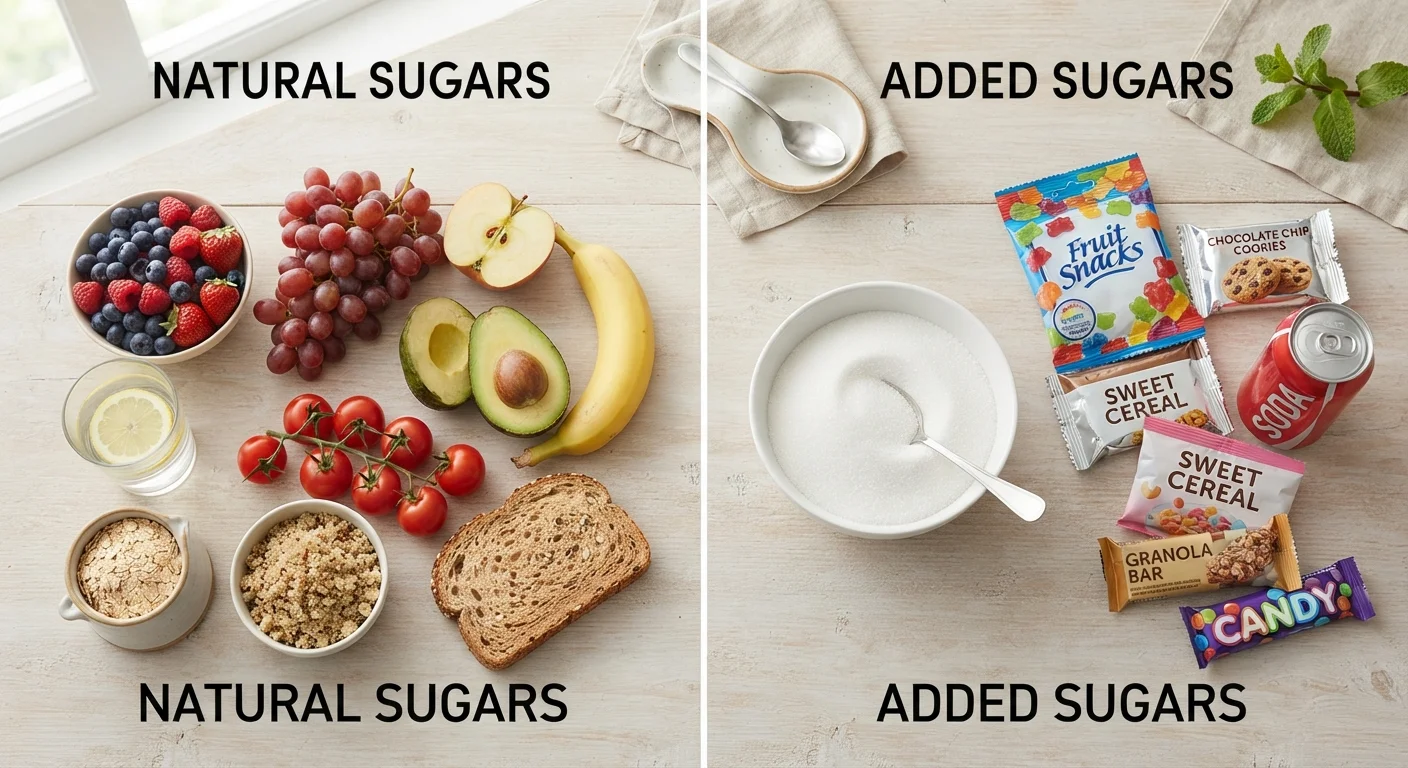
Key Takeaways
Option A
Natural Sugars
The sugars that come packaged with nutrients your body can use.
Best for: Anyone seeking steady energy and nutrient density from whole, minimally processed foods like fruit, dairy, and vegetables.
Option B
Added Sugars
Sugars introduced during food manufacturing or preparation — with no nutritional bonus.
Best for: Understanding where excess sugar hides in everyday foods and how to read nutrition labels more effectively.
If you want sustained energy without blood sugar spikes
Natural Sugars
Foods like whole fruit provide fiber that slows digestion, delivering a more gradual rise in blood glucose compared to added sugar sources.
If you are trying to reduce overall sugar intake
Natural Sugars
Shifting toward whole foods naturally limits added sugar exposure while still supplying sweetness through nutrient-dense sources.
If you are label-reading to manage a health condition
Added Sugars
Tracking the 'Added Sugars' line on the Nutrition Facts label gives the clearest picture of discretionary sugar in your diet; always discuss targets with a healthcare provider.
What Are Natural Sugars?
Natural sugars are carbohydrates that occur in whole, unprocessed foods. The two most common types are fructose (found in fruit) and lactose (found in milk and plain yogurt). These sugars have not been extracted, concentrated, or added during manufacturing — they arrive in the food exactly as nature produced them.
What makes natural sugars nutritionally distinct is the company they keep. A medium apple contains fructose, but it also delivers fiber, potassium, and vitamin C. Plain low-fat yogurt contains lactose alongside calcium, protein, and probiotics. That combination of nutrients affects how quickly sugar enters your bloodstream and how satisfied you feel afterward. As a general principle, the closer a food is to its whole, natural form, the more nutritional context it provides around its sugar content. For a deeper look at how whole and processed foods differ overall, see our guide to whole foods vs. processed foods.
What Are Added Sugars?
Added sugars are any sugars or caloric sweeteners incorporated into a food or beverage during processing or preparation. They go by many names on ingredient lists: high-fructose corn syrup, cane sugar, honey, agave nectar, brown rice syrup, dextrose, and maltose, among others. Regardless of the name or source, when a sugar is added to a product rather than naturally present, it is classified as an added sugar by the U.S. Food and Drug Administration (FDA).
Added sugars deliver calories — roughly 4 calories per gram — but contribute no fiber, vitamins, minerals, or other nutrients. This is why nutrition scientists use the term empty calories to describe them. Common sources include soft drinks, sweetened cereals, flavored yogurts, baked goods, condiments like ketchup, and many snack bars marketed as healthy.
| Criterion | Natural Sugars | Added Sugars |
|---|---|---|
| Where they come from | Whole foods (fruit, dairy, vegetables) | Added during manufacturing or cooking |
| Nutrient companions | Fiber, vitamins, minerals, protein | Typically none — empty calories |
| Examples | Fructose in apples, lactose in milk | High-fructose corn syrup, cane sugar, honey |
| Appears on Nutrition Facts label | Counted in 'Total Sugars' only | Listed separately as 'Added Sugars' |
| Federal dietary limit | No specific cap for whole food sources | Less than 10% of daily calories (USDA) |
| Effect on satiety | Fiber slows digestion, promotes fullness | Less filling; may encourage overconsumption |
What Current Guidance Recommends
The Dietary Guidelines for Americans — a federal resource updated every five years by the U.S. Departments of Agriculture and Health and Human Services — recommends that added sugars make up less than 10% of total daily calorie intake for adults and children over age two. For someone consuming roughly 2,000 calories per day, that translates to about 200 calories, or 50 grams, of added sugar. The American Heart Association suggests even lower targets for many adults, though specific targets should be discussed with a healthcare provider rather than applied universally.
Natural sugars found in whole fruit, vegetables, and plain dairy are not subject to the same limitation in federal guidance because those foods deliver meaningful nutritional value alongside their sugar content.
17 tsp
Average daily added sugar intake for U.S. adults
According to CDC analysis of National Health and Nutrition Examination Survey data, U.S. adults consume roughly 17 teaspoons of added sugar per day — well above federal recommendations.
~35%
Share of added sugar from beverages
The CDC estimates that sweetened beverages, including sodas and energy drinks, account for roughly one-third of added sugar consumption among American adults.
This article is for informational purposes only and does not constitute medical or dietary advice. Consult a qualified healthcare professional or registered dietitian for guidance tailored to your individual health needs.