

Key Takeaways
Why Hormone Myths Persist — and Why They Matter
Female hormones have been misunderstood, minimised, and mythologised for generations. Some misconceptions stem from outdated science; others from cultural attitudes that historically dismissed women's physiological experiences. The result is that many women enter adulthood with a muddled picture of how their own endocrine system works.
This matters because myths about hormones don't just cause confusion — they can delay diagnoses, discourage women from seeking care, and lead to unnecessary suffering. When a doctor or a family member frames legitimate hormonal symptoms as 'emotional,' women may internalise that dismissal and stop advocating for themselves.
The science of endocrinology — the study of hormones — has advanced considerably. Below, we address the most persistent myths and replace them with what the evidence currently supports. This content is for general information only; for personal health concerns, always consult a qualified healthcare professional.
Myth
PMS is mostly psychological — women just feel more emotional before their period.
Fact
PMS is a recognised clinical condition with measurable physiological causes, not a personality trait or emotional weakness.
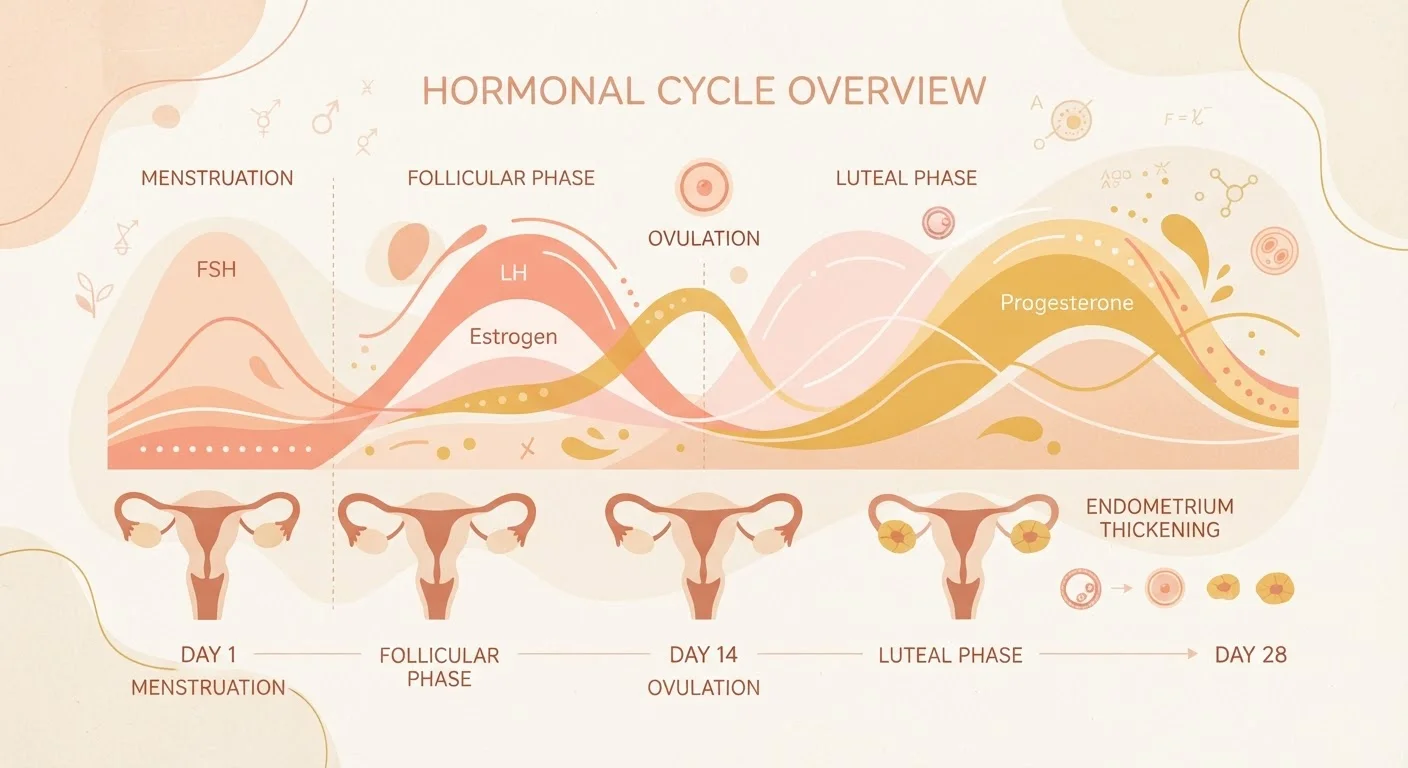
Premenstrual syndrome (PMS) involves real, documented changes in brain chemistry. Research has identified that fluctuating levels of oestrogen and progesterone interact with serotonin — a neurotransmitter that regulates mood — in the luteal phase of the cycle. For some women, a more severe form called PMDD causes significant disruption to daily life and meets the criteria for a mood disorder in the Diagnostic and Statistical Manual of Mental Disorders (DSM-5). Dismissing these symptoms as 'just hormones' delays diagnosis and appropriate care.
Myth
Women only have oestrogen; men only have testosterone.
Fact
All people have a mix of oestrogen, progesterone, and testosterone — the ratios differ, not the presence.
Testosterone is produced in women's ovaries and adrenal glands and plays important roles in bone density, muscle maintenance, and sexual function. Equally, men produce oestrogen, which is essential for bone health and certain aspects of cardiovascular function. Framing these as exclusively 'female' or 'male' hormones oversimplifies the endocrine system and can lead women to dismiss symptoms related to low testosterone, such as reduced libido or fatigue. For a plain-language breakdown of what each hormone actually does, see our guide to oestrogen, progesterone, and testosterone.
Myth
Hormonal contraception affects every woman's mood in the same way.
Fact
Individual responses to hormonal contraception vary considerably and depend on many factors, including the specific formulation used.
Research into hormonal contraception and mood shows inconsistent findings across studies, reflecting how variable individual responses are. Some women report mood changes — both positive and negative — while others notice none at all. Hormone type, dose, delivery method, and a person's existing hormonal profile all influence the outcome. If you are concerned about mood changes related to contraception, speaking with a healthcare provider about alternatives is always appropriate. Assuming one experience is universal can leave women feeling unheard when their own response differs.
Myth
Memory problems and 'brain fog' during menopause are imagined or just ageing.
Fact
Cognitive changes during perimenopause are well-documented and linked to fluctuating oestrogen levels, not simply the passage of time.
Oestrogen receptors exist throughout the brain, including in areas associated with memory and executive function. During perimenopause — the transitional phase before menstruation stops — oestrogen levels become erratic rather than simply declining steadily. Studies have found that verbal memory and processing speed can be measurably affected during this window. Importantly, research suggests these changes are often temporary; many cognitive functions stabilise post-menopause. Acknowledging this experience validates what many women report, and opens the door to evidence-based support rather than dismissal.
Myth
Once you reach menopause, your hormones simply stop.
Fact
Hormone production does not stop at menopause — it shifts, with ovarian production declining but adrenal production continuing.
Menopause marks the end of menstrual cycles but not the end of hormonal activity. The adrenal glands continue producing androgens (including a precursor to oestrogen called oestrone), and body fat tissue also converts androgens into oestrogen through a process called aromatisation. What changes significantly is the loss of cyclical, ovarian oestradiol — the most potent form of oestrogen. This distinction matters clinically because it affects how symptoms are assessed and how healthcare providers consider hormonal support options. For more on hormonal changes across life stages, our article on menstrual cycle myths covers related ground.
What the Evidence Actually Shows
Hormone science is nuanced, and even researchers acknowledge significant gaps remain. What has become clearer is that the endocrine system is deeply interconnected — with the brain, the gut, the immune system, and beyond. Simple narratives like 'oestrogen is the female hormone' or 'mood changes are just hormonal' fail to capture that complexity.
Up to 8%
Women affected by PMDD globally
The American College of Obstetricians and Gynecologists estimates that PMDD — the severe form of PMS — affects up to 8% of women of reproductive age.
~60%
Perimenopausal women reporting cognitive changes
Research published in academic menopause journals consistently finds that around 60% of women in the menopausal transition report subjective memory or concentration difficulties.
It's also worth noting that much of the early research on hormones was conducted predominantly on male subjects or on post-menopausal women in narrow age ranges. More recent studies are beginning to address these gaps, and clinical guidelines are being updated accordingly. Staying informed means being willing to revisit assumptions — even ones that feel like common knowledge.
If you're interested in how hormone myths compare to misconceptions in other areas of health, our article on vitamin myths explores a similar theme, as does our piece on myths about men's mental health.
Your Symptoms Deserve to Be Taken Seriously
If you have been told that hormonal symptoms — mood changes, cognitive shifts, menstrual pain, fatigue — are 'just in your head,' you have every right to seek a second opinion. Clinical evidence supports the physiological basis of many of these experiences. A healthcare provider who is up to date with current endocrinology research will take a thorough history and explore evidence-based options with you rather than dismissing your concerns.
This article is for informational purposes only and does not constitute medical advice. Always speak with a qualified healthcare provider about any symptoms or health concerns specific to you.