
Plant-Based Eating vs. Omnivorous Diets: Nutritional Trade-Offs to Understand

Key Takeaways
Our Verdict
Both plant-based and omnivorous diets can meet your nutritional needs — the difference lies in planning and food quality. Plant-based eaters need to be more deliberate about certain micronutrients, while omnivores benefit from limiting processed meats and prioritizing vegetables. There is no single right answer; the best diet is one you can sustain and that provides consistent nutritional coverage.
| Best for | Recommended |
|---|---|
| Those seeking a whole-food, lower-saturated-fat dietary pattern | Plant-Based Diet |
| Those who want broader natural access to complete proteins and fat-soluble nutrients | Omnivorous Diet |
| Those with higher iron, B12, or omega-3 needs (e.g., pregnant individuals, older adults) | Omnivorous Diet (with professional guidance) |
| Those motivated by environmental sustainability alongside health | Plant-Based Diet |
What These Two Eating Patterns Actually Mean
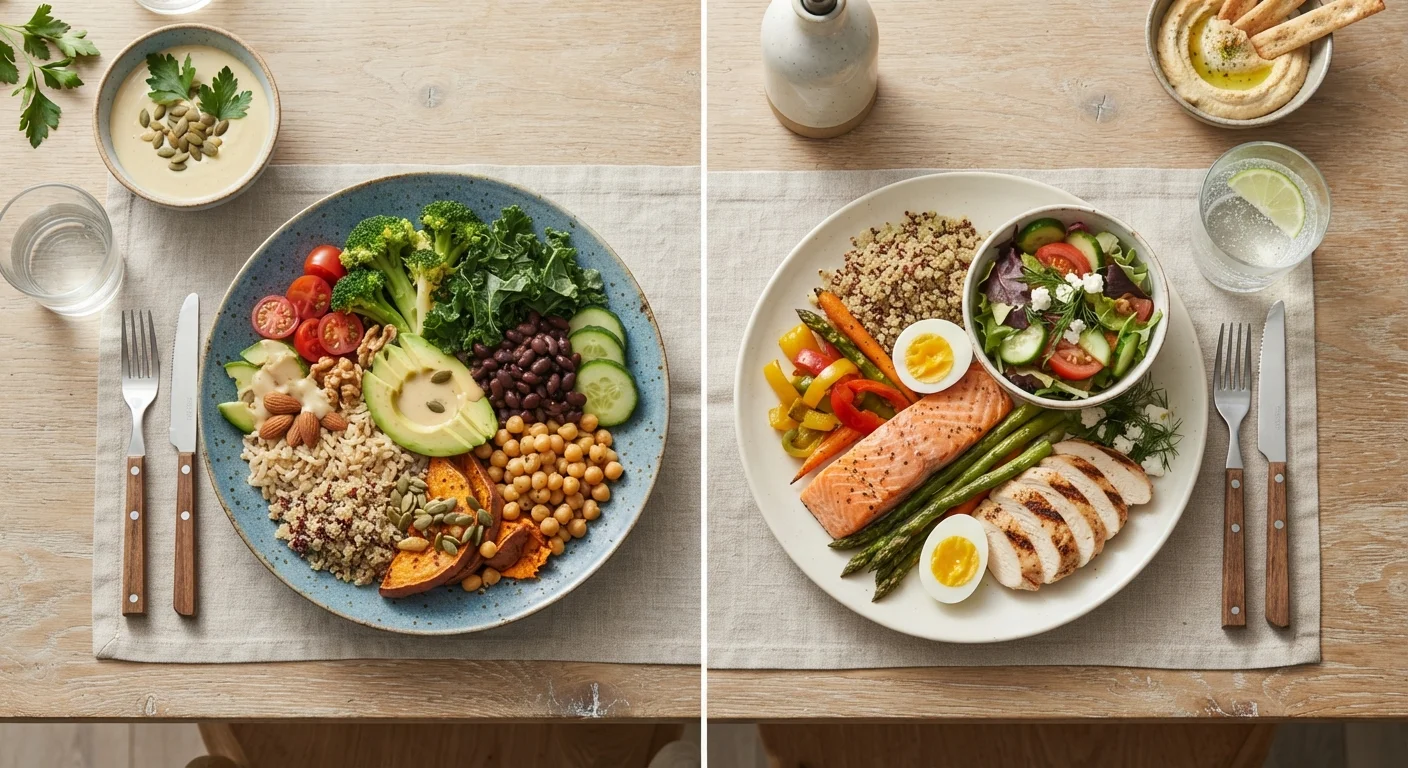
A plant-based diet centers on foods that come from plants — vegetables, fruits, whole grains, legumes, nuts, and seeds. It exists on a spectrum: some people follow a fully vegan approach (no animal products at all), while others eat a mostly plant-forward diet that occasionally includes dairy, eggs, or fish.
An omnivorous diet includes both plant foods and animal-derived foods such as meat, poultry, seafood, eggs, and dairy. This is the most common dietary pattern in the United States, though it varies widely in quality — from heavily processed fast food to carefully balanced whole-food meals.
It's worth noting upfront: the nutritional value of either pattern depends far more on overall food quality than on the label itself. A plant-based diet built on refined grains and packaged snacks is nutritionally different from one built on whole foods. The same applies to omnivorous eating. For more on that distinction, see what the science says about whole vs. processed foods.
Key Nutritional Strengths of Each Approach
Plant-based diets tend to be rich in dietary fiber, antioxidants, and a range of vitamins and minerals — particularly folate, potassium, magnesium, and vitamin C. Research consistently associates high vegetable and legume intake with lower risks of certain chronic diseases. Plant foods are also generally lower in saturated fat.
Omnivorous diets offer more straightforward access to complete proteins (those containing all essential amino acids), heme iron (which is more readily absorbed than plant-based iron), vitamin B12, zinc, vitamin D, and long-chain omega-3 fatty acids (EPA and DHA) found in fatty fish. These nutrients are harder to obtain in adequate amounts from plants alone.
| Nutrient / Factor | Plant-Based Diet | Omnivorous Diet | |
|---|---|---|---|
| Protein completeness | Requires combining food sources | Easily available from animal foods | |
| Vitamin B12 | Supplementation typically needed | Naturally present in meat, dairy, eggs | |
| Iron absorption | Non-heme iron; less readily absorbed | Heme iron; more readily absorbed | |
| Dietary fiber | Generally high | Can be low without deliberate effort | |
| Omega-3 (EPA/DHA) | Limited; algae supplements can help | Available through fatty fish | |
| Saturated fat risk | Generally lower | Higher if relying on red/processed meat | |
| Antioxidants & phytonutrients | Typically very high | Moderate; depends on vegetable intake |
For a broader look at how to build either pattern into a practical daily routine, the Healthy Eating Habits hub offers foundational guidance.
Nutritional Gaps to Watch On Either Diet
Every dietary pattern has potential weak spots. Understanding them helps you plan more effectively.
On a plant-based diet:
- Vitamin B12 — found almost exclusively in animal products; supplementation is generally recommended for vegans.
- Iron and zinc — present in plants but in a less absorbable form. Pairing with vitamin C-rich foods can improve iron absorption.
- Calcium — achievable through fortified plant milks, tofu, and leafy greens, but requires attention.
- Omega-3 fatty acids — ALA (found in flaxseed and walnuts) is a plant source, but conversion to EPA and DHA is limited. Algae-based supplements can help.
On an omnivorous diet:
- Fiber — many omnivores eat far less than the recommended 25–38 grams per day if vegetables and whole grains are limited.
- Saturated fat — diets heavy in red and processed meat can push saturated fat intake above recommended levels.
- Processed meat intake — regular consumption of deli meats, sausages, and similar products has been associated with increased health risks in population research.
Avoid Assuming Any Diet Is Complete By Default
No eating pattern automatically guarantees nutritional adequacy. Both plant-based and omnivorous diets can fall short of key nutrients if food choices are repetitive or heavily processed. Regular check-ins with a healthcare provider — including periodic blood work — can help catch gaps before they become problems. This is especially important for pregnant individuals, children, older adults, or anyone with a chronic health condition.
To explore micronutrient gaps in more depth, see plant-based eating and micronutrient gaps.
Practical Takeaways for Meal Planning
Regardless of which approach you follow, a few consistent habits apply to both:
- Prioritize whole foods. Most of your meals should be built around minimally processed ingredients — this is true whether or not you eat meat.
- Fill half your plate with vegetables and fruit. This is a consistent recommendation across both the USDA Dietary Guidelines and major nutrition organizations.
- Include a protein source at each meal. Plant-based eaters can combine legumes, tofu, tempeh, and whole grains; omnivores can rotate lean meats, fish, and eggs.
- Track your gaps, not just your totals. A varied diet helps, but knowing your potential weak spots allows for targeted planning.
Start With What You Already Eat
You don't need to overhaul your diet overnight. Begin by identifying one or two meals per week to build around whole plant foods, then gradually add variety. Small, consistent changes tend to stick better than dramatic resets. If you're uncertain about your nutrient needs, a single consultation with a registered dietitian can provide a useful roadmap.
If you're new to thinking structurally about meals, this introduction to building a balanced plate walks through the core principles clearly. Women can also find tailored guidance at plant-based eating for women.
This article is for general informational purposes only and is not a substitute for personalized medical or dietary advice. Please consult a registered dietitian or qualified healthcare professional before making significant changes to your diet.