

| Label regulated by | U.S. Food and Drug Administration (FDA) (FDA Nutrition Labeling regulations) |
| Calorie reference diet for %DV | 2,000 calories per day (FDA label guidance) |
| %DV considered low | 5% or less per serving (FDA consumer guidance) |
| %DV considered high | 20% or more per serving (FDA consumer guidance) |
| Key nutrients to limit | Saturated fat, sodium, added sugars (USDA Dietary Guidelines for Americans) |
| Key nutrients to seek more of | Fiber, vitamin D, calcium, iron, potassium (FDA updated label requirements) |
What the Label Is Actually Designed to Tell You
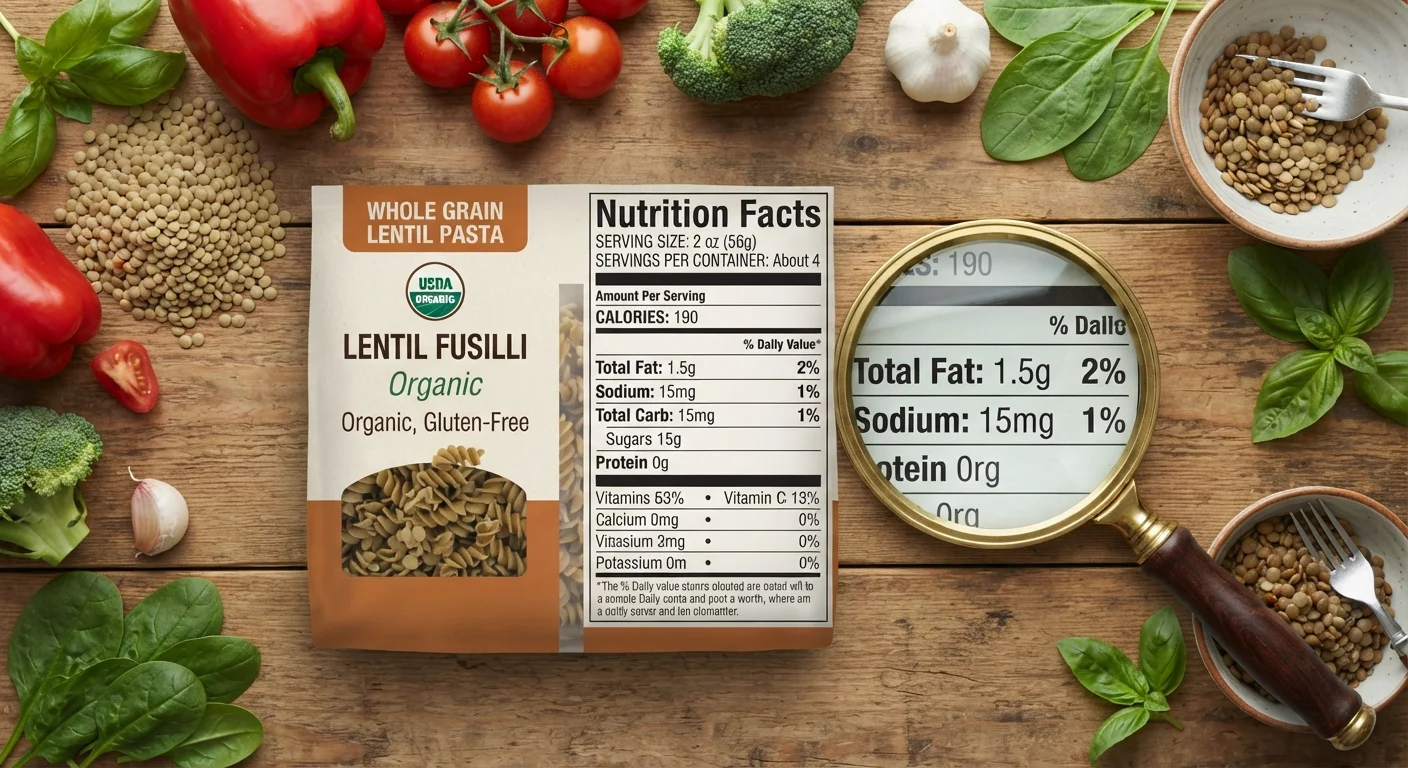
The Nutrition Facts label, required by the U.S. Food and Drug Administration (FDA) on most packaged foods, is a standardized snapshot of a food's nutritional makeup per serving. Its purpose is comparison and context — not a verdict on whether a food is "good" or "bad."
| Label regulated by | U.S. Food and Drug Administration (FDA) (FDA Nutrition Labeling regulations) |
| Calorie reference diet for %DV | 2,000 calories per day (FDA label guidance) |
| %DV considered low | 5% or less per serving (FDA consumer guidance) |
| %DV considered high | 20% or more per serving (FDA consumer guidance) |
| Key nutrients to limit | Saturated fat, sodium, added sugars (USDA Dietary Guidelines for Americans) |
| Key nutrients to seek more of | Fiber, vitamin D, calcium, iron, potassium (FDA updated label requirements) |
Two concepts anchor everything else on the label: serving size and servings per container. All the numbers you see — calories, fat, sodium, vitamins — apply to one serving, not the whole package. A bag that lists 150 calories per serving but contains three servings delivers 450 calories if you eat the whole thing. This single detail trips up more shoppers than any other part of the label.
For a deeper look at how ingredient lists and serving sizes interact, see our step-by-step guide to ingredient lists and serving sizes.
The Numbers Worth Paying Attention To
Not every row on the label demands equal attention. Here's where to focus your energy:
- Calories — The total energy in one serving. Useful for general awareness, but context matters; 200 calories from oats behaves differently in the body than 200 calories from candy.
- Saturated fat and trans fat — Current dietary guidelines from the USDA advise limiting saturated fat and avoiding artificial trans fat entirely. Look for lower numbers here.
- Sodium — Most Americans consume more sodium than recommended. A general benchmark from the FDA's label guidelines is 5% Daily Value (DV) or less per serving is considered low; 20% DV or more is considered high.
- Total sugars vs. added sugars — Total sugars includes naturally occurring sugars (think lactose in milk, fructose in fruit). Added sugars are the ones manufacturers put in. The updated label now lists them separately, which is genuinely useful.
- Dietary fiber — Most US adults fall short of recommended intake. Higher fiber foods tend to support digestive health and sustained energy. Aim for 20% DV or more when you can.
- Protein — Listed in grams; no DV percentage is required. Useful for comparing similar products, especially if protein intake is a goal.
Serving Size
The standardized amount of food used as the reference for all nutrition information on the label. It reflects typical consumption amounts, not necessarily a recommended portion.
% Daily Value (%DV)
A percentage showing how much of a nutrient one serving contributes to a general 2,000-calorie daily diet. It's a comparison tool, not a precise personal target.
Added Sugars
Sugars and syrups added to a food during processing or preparation, distinct from naturally occurring sugars found in fruit or dairy. Listed separately on updated Nutrition Facts labels.
Dietary Fiber
A type of carbohydrate found in plant foods that the body cannot fully digest. It supports digestive health and is associated with sustained fullness after eating.
Saturated Fat
A type of fat found primarily in animal products and some tropical oils. Current U.S. dietary guidelines recommend limiting saturated fat intake as part of a balanced diet.
Sodium
A mineral used in food processing and preservation. Excess sodium intake is commonly associated with elevated blood pressure in some individuals.
People managing blood sugar may find sodium and added sugars particularly important. For background on why, see our plain-language overview of type 2 diabetes.
Decoding % Daily Value — and Its Limits
The % Daily Value (%DV) column tells you how much of a nutrient one serving contributes toward a general daily reference amount. These reference amounts are based on a 2,000-calorie daily diet — a benchmark set by the FDA for label consistency, not a prescription for every person.
The 2,000-Calorie Baseline Isn't Universal
The %DV figures on every nutrition label are calculated using a 2,000-calorie reference diet. This is a standardized benchmark chosen for label consistency, not a recommendation for how many calories you personally should eat. Your actual needs depend on your age, sex, activity level, and health status. A registered dietitian can help you interpret labels in a way that fits your specific situation.
A practical rule: 5% DV or less = low; 20% DV or more = high. You can use this rule for nutrients you want to limit (sodium, saturated fat, added sugars) and nutrients you want more of (fiber, calcium, vitamin D, iron, potassium).
The %DV is a directional tool, not a precise personal target. Someone who needs fewer calories, has a kidney condition, or is pregnant will have different actual needs. Always discuss significant dietary changes with a registered dietitian or your healthcare provider.
To understand what these percentages mean for vitamins and minerals specifically, our micronutrient label guide explains the details clearly.
Using Labels as a Comparison Tool — Not a Scorecard
The most practical way to use a nutrition label is side by side. Comparing two similar products — two yogurts, two breads, two breakfast cereals — lets the label do what it was designed to do: make nutritional differences visible.
Look for the same serving size before comparing numbers. A cereal with 180 mg of sodium per ¾ cup isn't directly comparable to one measured per 1 cup unless you adjust mentally.
Labels don't capture everything. A food with an unremarkable label — plain oats, an apple, a chicken breast — often has no label at all because it's minimally processed. Understanding where labeled packaged foods fit alongside whole foods gives you fuller context. Our breakdown of whole foods vs. ultra-processed foods helps clarify that picture.
Labels also complement, rather than replace, understanding what your body actually needs. Learning about the major food groups gives you a foundation for knowing why certain nutrients matter in the first place.
70%+
US adults consuming excess sodium
According to CDC public health data, the majority of American adults exceed recommended sodium limits, largely through packaged and processed foods.
< 10%
US adults meeting fiber intake goals
The USDA Dietary Guidelines report that most Americans fall well short of recommended daily fiber intake from food sources.
This article is for general informational purposes only and does not constitute medical or dietary advice. Consult a qualified healthcare professional or registered dietitian for guidance tailored to your individual health needs.