

| Number of core food groups | 5 (plus oils as an essential component) (USDA MyPlate framework) |
| Primary role of grains | Main dietary source of carbohydrates for energy |
| Key nutrient in dairy | Calcium, phosphorus, and vitamin D |
| Protein food sources | Meat, poultry, seafood, eggs, beans, lentils, nuts, seeds |
| Recommended plate proportion (vegetables + fruits) | About half of each meal (USDA MyPlate) |
| Whole grain benefit over refined | Retains fiber, B vitamins, and iron |
Why Food Groups Still Matter
Food groups are a practical organizing tool — a way to make sense of the thousands of foods available to us by grouping them according to the nutrients they primarily deliver. Understanding these categories is a foundational step toward building a balanced daily diet, whether you are just starting to eat more nutritiously or looking to sharpen a routine you already have.
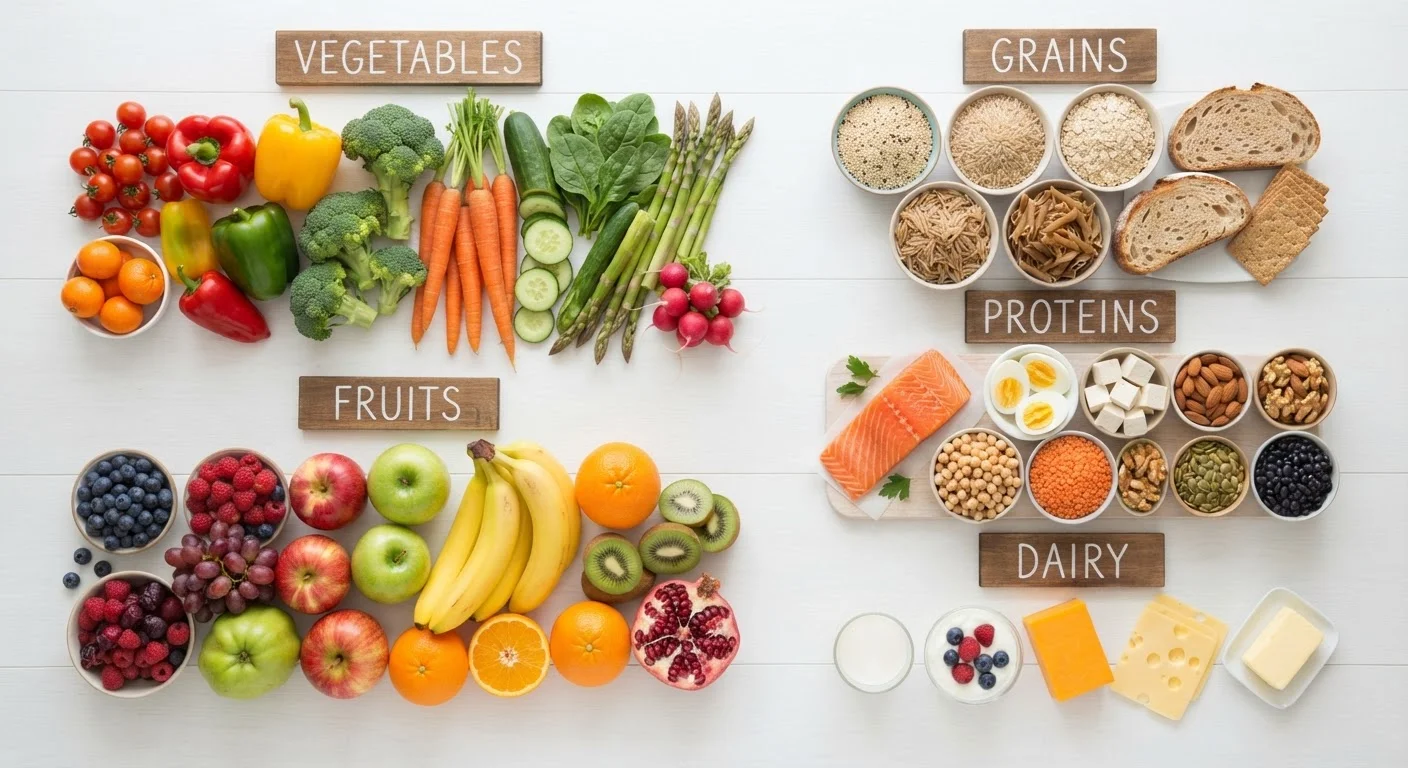
The USDA's current dietary framework identifies five core food groups: vegetables, fruits, grains, protein foods, and dairy (or fortified alternatives). Oils are also recognized as an essential component, though they are not classified as a food group in the traditional sense. Each group contributes a distinct set of nutrients — and no single group covers everything your body needs, which is exactly why variety matters.
| Number of core food groups | 5 (plus oils as an essential component) (USDA MyPlate framework) |
| Primary role of grains | Main dietary source of carbohydrates for energy |
| Key nutrient in dairy | Calcium, phosphorus, and vitamin D |
| Protein food sources | Meat, poultry, seafood, eggs, beans, lentils, nuts, seeds |
| Recommended plate proportion (vegetables + fruits) | About half of each meal (USDA MyPlate) |
| Whole grain benefit over refined | Retains fiber, B vitamins, and iron |
A Group-by-Group Breakdown
Vegetables
Vegetables supply dietary fiber, potassium, folate, and an array of vitamins including C and K. Dark-green vegetables like spinach and broccoli are particularly rich in iron and calcium. Eating a range of colors — red, orange, green, and purple — helps ensure you capture a wider spectrum of plant compounds called phytonutrients, which research suggests may support long-term health.
Fruits
Fruits provide natural sugars for quick energy, vitamin C, potassium, and fiber. Whole fruits are preferable to fruit juices because the fiber slows sugar absorption and supports digestive health. Berries, citrus, and stone fruits each contribute different antioxidant profiles.
Grains
Grains are the body's primary source of carbohydrates — the preferred fuel for the brain and muscles. Whole grains (such as oats, brown rice, and whole wheat) retain the bran and germ layers, delivering B vitamins, iron, and fiber. Refined grains have these layers removed and offer fewer nutrients unless enriched.
Protein Foods
This group includes meat, poultry, seafood, eggs, beans, peas, lentils, nuts, and seeds. Protein is essential for building and repairing tissues, producing enzymes and hormones, and supporting immune function. Seafood, in particular, provides omega-3 fatty acids, which are linked to heart and brain health. For a fuller look at how protein fits a men's diet, see Building a Balanced Plate.
Dairy and Fortified Alternatives
Milk, yogurt, and cheese are concentrated sources of calcium, phosphorus, and vitamin D — nutrients critical for bone strength and nerve function. Plant-based alternatives such as fortified soy or oat milk can provide comparable nutrients when they are specifically fortified, but always check the label to confirm. Our guide to reading nutrition labels can help you identify what to look for.
Oils and Healthy Fats
While not a formal food group, unsaturated fats — found in olive oil, avocados, nuts, and fatty fish — are necessary for absorbing fat-soluble vitamins (A, D, E, and K) and supporting cell membrane integrity. The key is favoring unsaturated fats over saturated and trans fats.
Macronutrients
The three primary nutrients the body needs in large amounts: carbohydrates, protein, and fat. Each provides energy (calories) and supports different bodily functions.
Micronutrients
Vitamins and minerals required in smaller amounts but essential for processes like immune function, bone health, and energy metabolism.
Phytonutrients
Naturally occurring plant compounds (such as flavonoids and carotenoids) that may support health. They are not classified as essential nutrients but are linked to reduced disease risk in research.
Whole grains
Grains that contain all three parts of the kernel — the bran, germ, and endosperm — providing more fiber and nutrients than refined grains.
Fortified foods
Foods that have had nutrients added during processing — for example, plant-based milks fortified with calcium and vitamin D to approximate the nutrient profile of cow's milk.
Unsaturated fats
Heart-friendlier fats found in foods like olive oil, nuts, and avocados. They remain liquid at room temperature and are generally preferred over saturated or trans fats.
How the Groups Work Together
No food group acts alone. Vitamin C from fruits, for example, helps the body absorb non-heme iron from plant-based protein foods. Healthy fats from oils enable absorption of fat-soluble vitamins found in vegetables. This interdependence is one of the strongest arguments for dietary variety rather than leaning heavily on a single category.
A useful mental model is to think of your plate as proportional real estate: roughly half of it filled with vegetables and fruits, roughly one quarter with grains (ideally whole), and the remaining quarter with protein foods — with a serving of dairy or a fortified alternative on the side. This is broadly consistent with the USDA's MyPlate guidance, though individual needs vary based on age, activity level, health status, and other factors.
9 in 10
Americans fall short of vegetable recommendations
According to CDC data, only about 1 in 10 U.S. adults meets federal fruit and vegetable intake guidelines.
~50%
Of grains consumed should be whole grains
USDA Dietary Guidelines for Americans recommend making at least half of all grains whole grains.
8 oz/week
Recommended seafood intake for adults
USDA Dietary Guidelines suggest most adults consume about 8 ounces of seafood per week for omega-3 benefits.
For a comprehensive look at how these principles extend across a lifetime of eating, the complete introduction to eating well covers everything from daily habits to micronutrient basics. Readers interested in specific vitamins can also consult the essential vitamins reference guide for a detailed nutrient-by-nutrient overview.
This article is for general informational and educational purposes only and is not a substitute for professional medical or dietary advice. Individual nutritional needs vary. Please consult a registered dietitian or qualified healthcare provider for personalized guidance.