

| Total essential vitamins | 13 (National Institutes of Health, Office of Dietary Supplements) |
| Fat-soluble vitamins | A, D, E, K |
| Water-soluble vitamins | C plus 8 B vitamins |
| Most common deficiency globally | Vitamin D (World Health Organization nutrition data) |
| Vitamin D — skin synthesis | Requires UVB sun exposure (NIH Office of Dietary Supplements) |
| Folate — critical life stage | Early pregnancy (neural tube formation) (CDC folic acid guidance) |
What This Guide Covers
Vitamins are organic compounds your body needs in small amounts to carry out essential processes — from building bone to converting food into energy. Unlike macronutrients (carbohydrates, protein, and fat), vitamins don't supply calories, but without them, your metabolism, immune system, and cell repair would all stall.
This guide works as a plain-language lookup reference. Each entry summarizes a vitamin's main job, reliable food sources, and common signs that intake may be falling short. For a broader introduction to why micronutrients matter, see our primer on vitamins and minerals.
It also helps to understand that vitamins fall into two categories — fat-soluble (A, D, E, K) and water-soluble (C and the B family) — which affects how your body absorbs and stores them. Learn more about that distinction here.
| Total essential vitamins | 13 (National Institutes of Health, Office of Dietary Supplements) |
| Fat-soluble vitamins | A, D, E, K |
| Water-soluble vitamins | C plus 8 B vitamins |
| Most common deficiency globally | Vitamin D (World Health Organization nutrition data) |
| Vitamin D — skin synthesis | Requires UVB sun exposure (NIH Office of Dietary Supplements) |
| Folate — critical life stage | Early pregnancy (neural tube formation) (CDC folic acid guidance) |
Fat-Soluble Vitamins: A, D, E, and K
Fat-soluble vitamins are absorbed alongside dietary fat and stored in the liver and fatty tissues. Because the body can hold reserves, deficiency tends to develop slowly — but excess from supplements can accumulate to harmful levels over time.
Fat-soluble vitamins
Vitamins (A, D, E, K) that dissolve in fat and are stored in the body's liver and fatty tissues. Because they accumulate, both deficiency and excess from supplements are concerns.
Water-soluble vitamins
Vitamins (C and the eight B vitamins) that dissolve in water. They are not stored in significant amounts, so regular dietary intake is important.
Micronutrient
Nutrients needed in small quantities — including vitamins and minerals — that are essential for normal body function but don't provide calories.
Deficiency
A condition in which the body has insufficient amounts of a specific nutrient to support normal function. Deficiencies are confirmed through clinical testing, not symptoms alone.
Antioxidant
A compound that helps protect cells from oxidative stress caused by unstable molecules called free radicals. Several vitamins (C, E, A) have antioxidant activity.
Fortified food
A food product to which vitamins or minerals have been added during processing — such as vitamin D added to milk or folic acid added to bread — to help the general population meet nutrient needs.
Vitamin A
Main roles: Vision in low light, immune defense, skin cell turnover, and fetal development.
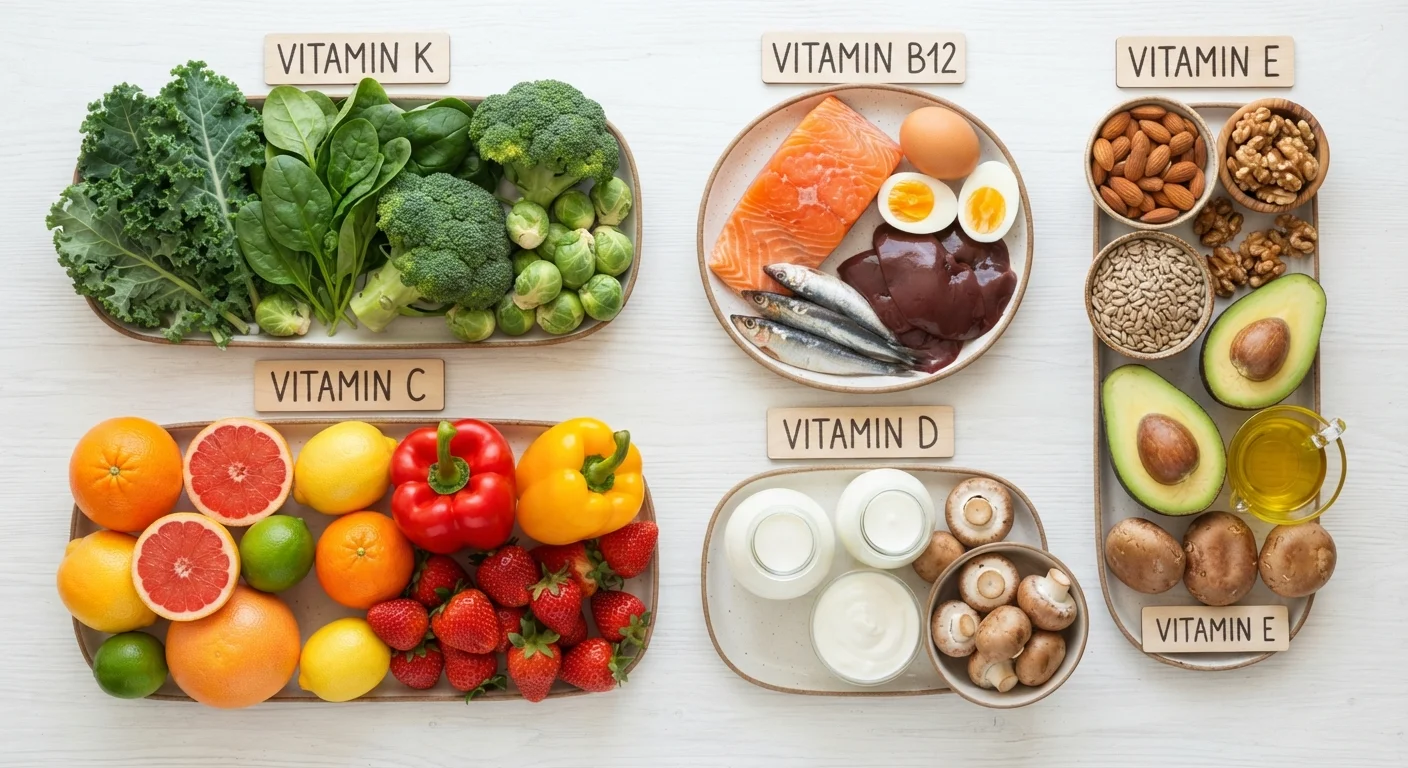
Food sources: Beef liver, sweet potato, carrots, spinach, fortified dairy.
Low-intake signs: Night blindness, frequent infections, dry or rough skin.
Vitamin D
Main roles: Calcium absorption, bone mineralization, immune modulation.
Food sources: Fatty fish (salmon, mackerel), fortified milk and plant milks, egg yolks. Skin also synthesizes vitamin D from sunlight.
Low-intake signs: Bone pain or tenderness, muscle weakness, fatigue (especially in people with limited sun exposure).
Vitamin E
Main roles: Antioxidant protection of cell membranes, immune function.
Food sources: Sunflower seeds, almonds, wheat germ oil, peanut butter, spinach.
Low-intake signs: Nerve damage, muscle weakness (true deficiency is uncommon in otherwise healthy adults).
Vitamin K
Main roles: Blood clotting (K1) and bone protein activation (K2).
Food sources: Leafy greens (kale, collards, spinach) for K1; fermented foods and some cheeses for K2.
Low-intake signs: Slow wound healing, easy bruising, abnormal bleeding.
Water-Soluble Vitamins: C and the B Family
Water-soluble vitamins dissolve in water and are not stored in large amounts — excess is generally excreted in urine, so daily intake matters more. The B vitamins deserve their own deep-dive; see our dedicated B vitamins guide for a full breakdown of B1 through B12.
~40%
U.S. adults with inadequate vitamin D intake
Estimates from NHANES data suggest roughly 40% of U.S. adults have blood levels below the sufficiency threshold for vitamin D.
1 in 6
Older adults with low B12 status
Research published in nutrition epidemiology literature suggests B12 insufficiency is relatively common among adults over 60, partly due to reduced absorption.
Vitamin C
Main roles: Collagen synthesis, immune support, antioxidant activity, enhanced iron absorption from plant foods.
Food sources: Bell peppers, citrus fruit, strawberries, broccoli, kiwi.
Low-intake signs: Slow wound healing, fatigue, swollen or bleeding gums (severe, prolonged deficiency leads to scurvy).
Key B Vitamins at a Glance
| Vitamin | Primary Role | Notable Sources |
|---|---|---|
| B1 (Thiamine) | Energy metabolism, nerve function | Whole grains, pork, legumes |
| B3 (Niacin) | DNA repair, energy production | Poultry, tuna, peanuts, fortified cereals |
| B9 (Folate) | Cell division, fetal neural tube development | Leafy greens, lentils, fortified grains |
| B12 (Cobalamin) | Nerve health, red blood cell formation | Meat, dairy, eggs, fortified plant foods |
Women of childbearing age, older adults, and people following plant-based diets are groups for whom certain B vitamins warrant particular attention. See nutrients commonly under-consumed by women for more context.
Putting It Into Practice
The most reliable strategy for meeting vitamin needs is consistent variety across food groups — not supplementation. Eating a range of vegetables, fruits, proteins, whole grains, and dairy or dairy alternatives naturally supplies most of the vitamins covered here. Our food groups reference guide maps which groups deliver which nutrients.
If you want a day-to-day tool, this beginner nutrition checklist helps you audit whether meals are covering your key bases without complicated tracking.
Supplements can fill genuine gaps, but they are not a substitute for dietary variety and should only be used with guidance from a qualified healthcare provider — especially for fat-soluble vitamins, which can accumulate. If you suspect a deficiency, a blood test ordered by your doctor is the right first step, not self-prescribed high-dose supplements.
Supplements Require Professional Guidance
Fat-soluble vitamins — particularly vitamins A and D — can reach harmful levels if taken in high doses over time because the body stores rather than excretes them. Always discuss supplement use with a healthcare provider before starting, and do not exceed the tolerable upper intake level for any nutrient without medical supervision.
This article provides general nutrition education and is not a substitute for personalized medical or dietary advice. If you have concerns about your vitamin levels or nutritional status, please consult a registered dietitian or your healthcare provider.