

| Most common deficiency in women | Iron (World Health Organization) |
| Bone-loss risk after menopause | Women lose up to 20% of bone density in the 5–7 years post-menopause (National Osteoporosis Foundation) |
| Nutrients most frequently under-consumed | Iron, calcium, vitamin D, folate, magnesium, iodine (U.S. Dietary Guidelines Advisory Committee) |
| Folate importance for pregnancy | Critical in the first 28 days of pregnancy — often before a woman knows she is pregnant (Centers for Disease Control and Prevention) |
| Vitamin D food sources | Limited in natural foods; oily fish and fortified products are best dietary bets |
| Magnesium role | Involved in 300+ enzymatic reactions in the body (National Institutes of Health Office of Dietary Supplements) |
Why Women Face Distinct Nutritional Gaps
Even women who eat regularly and mindfully can fall short on certain nutrients — not because their diets are poor, but because women's bodies have specific demands that standard dietary patterns don't always meet. Factors like menstruation, pregnancy, breastfeeding, hormonal fluctuations, and the natural shifts of aging all raise the bar for particular nutrients. Population-level dietary surveys consistently show the same shortfalls appearing across age groups.
This reference guide is designed to help you quickly identify which nutrients are most commonly under-consumed, understand why each one matters, and recognize the food sources that can help. It is general health information — not a substitute for personalized advice from a qualified healthcare professional.
For a broader look at how nutritional priorities evolve over time, see our guide to women's nutrition across decades. To understand why gaps occur even in seemingly balanced diets, this overview explains the common reasons.
| Most common deficiency in women | Iron (World Health Organization) |
| Bone-loss risk after menopause | Women lose up to 20% of bone density in the 5–7 years post-menopause (National Osteoporosis Foundation) |
| Nutrients most frequently under-consumed | Iron, calcium, vitamin D, folate, magnesium, iodine (U.S. Dietary Guidelines Advisory Committee) |
| Folate importance for pregnancy | Critical in the first 28 days of pregnancy — often before a woman knows she is pregnant (Centers for Disease Control and Prevention) |
| Vitamin D food sources | Limited in natural foods; oily fish and fortified products are best dietary bets |
| Magnesium role | Involved in 300+ enzymatic reactions in the body (National Institutes of Health Office of Dietary Supplements) |
The Key Nutrients Women Most Often Miss
The following nutrients appear most frequently in research as shortfalls for women across various life stages. Use this as a lookup reference.
~30%
Women affected by iron deficiency globally
According to the World Health Organization, iron deficiency is the most widespread nutritional deficiency, disproportionately affecting women of reproductive age.
~40%
U.S. adults with insufficient vitamin D
National survey data from the CDC indicates a large portion of U.S. adults have blood levels of vitamin D below recommended thresholds.
1 in 2
Women over 50 at risk of an osteoporosis-related fracture
The National Osteoporosis Foundation estimates that half of women over 50 will experience a fracture related to low bone density in their lifetime.
Iron
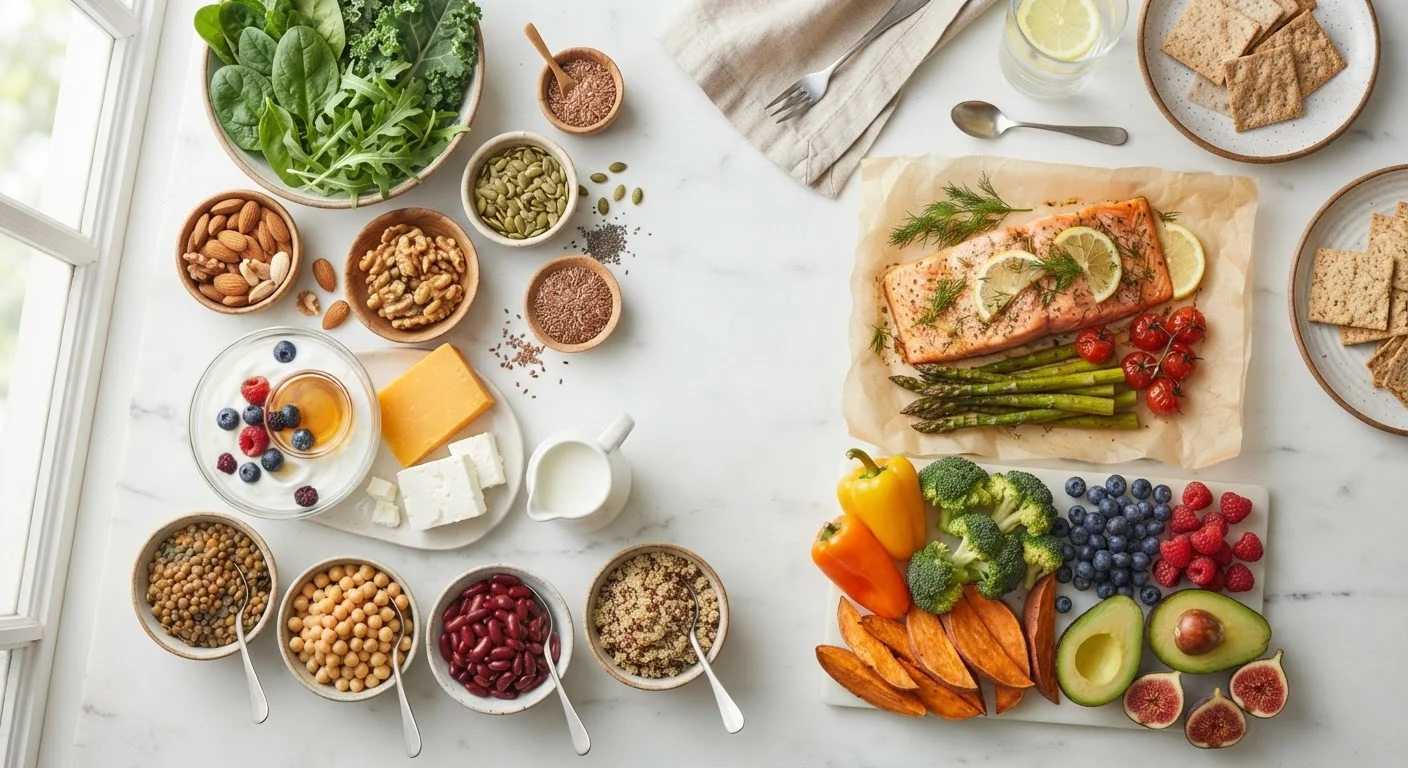
Iron supports red blood cell production and oxygen transport. Women of reproductive age lose iron through menstruation each month, making deficiency one of the most prevalent nutritional issues worldwide. Good sources include lean red meat, lentils, tofu, spinach, and fortified cereals. Pairing plant-based iron sources with vitamin C-rich foods helps the body absorb them more effectively. Learn more in our dedicated iron and women's health guide.
Calcium
Calcium is critical for bone density, muscle function, and nerve signaling. Women are at significantly higher risk of osteoporosis than men, and adequate calcium intake throughout life is a key protective factor. Dairy products, fortified plant milks, calcium-set tofu, broccoli, and almonds are reliable sources.
Vitamin D
Vitamin D helps the body absorb calcium and supports immune function and mood regulation. Because few foods contain meaningful amounts naturally, many women rely on sun exposure — which is limited by geography, season, and sun-protective habits. Oily fish, egg yolks, and fortified foods contribute, but supplementation is sometimes recommended; always discuss this with a healthcare provider.
Folate (Vitamin B9)
Folate is essential for DNA synthesis and cell division. It is especially critical before and during early pregnancy to support fetal neural development. Dark leafy greens, legumes, avocado, and fortified grains are the primary dietary sources. Anyone who could become pregnant is typically advised to discuss folic acid supplementation with their doctor.
Magnesium
Magnesium is involved in over 300 enzymatic reactions, including energy production, muscle relaxation, and blood sugar regulation. It may also play a role in easing premenstrual symptoms. Whole grains, nuts, seeds, legumes, and dark chocolate are excellent sources.
Iodine
Iodine is necessary for thyroid hormone production, which regulates metabolism and is vital during pregnancy for fetal brain development. Seafood, dairy, and iodized salt are the main sources in most Western diets.
Bioavailability
The proportion of a nutrient that the body can actually absorb and use from food. Some nutrients are more bioavailable from animal sources than plant sources.
Heme iron
A form of iron found in animal products like meat and fish that the body absorbs more efficiently than the non-heme iron found in plant foods.
Fortified food
A food that has had one or more nutrients added to it during processing — for example, calcium added to plant milk or folic acid added to breakfast cereals.
Neural tube defect
A birth defect of the brain or spinal cord that can occur in early pregnancy. Adequate folate intake before and during pregnancy significantly reduces the risk.
If you follow a plant-based diet, several of these nutrients — particularly iron, calcium, iodine, and vitamin D — warrant extra attention. Our article on plant-based eating for women covers this in detail. You can also use nutrition label guidance to spot fortified food sources at the grocery store, and our essential vitamins reference for a complete vitamin-by-vitamin breakdown.
Supplementation Is Not a One-Size-Fits-All Solution
While supplements can help close specific gaps, they are not necessary for everyone and some nutrients can be harmful in excess. Blood testing is the most reliable way to identify a true deficiency. Before starting any supplement — including common ones like iron or vitamin D — discuss it with your healthcare provider to determine whether it is appropriate for your individual situation.
This article is for general informational purposes only and does not constitute medical advice. Always consult a qualified healthcare professional before making changes to your diet or beginning any supplementation.