

Key Takeaways
Iron (Dietary Mineral)
Iron is an essential mineral your body cannot make on its own — it must come from food. Its most critical job is helping red blood cells carry oxygen from your lungs to every cell in your body. Without enough iron, energy, concentration, and overall well-being can all suffer.
Iron exists in two dietary forms: heme iron (found in animal foods, absorbed more efficiently) and non-heme iron (found in plant foods, absorbed less readily but still meaningful). The body regulates absorption based on its current stores.
Why Iron Is a Women's Health Priority
If you have ever dragged yourself through the afternoon despite a full night's sleep, or found it hard to focus even on simple tasks, low iron might be part of the picture. Iron deficiency is consistently identified as one of the most common nutritional gaps among women — and yet it often goes unrecognised because its symptoms can seem easy to explain away.
Women of reproductive age lose iron monthly through menstruation, making their dietary needs higher than those of most men. Pregnancy raises the stakes further, increasing iron demands substantially to support a growing baby and expanded blood volume. See our guide to nutrition and menstrual health for a broader look at how diet intersects with the menstrual cycle.
Understanding iron is not about obsessing over numbers — it is about recognising why this mineral deserves a place in your everyday awareness.
What Iron Actually Does in Your Body
Iron's most well-known role is in haemoglobin — the protein inside red blood cells that carries oxygen to your muscles, organs, and brain. Without sufficient iron, your body produces fewer or smaller red blood cells, and oxygen delivery throughout the body becomes less efficient.
But iron does more than transport oxygen. It also supports:
- Energy metabolism: Iron is involved in converting food into usable energy at the cellular level.
- Immune function: A healthy immune system relies partly on adequate iron to support the production and activity of immune cells.
- Cognitive function: Research consistently links iron status to attention, memory, and learning, particularly in younger women.
- Temperature regulation: Feeling persistently cold, especially in the hands and feet, is a commonly reported experience among people with low iron.
For context on how iron fits within the broader family of essential minerals, the essential minerals overview covers what each mineral does and why balance matters.
~30%
of women globally affected by anaemia
The World Health Organization estimates that around 30% of women of reproductive age worldwide are affected by anaemia, with iron deficiency being the leading cause.
18 mg
recommended daily iron intake for adult women
According to the U.S. National Institutes of Health, women aged 19–50 generally need approximately 18 mg of iron per day — compared to 8 mg for men of the same age.
27 mg
daily iron recommended during pregnancy
The NIH recommends that pregnant women aim for 27 mg of iron per day, reflecting the substantially increased demands of pregnancy on the body's iron stores.
Who Is Most at Risk of Iron Deficiency?
While any woman can develop low iron, certain life stages and circumstances raise the risk:
- Women with heavy periods: Heavier or longer menstrual bleeding means more iron lost each cycle, making it harder to replenish through diet alone.
- Pregnant women: Iron needs increase significantly during pregnancy. This is a special-population context where professional guidance is essential — please speak with your midwife or doctor rather than relying on general advice.
- Vegetarians and vegans: Plant-based diets provide only non-heme iron, which the body absorbs less efficiently. Thoughtful meal planning becomes especially important.
- Frequent exercisers: High-intensity or endurance exercise can increase iron losses through sweat and gastrointestinal pathways.
- Women with certain health conditions: Conditions affecting the gut, such as coeliac disease or inflammatory bowel disease, can impair iron absorption even when dietary intake seems adequate.
This is one reason why iron features prominently in our quick reference on nutrients women commonly under-consume.
Get Tested Before You Supplement
Iron supplements are not risk-free — taking them when your levels are already within a healthy range can cause digestive discomfort and, in some cases, interfere with the absorption of other minerals. If you suspect your iron is low, ask your healthcare provider for a blood test first. A ferritin test (which measures stored iron) alongside a full blood count gives the clearest picture.
Building Iron Into Your Diet
Getting more iron from food is often achievable with a few straightforward shifts. Here is what the evidence supports:
Prioritise a mix of iron sources
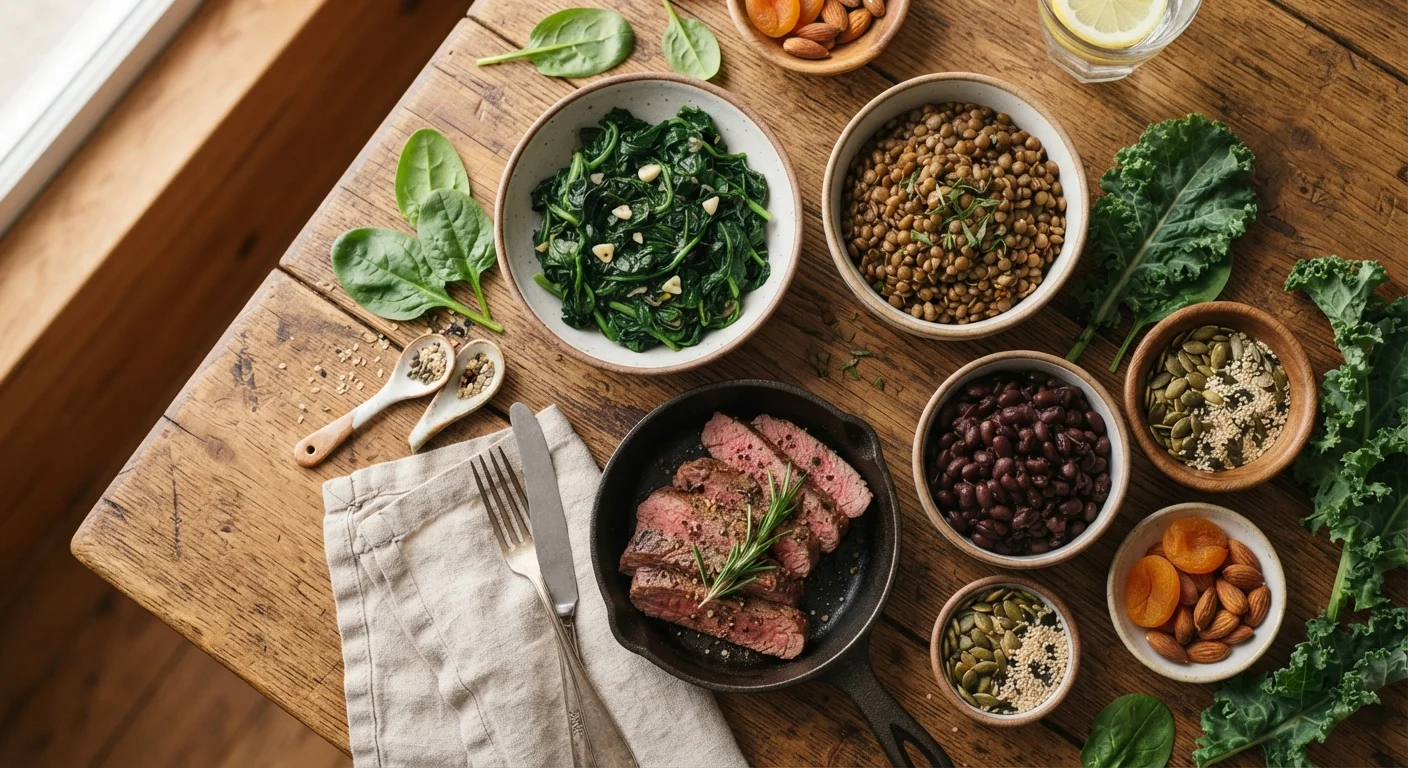
Lean red meat, poultry, and shellfish contain heme iron, which the body absorbs readily. For those who eat little or no meat, lentils, chickpeas, kidney beans, tofu, fortified breakfast cereals, pumpkin seeds, and dark leafy greens are valuable non-heme sources.
Pair plant iron with vitamin C
Vitamin C consumed at the same meal significantly enhances the absorption of non-heme iron. A squeeze of lemon over spinach, orange slices alongside a bean dish, or bell peppers added to a lentil soup are simple, practical combinations. Our article on vitamin C's broader roles explains why this nutrient is so often underestimated.
Be mindful of absorption blockers
Tannins in tea and coffee, and calcium in dairy, can reduce non-heme iron absorption when consumed at the same time. This does not mean avoiding these foods — just spacing them away from your highest-iron meals when possible.
This article is for general informational purposes only and does not constitute medical advice. Please consult a qualified healthcare professional for personalised guidance on your nutritional needs or health concerns.