

| Number of essential minerals | At least 16 (National Institutes of Health, Office of Dietary Supplements) |
| Most common mineral deficiency globally | Iron (World Health Organization) |
| Potassium daily adequate intake (adults) | 2,600–3,400 mg (National Academies of Sciences, 2019) |
| Zinc daily RDA (adult men / women) | 11 mg / 8 mg (NIH Office of Dietary Supplements) |
| Selenium daily RDA (adults) | 55 mcg (NIH Office of Dietary Supplements) |
| Best food strategy for minerals | Varied whole-food diet (USDA Dietary Guidelines for Americans) |
Why Minerals Matter
Vitamins often get the spotlight, but minerals are equally essential. These naturally occurring nutrients support everything from fluid balance and muscle contractions to immune defense and DNA repair. Unlike macronutrients such as protein or carbohydrates, your body cannot make minerals on its own — they must come entirely from food.
Minerals are divided into two groups. Major minerals (also called macrominerals) are needed in larger amounts — potassium, calcium, magnesium, sodium, and phosphorus fall here. Trace minerals are required in much smaller quantities but are no less important — zinc, selenium, iron, manganese, and copper are examples.
For a broader look at how these nutrients fit into daily eating, see Balanced Diet Basics. And if you want a deeper dive into the full range of micronutrients, the article Micronutrients: The Vitamins and Minerals Your Body Relies On Daily is a helpful companion read.
| Number of essential minerals | At least 16 (National Institutes of Health, Office of Dietary Supplements) |
| Most common mineral deficiency globally | Iron (World Health Organization) |
| Potassium daily adequate intake (adults) | 2,600–3,400 mg (National Academies of Sciences, 2019) |
| Zinc daily RDA (adult men / women) | 11 mg / 8 mg (NIH Office of Dietary Supplements) |
| Selenium daily RDA (adults) | 55 mcg (NIH Office of Dietary Supplements) |
| Best food strategy for minerals | Varied whole-food diet (USDA Dietary Guidelines for Americans) |
Key Minerals at a Glance
Below is a plain-language overview of six minerals that frequently come up in nutrition conversations — what each one does, where to find it in food, and signs that intake may be low.
Major minerals
Minerals the body requires in relatively large amounts (generally more than 100 mg per day). Examples include potassium, calcium, and magnesium.
Trace minerals
Minerals needed in very small quantities but still essential for normal body function. Zinc, selenium, and iodine are common examples.
Antioxidant
A substance that helps protect cells from damage caused by unstable molecules called free radicals. Selenium is one mineral with antioxidant properties.
Deficiency
A condition in which the body does not have enough of a particular nutrient to carry out normal functions, often resulting in recognizable symptoms.
Enzymatic reaction
A chemical process in the body facilitated by proteins called enzymes. Many minerals — especially magnesium — act as co-factors that help enzymes function correctly.
Zinc
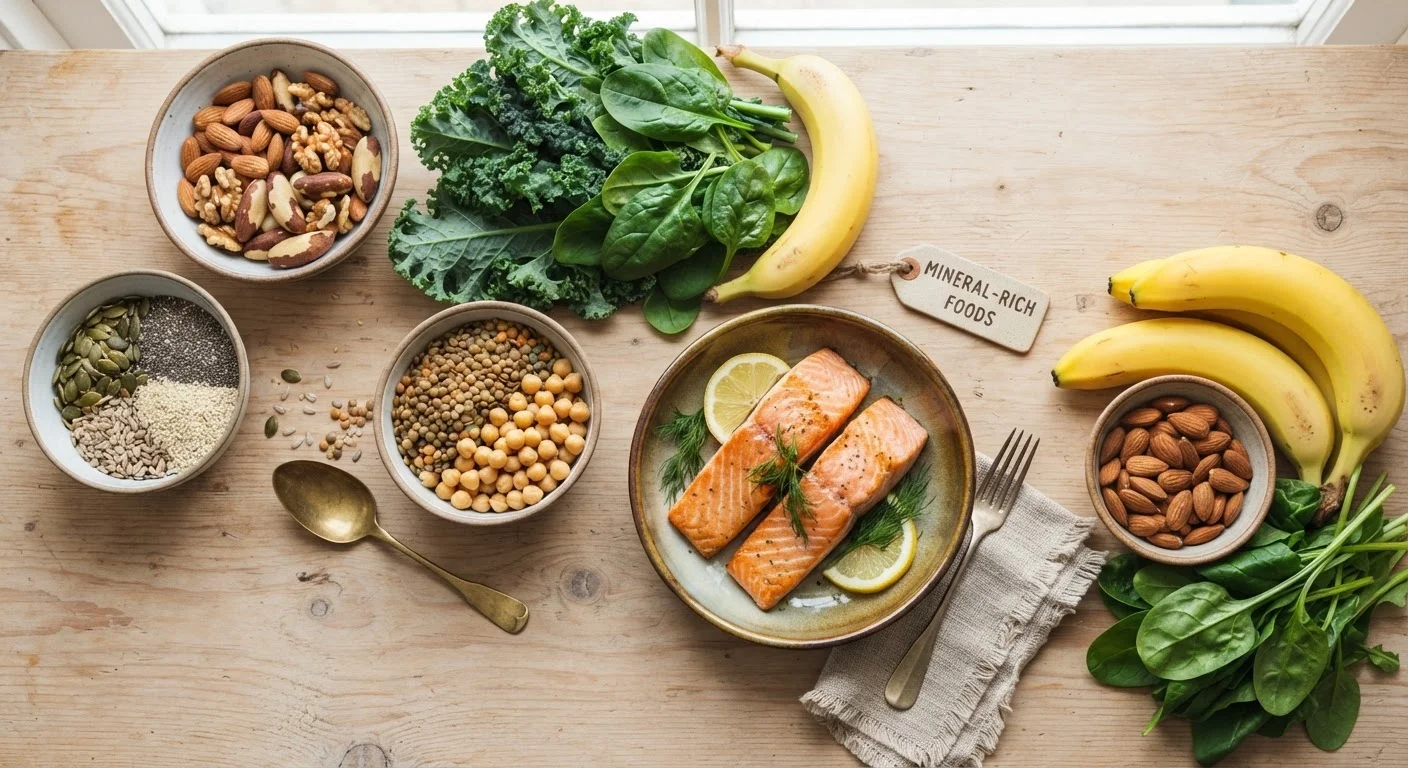
Zinc supports immune cell production, wound healing, and the senses of taste and smell. It's found in oysters, beef, pumpkin seeds, lentils, and fortified cereals. Signs of low zinc can include frequent colds, slow wound healing, or reduced appetite. Men in particular may not meet daily targets — see Nutrients Most Men Don't Get Enough Of for context.
Potassium
Potassium helps regulate blood pressure, supports normal nerve signaling, and assists with muscle function including the heartbeat. Bananas get most of the attention, but potatoes, white beans, spinach, and avocado are all excellent sources. Low potassium — sometimes called hypokalemia — can cause muscle cramps, weakness, or fatigue.
Selenium
Selenium acts as an antioxidant and plays a role in thyroid hormone metabolism. Brazil nuts are exceptionally high in selenium; seafood, eggs, and whole grains are also good sources. Because selenium needs are small and very high intake carries risk, food sources are generally the safest way to meet your needs.
Magnesium
Magnesium is involved in over 300 enzymatic reactions, including energy production and protein synthesis. Dark chocolate, almonds, black beans, and whole grains supply meaningful amounts. Magnesium deficiency is more common than many people realize and can present as muscle twitches, poor sleep, or low energy.
Iodine
Iodine is essential for producing thyroid hormones, which regulate metabolism and support fetal brain development. Seafood, dairy, and iodized table salt are the primary sources in the U.S. diet. Pregnant individuals should pay particular attention to iodine intake and consult a healthcare provider about their specific needs.
Iron
Iron is central to red blood cell production and oxygen transport throughout the body. Red meat, poultry, beans, lentils, and fortified cereals all contribute iron. Women of reproductive age are at elevated risk of deficiency — Iron and Women's Health: Why This Mineral Deserves More Attention covers this topic in detail.
Balance, Interactions, and Practical Takeaways
Minerals don't work in isolation. Calcium and vitamin D, for example, function as a team — a relationship explored in Calcium and Vitamin D: Why These Two Nutrients Work as a Team. Similarly, too much zinc can interfere with copper absorption, and excess sodium can increase urinary potassium loss.
The most reliable strategy for covering your mineral needs is dietary variety. No single food covers everything, but a pattern built around vegetables, legumes, whole grains, nuts, seeds, lean proteins, and dairy (or fortified alternatives) naturally delivers a broad mineral profile.
Food First, Supplements Second
For most healthy adults, a varied diet provides adequate minerals without supplementation. Supplements can fill genuine gaps — such as iron deficiency confirmed by a blood test — but they are not a substitute for a balanced diet. Excess intake of certain minerals through supplements can cause harm, so higher-dose products should only be used when recommended by a healthcare professional.
Supplements are sometimes appropriate — for example, iron supplements for diagnosed deficiency or iodine during pregnancy — but they should be used under healthcare guidance, not as a default. Taking high doses of any single mineral without medical supervision can create imbalances or toxicity. Always speak with a qualified healthcare professional before starting or changing any supplement regimen.
This article is for general informational purposes only and is not a substitute for personalized medical or dietary advice. Consult a registered dietitian or your healthcare provider for guidance suited to your individual needs.