

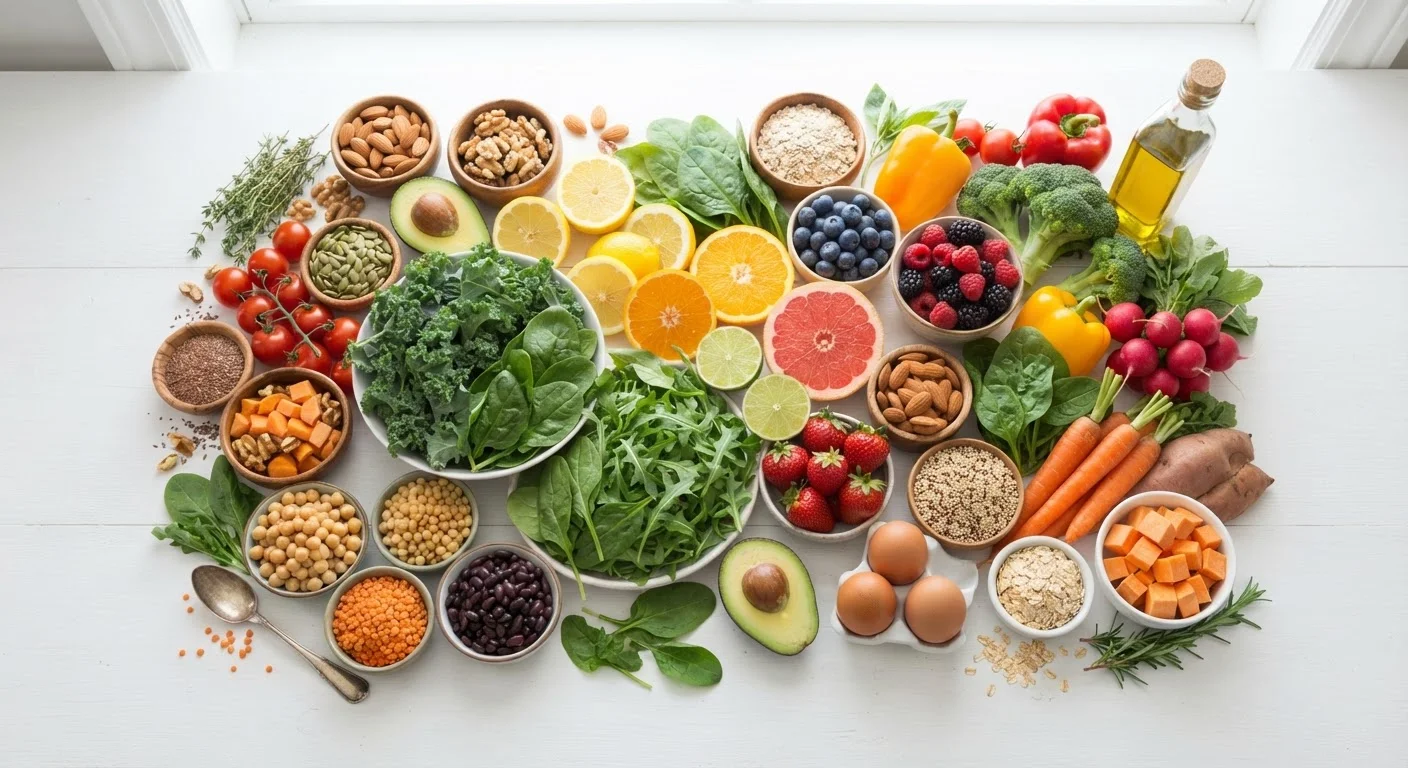
Key Takeaways
Micronutrients
Micronutrients are the vitamins and minerals your body needs in small amounts every day to function properly. Unlike macronutrients (carbohydrates, protein, and fat), micronutrients don't provide calories — but they are essential for energy production, immune defense, bone health, and hundreds of other processes. Because your body can't manufacture most of them on its own, you need to get them regularly through food.
Vitamins are organic compounds (carbon-containing) that can be destroyed by heat or light, while minerals are inorganic elements that retain their structure regardless of cooking method — a distinction that affects how food preparation influences nutrient availability.
What Micronutrients Actually Do
Think of micronutrients as the behind-the-scenes workforce of your body. While macronutrients supply the fuel, micronutrients manage the machinery — enabling your cells to convert food into usable energy, helping your immune system recognize and respond to threats, supporting the production of hormones, and maintaining the structural integrity of bones and teeth.
Each vitamin and mineral has specific jobs. Vitamin C, for example, is required for collagen synthesis, which keeps skin, blood vessels, and connective tissue intact. Magnesium participates in more than 300 enzyme reactions, including those involved in muscle contraction and blood pressure regulation. Iron carries oxygen through the blood, which is why iron deficiency often shows up as persistent tiredness and difficulty concentrating.
For a broader look at how vitamins and minerals differ at a foundational level, see our introduction to vitamins and minerals.
Micronutrients vs. Macronutrients: A Quick Distinction
Macronutrients — carbohydrates, protein, and fat — are needed in gram-level quantities and provide the calories your body uses for energy. Micronutrients are needed in milligram or microgram amounts and provide no calories. Both categories are essential; neither is more important than the other, and a healthy diet includes adequate amounts of each.
Vitamins: Fat-Soluble vs. Water-Soluble
The 13 essential vitamins are divided into two categories based on how the body stores and handles them.
Fat-Soluble Vitamins (A, D, E, K)
These dissolve in fat and are stored in the liver and fatty tissues, meaning your body can draw on reserves when dietary intake dips. Vitamin A supports vision and immune function; vitamin D helps regulate calcium absorption and bone density; vitamin E acts as an antioxidant protecting cell membranes; and vitamin K is essential for blood clotting and bone metabolism. Because these vitamins accumulate in the body, very high supplemental doses can become problematic — always consult a healthcare provider before supplementing.
Water-Soluble Vitamins (C and the B Vitamins)
These dissolve in water and are not stored in meaningful quantities, so consistent daily intake from food matters. The B vitamins — including B12, folate, thiamine, and riboflavin — are central to energy metabolism and neurological health. Vitamin C is a well-known antioxidant and immune supporter. Because excess water-soluble vitamins are largely excreted, your body is less efficient at banking them, which makes regular dietary sources important.
Preserve Water-Soluble Vitamins When Cooking
Vitamins like C and folate break down easily with heat and dissolve into cooking water. To retain more of these nutrients, try steaming or stir-frying vegetables instead of boiling them, and use cooking liquids (like vegetable broth from blanching) in soups or sauces rather than discarding them.
Minerals: Major and Trace
Minerals are inorganic elements that your body cannot produce. They are grouped by how much you need each day.
Major Minerals
Calcium, phosphorus, magnesium, sodium, potassium, chloride, and sulfur are needed in relatively larger amounts (generally 100 mg or more per day). Calcium and phosphorus form the structural backbone of bones and teeth. Potassium and sodium work together to regulate fluid balance and nerve signaling. Magnesium supports muscle function, sleep quality, and blood sugar regulation.
Trace Minerals
Iron, zinc, iodine, selenium, copper, manganese, fluoride, and chromium are needed in much smaller quantities — often micrograms — but are no less vital. Zinc supports immune defense and wound healing. Iodine is critical for thyroid hormone production. Selenium plays a role in antioxidant protection and reproductive health.
For quick-reference facts on the minerals your diet should cover, explore our guide on essential minerals including zinc, potassium, and selenium.
~1 in 3
U.S. adults at risk for at least one vitamin deficiency
CDC nutritional surveys consistently identify vitamin D, vitamin B6, and iron as among the most common shortfalls in the U.S. adult population.
13
Essential vitamins the human body requires
These 13 vitamins — four fat-soluble and nine water-soluble — must be obtained through food or, in some cases, supplementation, as the body cannot synthesize them in adequate quantities.
300+
Enzyme reactions involving magnesium alone
According to the National Institutes of Health Office of Dietary Supplements, magnesium participates in over 300 biochemical reactions, underscoring how a single mineral can have wide-ranging physiological effects.
Building a Micronutrient-Rich Plate
No single food contains every micronutrient your body needs, which is why dietary variety is the most practical strategy. The USDA's Dietary Guidelines for Americans consistently emphasize eating from multiple food groups — and the reasoning is precisely about micronutrient coverage.
- Dark leafy greens (spinach, kale, Swiss chard): rich in folate, vitamin K, calcium, and iron
- Colorful fruits and vegetables (bell peppers, citrus, berries, sweet potatoes): excellent sources of vitamin C, beta-carotene, and potassium
- Legumes and beans (lentils, black beans, chickpeas): provide iron, folate, magnesium, and zinc
- Whole grains (oats, brown rice, quinoa): supply B vitamins, magnesium, and selenium
- Eggs and dairy: concentrated sources of vitamin D, B12, calcium, and iodine
- Nuts and seeds (almonds, sunflower seeds, pumpkin seeds): deliver vitamin E, magnesium, and zinc
- Lean meats and fish: among the most bioavailable sources of iron, zinc, and vitamin B12
People eating plant-based diets may need to pay closer attention to vitamin B12, vitamin D, iodine, iron, and zinc — nutrients predominantly concentrated in animal foods. Similarly, research shows that certain populations consistently fall short on specific nutrients. Our article on nutrients most men don't get enough of highlights common gaps supported by population data.
If you suspect your diet may be coming up short, our guide on signs your diet may be missing key micronutrients offers a practical checklist and sensible next steps. And for a fuller picture of daily nutrition beyond vitamins and minerals, see our piece on fibre, hydration, and healthy fats.
This article is for general informational and educational purposes only and is not a substitute for professional medical or dietary advice. Speak with a qualified healthcare provider or registered dietitian for guidance specific to your health needs.