
Fibre, Hydration, and Healthy Fats: The Underrated Pillars of Daily Nutrition

Key Takeaways
Why these three nutrients get overlooked
When people think about eating well, the conversation almost always starts with calories or protein. Fibre, water, and fat rarely make headlines — and when fat does, it's usually framed as something to reduce rather than choose wisely. Yet these three elements are involved in nearly every biological process your body runs daily.
This isn't about adding complexity to your diet. It's about recognising that small, consistent choices around these three areas can have a meaningful impact on digestion, energy levels, cardiovascular health, and how well your body absorbs the other nutrients you're already eating. For a broader view of how vitamins and minerals fit into the picture, the micronutrients your body relies on daily is a useful companion read.
Fibre: The digestive workhorse hiding in plain sight
Fibre is a type of carbohydrate your body cannot fully digest — and that's exactly what makes it valuable. It slows digestion, helping to stabilise blood sugar levels after meals, and feeds the beneficial bacteria in your gut that support immune function and mood regulation.
There are two main types: soluble fibre, which dissolves in water and can help lower LDL (bad) cholesterol, and insoluble fibre, which adds bulk to stool and promotes regular bowel movements. Most whole plant foods contain both.
Good everyday sources include oats, beans, lentils, pears, broccoli, and whole-wheat bread. The Dietary Guidelines for Americans suggest approximately 14 grams of fibre per 1,000 calories consumed, yet most adults get far less. Adding just one additional serving of legumes or vegetables daily is a practical first step.
Fibre feeds beneficial gut bacteria that quietly support your immune system and mood.
Hydration: The nutrient most people consistently underestimate
Water is technically a nutrient — one that transports every vitamin, mineral, and fuel molecule your body uses. It regulates body temperature, cushions joints, flushes waste through the kidneys, and helps maintain blood pressure.
Mild dehydration, even at just 1–2% fluid loss, can impair concentration, increase feelings of fatigue, and make physical activity feel harder than it should. Thirst is a useful signal but is not always an early warning — by the time you feel thirsty, fluid levels may already be dipping.
The National Academies of Sciences, Engineering, and Medicine suggest a general intake of about 3.7 litres (125 oz) per day for men and 2.7 litres (91 oz) for women from all sources combined — food contributes roughly 20% of that. Hydrating foods like cucumbers, watermelon, and soups count toward your total. Spreading water intake evenly across the day is more effective than drinking large amounts at once.
Even mild dehydration can reduce concentration and make physical activity feel harder.
Healthy fats: Essential, not optional
Decades of low-fat diet messaging led many people to fear all dietary fat — but the scientific consensus has shifted significantly. Fat is a macronutrient your body requires for absorbing fat-soluble vitamins (A, D, E, and K), building cell membranes, producing hormones, and supporting brain health.
The distinction that matters is the type of fat. Unsaturated fats — found in olive oil, avocados, nuts, and fatty fish — are associated with reduced cardiovascular risk. Trans fats (largely eliminated from the US food supply through regulatory action) and high intakes of saturated fat are associated with increased LDL cholesterol levels.
You don't need to count fat grams obsessively. Practical habits include using olive oil instead of butter for cooking, snacking on a small handful of unsalted nuts, and including fatty fish like salmon or sardines a couple of times a week. To understand how fat fits alongside other macronutrients, see our guide to macronutrients.
Fat-soluble vitamins A, D, E, and K literally cannot be absorbed without dietary fat present.
Combining all three: Simple daily habits that work together
Fibre, hydration, and healthy fats are more effective when treated as a team rather than isolated priorities. A meal built around whole grains, vegetables, and a drizzle of olive oil delivers fibre and healthy fat together. Pairing that meal with a glass of water rounds out all three pillars in a single sitting.
Some practical pairings to consider:
- Overnight oats (fibre) made with water or low-fat milk, topped with chia seeds (healthy fat) and served alongside a glass of water.
- A mixed-leaf salad dressed with olive oil and lemon, with a side of lentil soup.
- Whole-grain toast spread with mashed avocado — a reliable source of both fibre and monounsaturated fat.
These aren't rigid prescriptions — they're illustrations of how ordinary foods already deliver what your body needs when chosen thoughtfully.
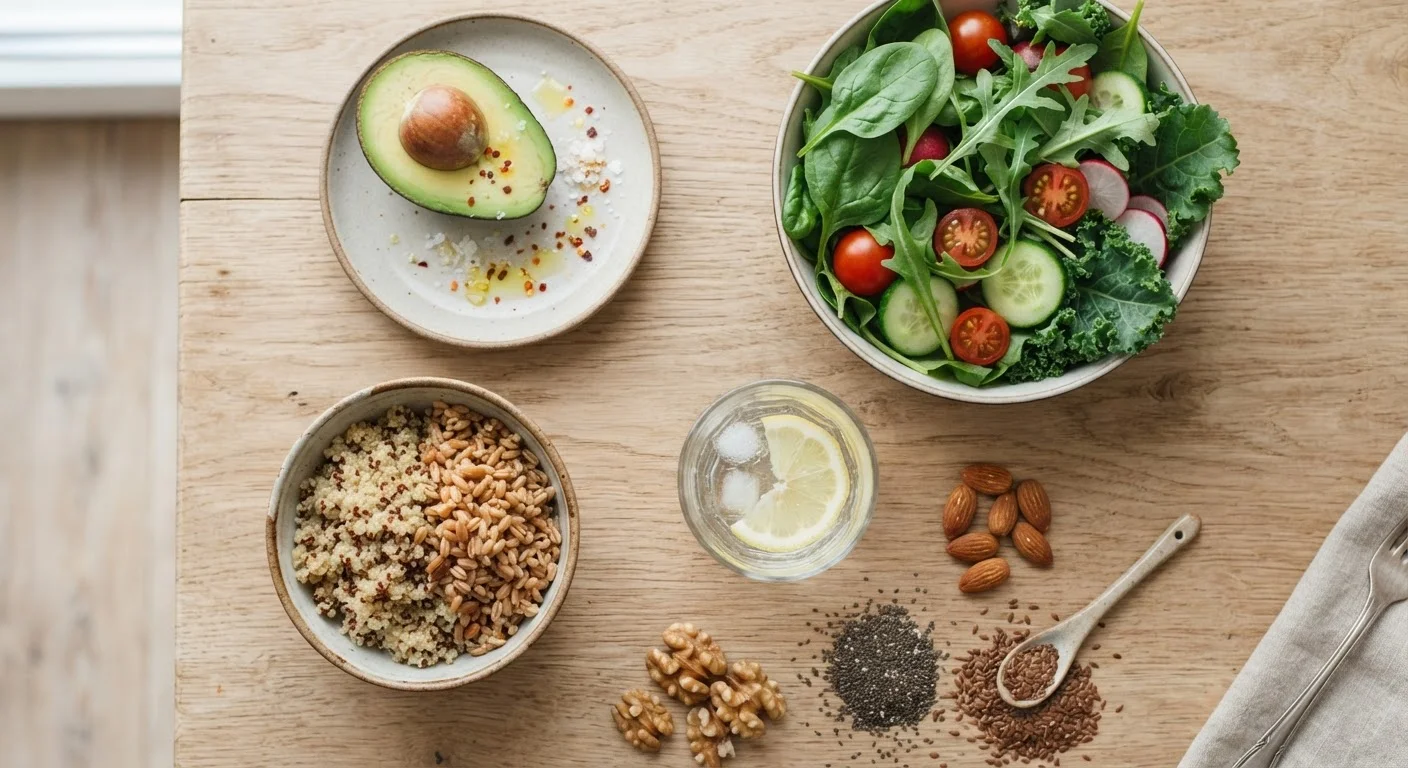
A meal of whole grains, vegetables, and olive oil can cover all three nutritional pillars at once.
Who should pay closer attention — and when to ask for help
Certain groups may have specific needs around fibre, fluids, and fat that general guidance doesn't fully address. People managing type 2 diabetes benefit particularly from fibre's blood sugar effects but should work with a healthcare provider on meal composition. Those with inflammatory bowel conditions may find high-fibre foods aggravate symptoms during flares — again, professional guidance is essential.
Women's fibre intake specifically tends to fall short of recommendations — our article on why women often miss their daily fibre target explores this gap in detail. Similarly, men often fall short on several key nutrients including fibre — see nutrients most men don't get enough of for population-level data.
If you have a chronic condition, are pregnant, or are managing a health concern, speak with a registered dietitian before making significant dietary changes. General guidance is a starting point, not a substitute for personalised care.
Registered dietitians can tailor fibre, hydration, and fat guidance to your specific health situation.
Building these habits into everyday eating
None of the habits described above require an overhaul of how you eat. The goal is gradual, sustainable progress — swapping refined grains for whole grains, keeping a water bottle within reach, and choosing olive oil or avocado as a regular fat source rather than an occasional treat.
A simple way to boost all three at once
Try building one meal each day around the 'plate method': fill half your plate with non-starchy vegetables (fibre), one quarter with whole grains (more fibre), and one quarter with a lean protein or plant protein. Add a small amount of healthy fat — a drizzle of olive oil, a few slices of avocado, or a small handful of nuts — and drink a full glass of water with the meal. This single habit addresses all three pillars without tracking or counting.
If you want to explore nutrition more broadly, our vitamins and minerals hub covers the micronutrients that work alongside fibre, water, and healthy fats to keep your body functioning well. Women looking for nutrition guidance relevant to their specific health needs can explore the Women's Nutrition hub for targeted information.
Supplements vs. whole foods for fibre
Fibre supplements (such as psyllium husk powder) can help people who struggle to meet needs through food alone. However, they don't deliver the full package of vitamins, minerals, antioxidants, and other beneficial compounds that whole plant foods provide. Whole foods remain the preferred source whenever possible. If you're considering a fibre supplement, discuss it with a healthcare provider first, especially if you take medications, as fibre can affect how some drugs are absorbed.
This article is for general informational purposes only and does not constitute medical or dietary advice. Always consult a qualified healthcare professional or registered dietitian before making significant changes to your diet, particularly if you have an existing health condition.