

Key Takeaways
Vitamin C (Ascorbic Acid)
Vitamin C is a water-soluble nutrient your body needs every day because it cannot make or store it on its own. It plays a role in dozens of biological processes — from building skin and connective tissue to helping your body absorb iron from plant-based foods. Most people know it as an immune-support vitamin, but that's only part of the story.
Chemically known as ascorbic acid, Vitamin C acts as an antioxidant and a cofactor for enzymes involved in collagen synthesis and neurotransmitter production.
The Immune Connection — and Why It's Incomplete
Vitamin C earned its reputation as an immune nutrient fairly, but that framing has crowded out a much fuller picture. It's one of the most versatile micronutrients in human nutrition, supporting processes that have nothing to do with fighting off a cold. For a broader foundation on how vitamins fit into your overall health, see our introduction to vitamins and minerals.
Yes, Vitamin C does support immune cell function — it accumulates in white blood cells and helps them work more effectively. But if immunity is the only reason you're thinking about this nutrient, you're missing several of its most important jobs.
“Vitamin C is one of the safest and most effective nutrients we know of. It is a critical cofactor in the synthesis of collagen, carnitine, and neurotransmitters, making it essential far beyond immune function.”
— Mark Levine, Senior Investigator, National Institutes of Health, and researcher on Vitamin C pharmacokinetics
Collagen, Wound Healing, and Your Skin
One of Vitamin C's most critical roles is helping your body produce collagen — the protein that holds together skin, tendons, cartilage, and blood vessels. Without adequate Vitamin C, collagen production stalls, which is why one of the first visible signs of serious deficiency is slow-healing wounds and fragile skin.
This isn't just a cosmetic concern. Collagen is structural. It keeps your gums attached to your teeth, your blood vessels intact, and your joints cushioned. The historical disease caused by severe Vitamin C deficiency — scurvy — was characterized by bleeding gums, bruising, and wounds that wouldn't close, all direct consequences of collagen breakdown.
For most people in the US, outright scurvy is rare. But subclinical, long-term shortfalls may still affect skin resilience and recovery from minor injuries over time.
Pair Vitamin C Foods With Iron-Rich Plant Foods
If you eat a plant-based or mostly plant-based diet, try eating your iron-rich foods — lentils, beans, spinach, fortified grains — alongside a Vitamin C source at the same meal. Simple combinations like tomato sauce over lentil pasta or bell pepper strips with hummus make this easy to do without tracking anything.
Iron Absorption: The Vitamin C–Iron Partnership
Here's a practical nutrition fact that often gets overlooked: Vitamin C significantly enhances your body's ability to absorb non-heme iron — the type of iron found in plant-based foods like lentils, spinach, and fortified cereals. It converts iron into a form that's easier for your intestines to absorb.
This makes Vitamin C especially relevant for people who eat little or no meat. Adding a squeeze of lemon to a lentil dish, or pairing spinach with sliced strawberries, isn't just a flavor move — it's a practical nutritional strategy. Our article on iron and women's health explores this relationship in more detail, particularly for those at higher risk of deficiency.
95 mg
Vitamin C in half a cup of raw red bell pepper
According to USDA FoodData Central, red bell pepper is one of the richest per-serving sources of Vitamin C, surpassing most citrus fruits.
~3×
Iron absorption increase with Vitamin C
Research published in nutritional science literature suggests Vitamin C can enhance non-heme iron absorption by up to threefold when consumed together in the same meal.
75–90 mg
Daily Vitamin C RDA for US adults
The National Institutes of Health Office of Dietary Supplements sets the RDA at 75 mg for adult women and 90 mg for adult men, with higher amounts recommended for smokers.
Food Sources Beyond Orange Juice
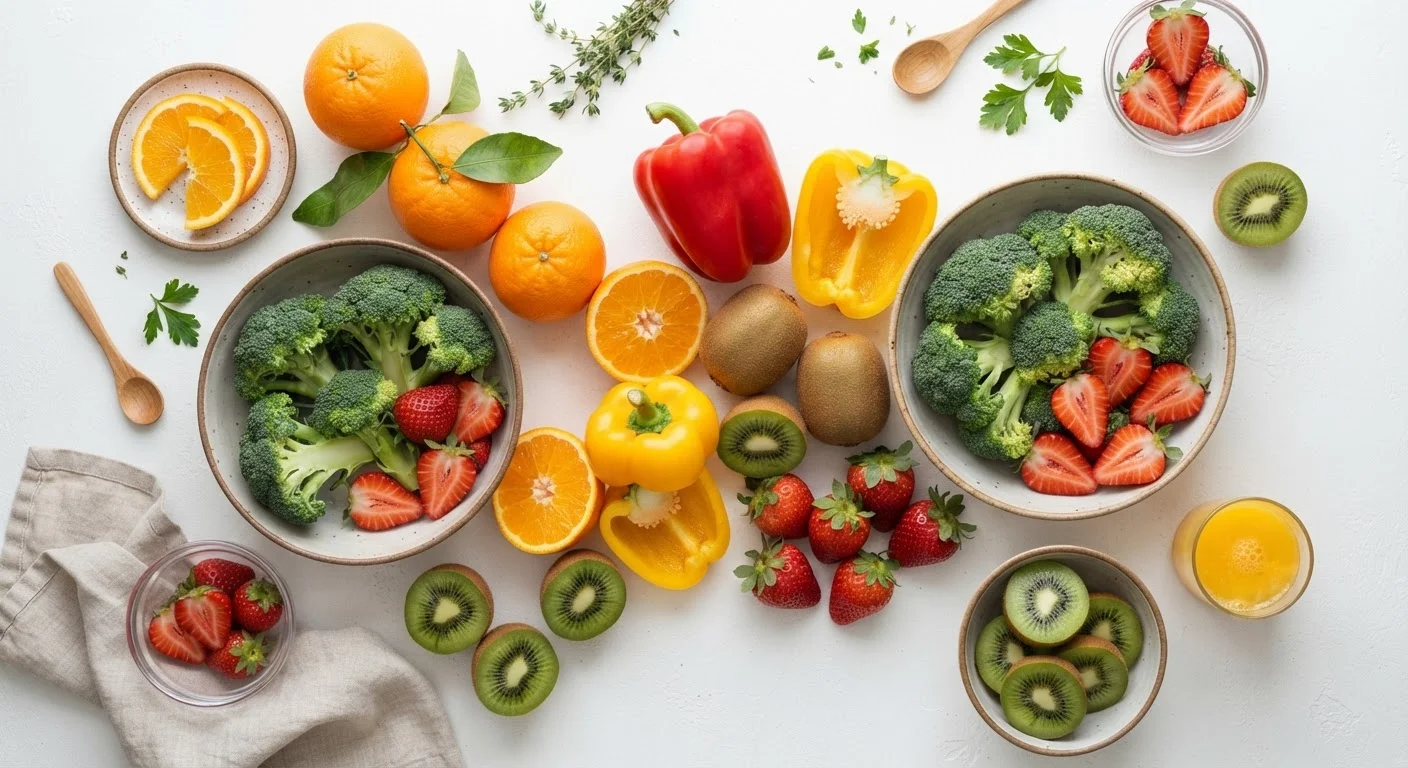
The orange-and-orange-juice association has been so strong for so long that many people are surprised to learn that red bell peppers contain nearly three times the Vitamin C of a medium orange. Other excellent sources include:
- Kiwifruit
- Broccoli and Brussels sprouts
- Strawberries
- Tomatoes and tomato juice
- Cantaloupe
- Raw leafy greens like kale
Because Vitamin C is water-soluble and sensitive to heat, raw or lightly cooked vegetables tend to retain more of it. That said, even cooked sources contribute meaningfully. Variety across the day is more important than focusing on any single food. For a full lookup of what each essential vitamin does and where to find it, see our practical reference guide to essential vitamins.
Who May Need to Pay Extra Attention
Most adults eating a reasonably varied diet meet their daily Vitamin C needs without thinking about it. However, certain groups may need to be more mindful:
- Smokers — Cigarette smoke depletes Vitamin C, and guidelines suggest smokers consume more than the standard daily recommendation.
- People with very restricted diets — Those avoiding fruits and vegetables for any reason face a higher risk of insufficient intake.
- People with certain absorption conditions — Some gastrointestinal conditions can reduce how well nutrients are absorbed.
If you fall into any of these groups, or if you're managing a chronic condition, speaking with a registered dietitian or physician is the most reliable path forward. This article is general health information and is not a substitute for personalized medical advice.
Vitamin C also works alongside other micronutrients. Its interaction with iron is one example; its role as an antioxidant also complements nutrients like zinc. Our overview of zinc's role in men's health touches on how these micronutrients intersect.
This article is for informational and educational purposes only and does not constitute medical advice. Always consult a qualified healthcare professional for guidance specific to your health situation.