

Key Takeaways
Zinc
Zinc is an essential mineral that your body cannot produce on its own, meaning it must come from food or supplements. It plays a critical role in hundreds of biological processes, including immune defence, wound healing, protein synthesis, and DNA production. For men specifically, zinc is also involved in testosterone regulation and reproductive function.
Zinc acts as a cofactor for more than 300 enzymes in the human body. It is classified as an essential trace element, meaning only small quantities are needed but those amounts are non-negotiable for normal physiological function.
What Zinc Actually Does in the Body
Zinc is involved in so many biological processes that it is difficult to overstate its importance. At the cellular level, it helps enzymes function, supports the replication of DNA, and enables proteins to fold into the shapes they need to do their jobs. Without adequate zinc, these foundational processes begin to falter.
From an immune standpoint, zinc helps activate T-cells — white blood cells that identify and destroy infected or cancerous cells. It also has antioxidant properties that help limit cellular damage caused by inflammation. This is why adequate zinc status is closely associated with a well-functioning immune system.
Zinc is equally important for tissue repair. When the skin or muscle is damaged, zinc drives the production of new cells and collagen, speeding up the healing process. This connection to wound healing also overlaps with skin health more broadly.
Zinc and Other Nutrients Work Together
Zinc does not work in isolation. Its absorption and function are influenced by other dietary factors, including copper and iron. High-dose zinc supplementation can deplete copper over time. Similarly, vitamin C supports wound healing in ways that complement zinc's role — see why vitamin C is more than just an immune booster for more. A balanced, varied diet generally keeps these relationships in healthy equilibrium.
For a broader look at how zinc fits alongside other key minerals, see our quick-reference mineral guide.
Why Zinc Matters Specifically for Men
While zinc is essential for everyone, men have a few additional reasons to pay attention to it. The testes require zinc to produce testosterone, the primary male sex hormone. Research has consistently shown that zinc deficiency is associated with lower testosterone levels, which can affect energy, mood, body composition, and libido.
Zinc also supports healthy sperm production and motility. Studies suggest that adequate zinc intake is linked to better sperm quality — a relevant consideration for men thinking about fertility.
The prostate gland contains one of the highest concentrations of zinc in the male body, though the exact implications of this for prostate health are still being studied. What is established is that zinc plays a regulatory role in prostate cell function.
11 mg
Daily zinc RDA for adult men
According to the National Institutes of Health Office of Dietary Supplements, adult men aged 19 and over require 11 mg of zinc per day.
40 mg
Tolerable upper intake level for adults
The NIH sets the Tolerable Upper Intake Level at 40 mg per day for adults; exceeding this regularly — usually via supplements — increases risk of adverse effects.
~17%
Global population estimated zinc-insufficient
A widely cited estimate in nutrition research suggests roughly 17% of the world's population may have insufficient zinc intake, with risk higher in regions dependent on plant staples.
Zinc is just one of several nutrients that many men fall short on. Our article on nutrients most men don't get enough of covers the broader picture.
Best Food Sources of Zinc
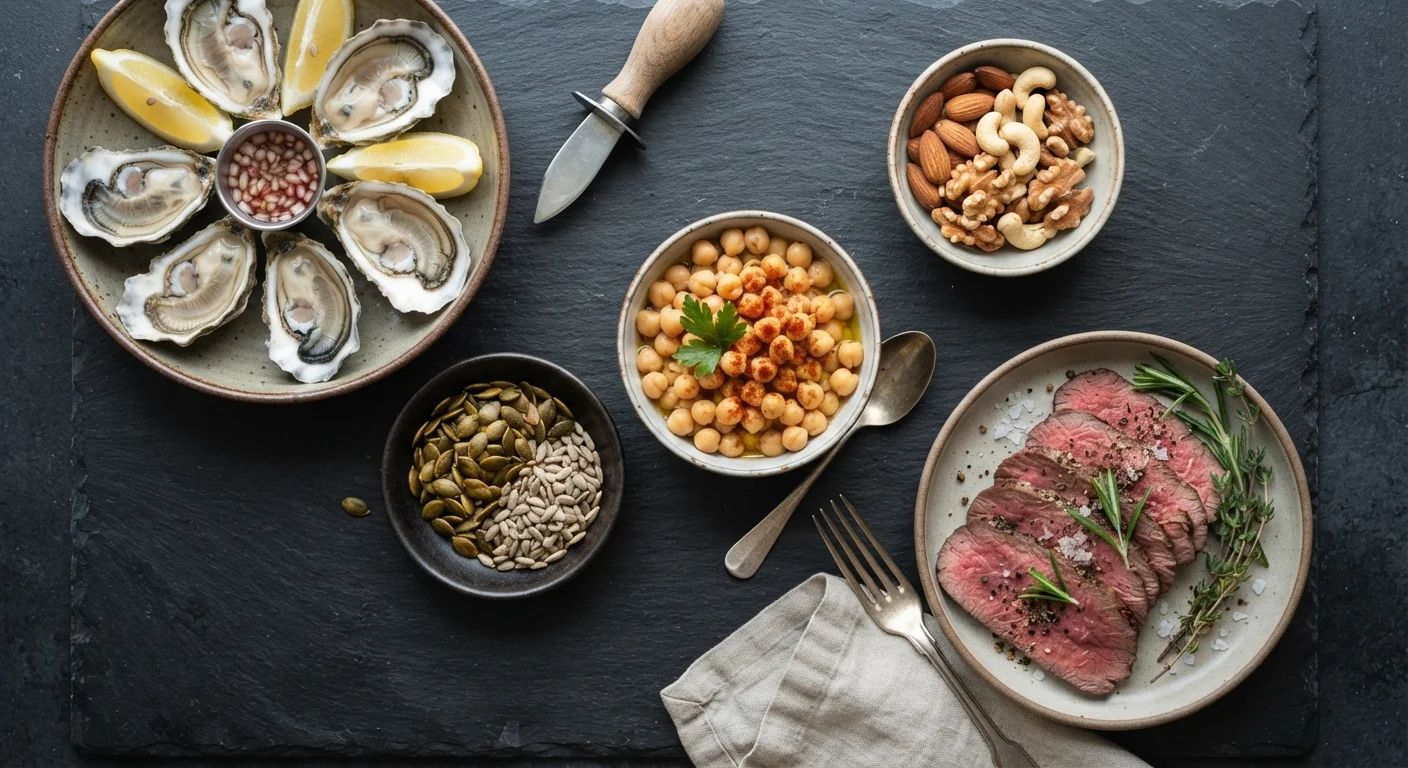
The most concentrated sources of zinc are animal-based foods. Oysters contain more zinc per serving than almost any other food. Beef, pork, lamb, chicken, and canned fish are all reliable sources that most men include in their regular diet.
Plant-based sources include pumpkin seeds, hemp seeds, chickpeas, lentils, black beans, cashews, and whole grains like oats and quinoa. Because plant foods contain phytates — compounds that bind to zinc and reduce how much is absorbed — men relying primarily on plant sources may need to consume more total zinc to meet their needs.
- Oysters – highest zinc content of any single food
- Beef and lamb – excellent bioavailable sources
- Pumpkin seeds – practical plant-based option
- Chickpeas and lentils – good for plant-forward diets
- Cashews and hemp seeds – easy to add to meals or snacks
For a fuller picture of how to plan nutritionally complete meals, explore our end-to-end men's nutrition resource.
Improve Zinc Absorption From Plant Foods
If you rely on legumes and grains for zinc, simple preparation steps can make a meaningful difference. Soaking dried beans and lentils overnight and then rinsing before cooking reduces phytate content. Sprouting grains and seeds has a similar effect. Pairing plant zinc sources with a protein-rich food may also modestly improve absorption.
Deficiency, Supplementation, and What to Watch For
Outright zinc deficiency is uncommon in men who eat varied diets, but suboptimal intake is more widespread. Men at higher risk include those who follow strict plant-based diets, have gastrointestinal conditions that impair absorption, consume significant amounts of alcohol regularly, or are older adults with reduced dietary variety.
If you suspect your zinc intake is low, the first step is a conversation with your doctor, who can arrange appropriate testing. Supplements are widely available, but exceeding recommended amounts consistently can cause problems — including interfering with copper absorption, which has its own downstream effects on health.
Food-first approaches are generally preferred. Zinc from whole foods comes packaged with other nutrients, and it is very difficult to consume toxic amounts through diet alone.
This article is for general informational purposes only and does not constitute medical or nutritional advice. If you have concerns about your zinc levels or overall nutritional status, please consult a qualified healthcare professional.