

Key Takeaways
Why Nutrition Labels Feel Confusing
You pick up a box at the supermarket, flip it over, and within seconds you're staring at a dense grid of numbers, percentages, and abbreviations. It can feel like you need a science degree to make sense of it all. You don't.
Nutrition labels follow a standardised format required by the FDA, which means once you know how to read one, you can read them all. The challenge is knowing which numbers actually matter for your health — and understanding that those priorities can shift depending on your life stage, activity level, and specific health goals.
For women especially, certain nutrients tend to be under-consumed. Our guide to nutrients commonly under-consumed by women is a useful companion to this walkthrough if you want to understand the "why" behind what you're looking for.
What you will need
How to Read a Nutrition Label, Step by Step
Work through the label from top to bottom — each section builds on the one before it. Once this sequence becomes habit, you'll spend less time second-guessing in the aisle and more time making choices you feel confident about.
Start with Serving Size
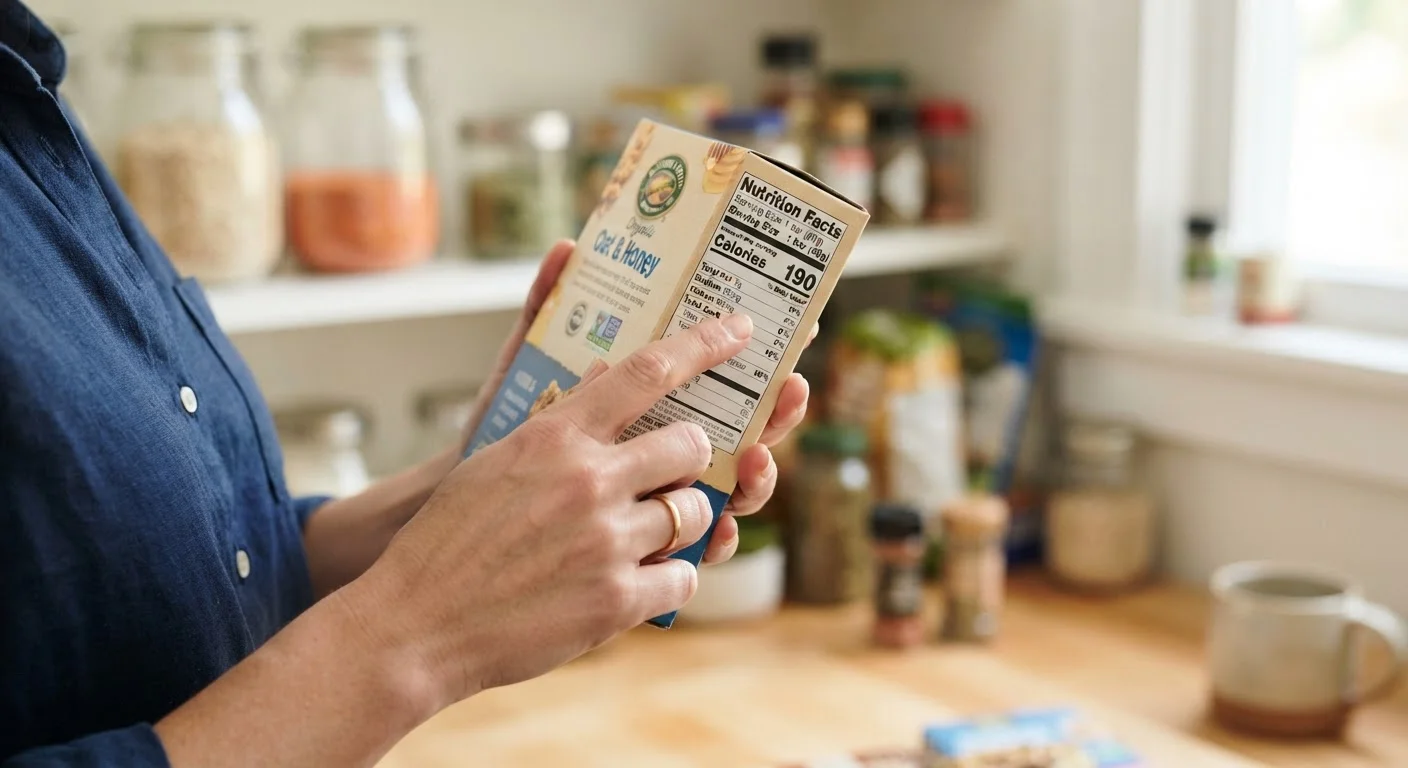
The very first line after the "Nutrition Facts" heading tells you the serving size — for example, "2 cookies (28g)" or "1 cup (240mL)." Every single number on the rest of the label is based on this amount, not the whole package.
Check how many servings are in the container. A bag that appears single-serve may contain two or three servings, meaning you'd need to multiply every value by that number to understand what you actually consumed.
Note the Calories
Calories are displayed prominently below the serving size. This number tells you how much energy one serving provides. Calories aren't inherently good or bad — they're simply a unit of energy — but knowing the count helps you understand where a food fits within your overall eating pattern.
Review the Macronutrients
Below the calories you'll find three macronutrients — fat, carbohydrates, and protein. Each is broken down further:
- Fat: Look at the sub-lines for saturated fat and trans fat. Saturated fat is worth moderating; trans fat should ideally be zero.
- Carbohydrates: Broken into dietary fiber and total sugars (with a separate line for added sugars). Fiber is generally beneficial; added sugars are worth keeping an eye on.
- Protein: Listed as a total — no sub-lines. Protein supports muscle, bone health, and satiety.
Use the % Daily Value as a Guide
The column on the right shows % Daily Value (%DV) for most nutrients. This percentage is based on a reference diet of 2,000 calories per day — a general benchmark, not a personal prescription.
A simple rule of thumb: 5% DV or less is considered low for a nutrient; 20% DV or more is considered high. Use this to quickly identify whether a food is a meaningful source of a nutrient or not.
For a deeper look at what micronutrient percentages actually mean in practice, this breakdown of micronutrient percentages explains the figures clearly.
Check the Ingredient List
The ingredient list appears below or beside the Nutrition Facts panel. Ingredients are listed in descending order by weight — the first ingredient is the one present in the largest amount.
Scan for: where sugar appears (multiple sugar names early in the list signal a high-sugar product), whether whole foods feature prominently, and how long the list is overall. A shorter list generally means less processing, though this isn't a universal rule.
Make It a Quick Habit, Not a Chore
You don't need to analyse every label every time. Pick two or three key numbers relevant to your current goals — say, added sugar and fiber — and focus on those consistently. Over time, pattern recognition builds naturally and label-reading becomes second nature.
What Women Should Pay Extra Attention To
General nutrition guidelines are written for a broad adult population, but women have distinct physiological needs at different life stages. Here's where the label becomes especially relevant:
- Iron: Women of reproductive age need roughly twice as much iron as men. A label showing 20% or more DV per serving is a meaningful contribution. Pair iron-rich foods with vitamin C sources to support absorption.
- Calcium and Vitamin D: Both support bone density — a concern that grows more significant after perimenopause. Look for these on dairy, fortified plant milks, and leafy green products.
- Folate/Folic Acid: Essential during pregnancy planning and early pregnancy. Fortified cereals and grains often list this prominently.
- Added Sugars: The label separates "total sugars" from "added sugars." The added sugars line tells you how much sweetener was introduced during processing — this is the figure most linked to health concerns when consistently high.
For a broader view of how these nutrients fit into your daily meals, see what a balanced plate actually looks like.
Labels Have Limits — Context Still Matters
A nutrition label reflects the composition of a single food in isolation. It doesn't tell you how that food interacts with the rest of your diet, your personal health history, or your specific nutritional needs. Use labels as one tool among many, and speak with a registered dietitian if you're navigating a health condition, pregnancy, or significant dietary change.
This article is for general informational purposes only and does not constitute medical or dietary advice. Speak with a registered dietitian or your healthcare provider for guidance personalised to your health needs.