

Key Takeaways
A Balanced Plate
A balanced plate is a meal assembled so that different food groups appear in proportions that collectively provide the nutrients your body needs. Rather than eliminating any food group, it emphasizes relative amounts — more vegetables, moderate protein, and controlled portions of grains and fats. The goal is variety and proportion, not perfection at every single meal.
The USDA's MyPlate model and Harvard's Healthy Eating Plate are two evidence-informed visual frameworks that guide these proportions, though individual needs may vary based on age, activity level, and health status.
The Plate, Not the Diet
Nutrition advice often arrives in sweeping, all-or-nothing terms: cut carbs entirely, eat only protein, eliminate fat. These messages are both confusing and, for most people, unsustainable. A more grounded starting point is something far simpler — the plate in front of you.
Understanding what a balanced diet actually means is the foundation, but translating that into a physical meal is where most people need practical help. The plate model gives you a concrete, visual framework that works regardless of cuisine, cooking skill, or budget.
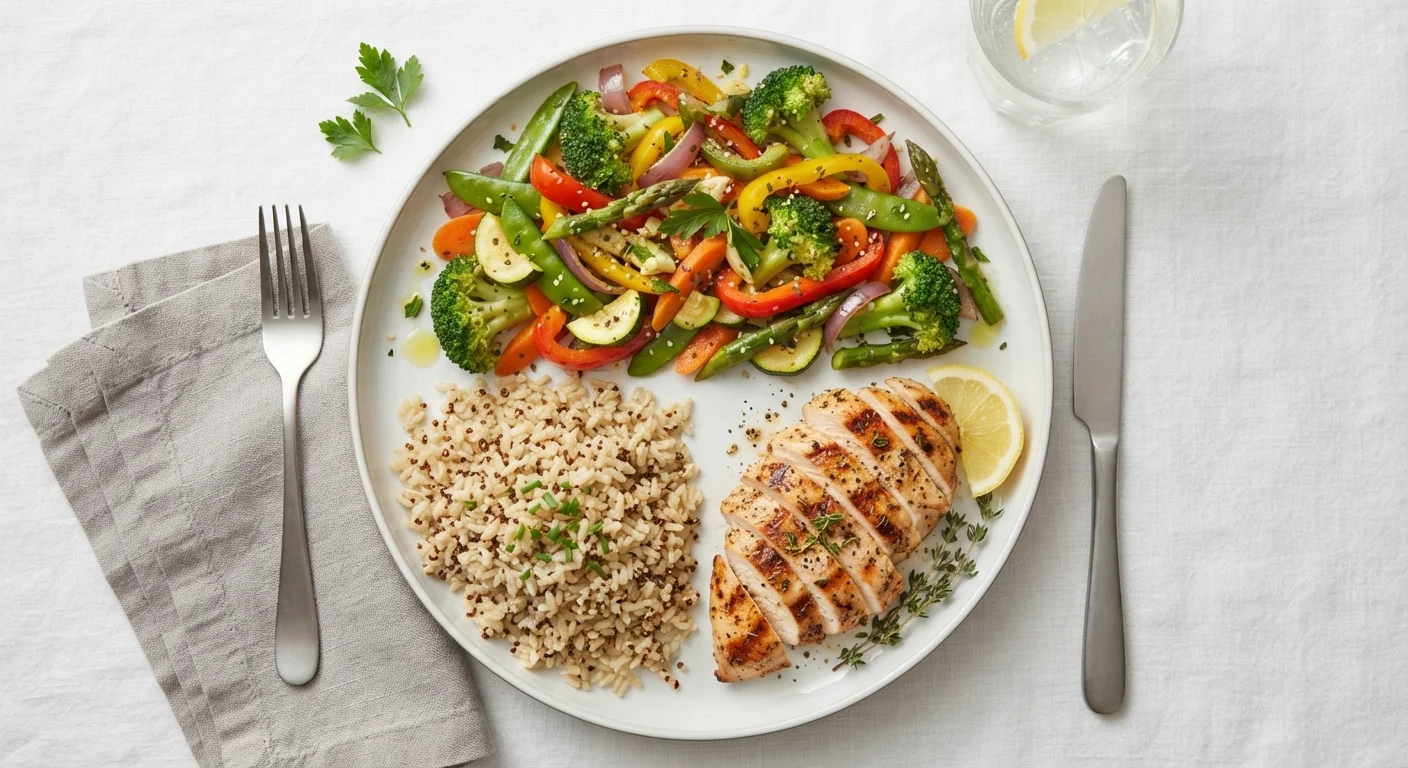
Think of your plate as divided into zones. These zones represent food groups — and the amount of space each group occupies reflects its recommended proportion in a healthy meal. This isn't about restriction; it's about structure.
Breaking Down the Proportions
The two most widely referenced plate frameworks — the USDA's MyPlate and Harvard's Healthy Eating Plate — share a core logic, even if they differ in some details. Here's how the proportions generally break down for a typical meal:
- Half the plate: Vegetables and fruit. This is the largest zone. Non-starchy vegetables — leafy greens, broccoli, peppers, carrots — should dominate. Fruit can supplement, but vegetables are the priority at lunch and dinner.
- One quarter: Whole grains or starchy vegetables. Brown rice, whole wheat bread, oats, quinoa, or sweet potato all qualify. Whole grains retain fiber and micronutrients that refined grains lose during processing.
- One quarter: Lean protein. Beans and legumes, fish, poultry, eggs, tofu, or low-fat dairy all fit here. Red and processed meats can be included occasionally, though major health bodies recommend limiting them.
- A small addition: Healthy fats. Olive oil for cooking, a few slices of avocado, or a handful of unsalted nuts add essential fatty acids without crowding out other food groups.
50%
Recommended plate share for vegetables and fruit
Both the USDA MyPlate and Harvard's Healthy Eating Plate recommend that half of every meal consist of vegetables and fruit, with vegetables prioritized.
90%
US adults falling short on vegetables
According to CDC dietary surveillance data, approximately 9 in 10 American adults do not consume the recommended daily amount of vegetables.
3x
Higher fiber in whole vs. refined grains
Whole grains generally contain significantly more dietary fiber than their refined counterparts, supporting digestive health and prolonged satiety, according to nutrition research.
Water or an unsweetened beverage completes the picture. Sugary drinks add significant calories with minimal nutritional value and are best treated as occasional choices rather than everyday staples.
Why Proportions Matter More Than Perfection
One of the most liberating insights in nutrition science is this: no single food determines your health, and no single meal makes or breaks a diet. What shapes your wellbeing is the pattern of choices made across days and weeks.
Start With One Meal, Not Your Whole Diet
Overhauling everything at once is one of the most common reasons people abandon healthy eating intentions. Instead, choose one meal — typically lunch or dinner — and focus on adjusting its proportions for a week. Once that feels natural, apply the same approach to another meal. Small, consistent changes compound into meaningful long-term habits.
This means a meal that leans heavy on grains one evening can be balanced by an extra serving of vegetables the next morning. Flexibility isn't a loophole — it's built into how evidence-based dietary guidelines are designed.
For those looking at how plate-building applies to specific contexts, building a balanced plate for men's nutrition and a practical framework for women both offer tailored starting points. The underlying proportions remain consistent; individual calorie and nutrient needs are what shift.
Putting It Into Practice
Applying the plate model doesn't require special ingredients or elaborate recipes. Consider a few everyday scenarios:
If you'd like to go further, learning to read a nutrition label without confusion can help you make informed choices when shopping for packaged foods. And exploring the Balanced Diet Basics hub provides a full library of foundational nutrition guidance.
This article is for general informational and educational purposes only and does not constitute medical or dietary advice. Individual nutritional needs vary. Please consult a registered dietitian or qualified healthcare professional before making significant changes to your diet, especially if you have an existing health condition or specific nutritional requirements.