

Key Takeaways
Why Women's Nutritional Needs Differ
Women's bodies are shaped by hormonal cycles, reproductive transitions, and body-composition patterns that genuinely shift nutrient demands throughout life. Teenage girls, pregnant women, and women approaching menopause all face meaningfully different nutritional requirements — and even within a single adult decade, monthly hormonal fluctuations affect how efficiently the body uses certain nutrients like iron and magnesium.
That's not an excuse for overcomplicated eating. It's simply a reason to approach meal-building with your biology in mind. For a broader look at sustainable eating routines, see our complete overview of healthy eating habits.
This article is for general informational purposes only and is not a substitute for personalised medical or dietary advice. Please consult a qualified healthcare professional for guidance specific to your health needs.
The Balanced Plate Framework
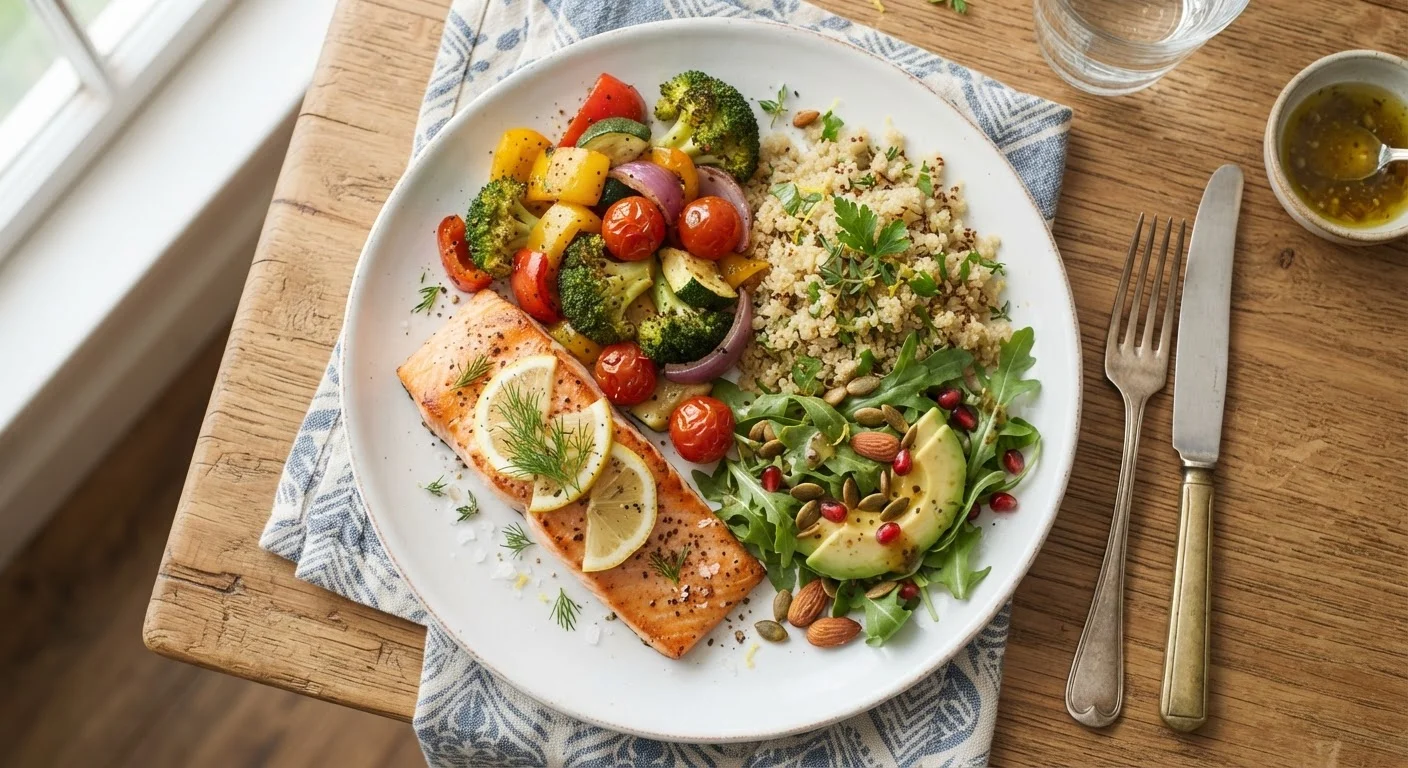
Rather than counting every calorie or following a rigid meal plan, a plate-based visual model gives you a flexible, repeatable structure. Here's how the proportions generally work for most women:
- Half the plate — vegetables and fruit. Prioritise non-starchy vegetables (leafy greens, broccoli, peppers, courgette) with fruit playing a supporting role.
- One quarter — quality carbohydrates. Whole grains like oats, brown rice, quinoa, or starchy vegetables such as sweet potato offer fibre and steady energy.
- One quarter — lean protein. Eggs, legumes, fish, poultry, tofu, or low-fat dairy all count.
- A small portion of healthy fat. Think avocado, nuts, seeds, or olive oil used in cooking.
This isn't a prescription — it's a flexible guide. For a visual breakdown of what these proportions look like in practice, see what a balanced plate actually looks like in a real meal context.
Anchor every meal around a generous portion of vegetables
Vegetables deliver fibre, micronutrients, and antioxidants that are foundational to women's health at every life stage. Most women eat well below recommended amounts, and increasing vegetable intake is one of the highest-impact dietary changes available. Variety across colours and types broadens the range of nutrients consumed.
Include a protein source at every meal, not just dinner
Protein supports lean muscle mass, which women naturally lose more readily with age. It also plays a key role in satiety hormones, helping to stabilise appetite and reduce energy dips. Spreading intake across the day is more effective than concentrating it in one meal.
Choose whole grains over refined carbohydrates most of the time
Whole grains retain their fibre and micronutrient content — particularly B vitamins and magnesium — which refined grains largely lose in processing. Fibre supports digestive health and helps regulate blood sugar, both of which affect energy and mood throughout the day.
Don't fear dietary fat — focus on its source
Healthy fats from whole foods are essential for absorbing fat-soluble vitamins (A, D, E, and K) and for producing the hormones that regulate the menstrual cycle and menopause transition. Avoiding all fat can inadvertently limit these processes. The quality and context of fat matters more than the quantity.
Hydrate consistently throughout the day, not just when thirsty
Thirst is a lagging signal — by the time it registers, mild dehydration may already be affecting concentration and energy. Women's fluid needs vary with activity, climate, and life stage, but plain water and water-rich foods like cucumbers and soups all contribute. Adequate hydration also supports kidney function and skin health.
Nutrients Women Should Pay Closest Attention To
Population data consistently shows that women are most likely to fall short on a handful of specific nutrients. Being aware of them helps you shop and cook more intentionally — without obsessing over numbers.
1 in 4
Women with iron deficiency anaemia
According to the World Health Organization, iron deficiency anaemia affects approximately one in four women of reproductive age globally.
~50%
Women below recommended calcium intake
Research from national dietary surveys in the US suggests roughly half of adult women consume less calcium than the recommended daily amount.
Iron is lost through menstruation each month, making deficiency particularly common in women of reproductive age. Pairing iron-rich foods (lentils, red meat, fortified cereals, spinach) with a source of vitamin C improves absorption. Calcium and vitamin D work together to protect bone density — especially important as women lose bone mass more rapidly in the years around menopause. Folate is critical during the childbearing years because it supports healthy cell division; women who are or may become pregnant are typically advised to speak with their doctor about supplementation. Omega-3 fatty acids, found in oily fish, walnuts, and flaxseed, are associated with cardiovascular and hormonal health — our overview of omega-3 fatty acids covers the evidence in detail.
If you're unsure whether your daily meals are covering the basics, the daily nutrition checklist for beginners is a useful, low-effort audit tool.
Special Populations: A Note on Individual Needs
Pregnant women, breastfeeding mothers, adolescent girls, and women managing chronic health conditions all have nutritional requirements that go beyond general guidance. If you fall into any of these groups, the plate framework is a helpful starting point — but it should be tailored with the support of a registered dietitian or your primary care provider. Do not start or stop any supplement without professional guidance.
Putting It Into Practice
Knowing the framework is one thing; applying it on a busy Tuesday evening is another. A few practical habits make the biggest difference over time.
If structure helps, meal planning has real benefits — and some limitations worth knowing. Building a plate you actually enjoy eating is always the first priority. The goal isn't dietary perfection; it's a consistent pattern that supports your energy, health, and wellbeing across the long term.
“You don't have to eat perfectly to be healthy. It's what you eat consistently over time, not occasionally, that shapes your wellbeing.”
— Ellie Krieger, Registered dietitian nutritionist and public health nutrition author