

Key Takeaways
Why Nutrition Labels Matter for Everyday Choices
The Nutrition Facts label is a federally standardized panel required on most packaged foods sold in the United States. It was designed to give consumers a consistent, comparable snapshot of what they're eating — but many people find it confusing, easy to ignore, or difficult to apply in real grocery-store moments.
The good news: you don't need to become a nutrition scientist to use labels effectively. You only need to focus on a small number of fields, understand a few key concepts, and practice applying them. Over time, scanning a label becomes second nature.
This guide walks through the label section by section, starting with the most foundational element — serving size — and ending with the ingredient list. For a complementary perspective on reading nutrition labels for everyday decisions, that walkthrough covers how to decide which numbers deserve your attention in different eating contexts.
What you will need
Before you begin, gather your materials:
Packaged food with a Nutrition Facts label
Your hands-on reference for practicing each step in this guide.
Pen and notepad (or notes app)
Useful for jotting down observations as you work through a label.
Step-by-Step: Decoding the Label
Work through the following steps using any packaged food with a Nutrition Facts label. The steps are designed to build on each other, so reading them in order is recommended the first time through.
Find and read the serving size
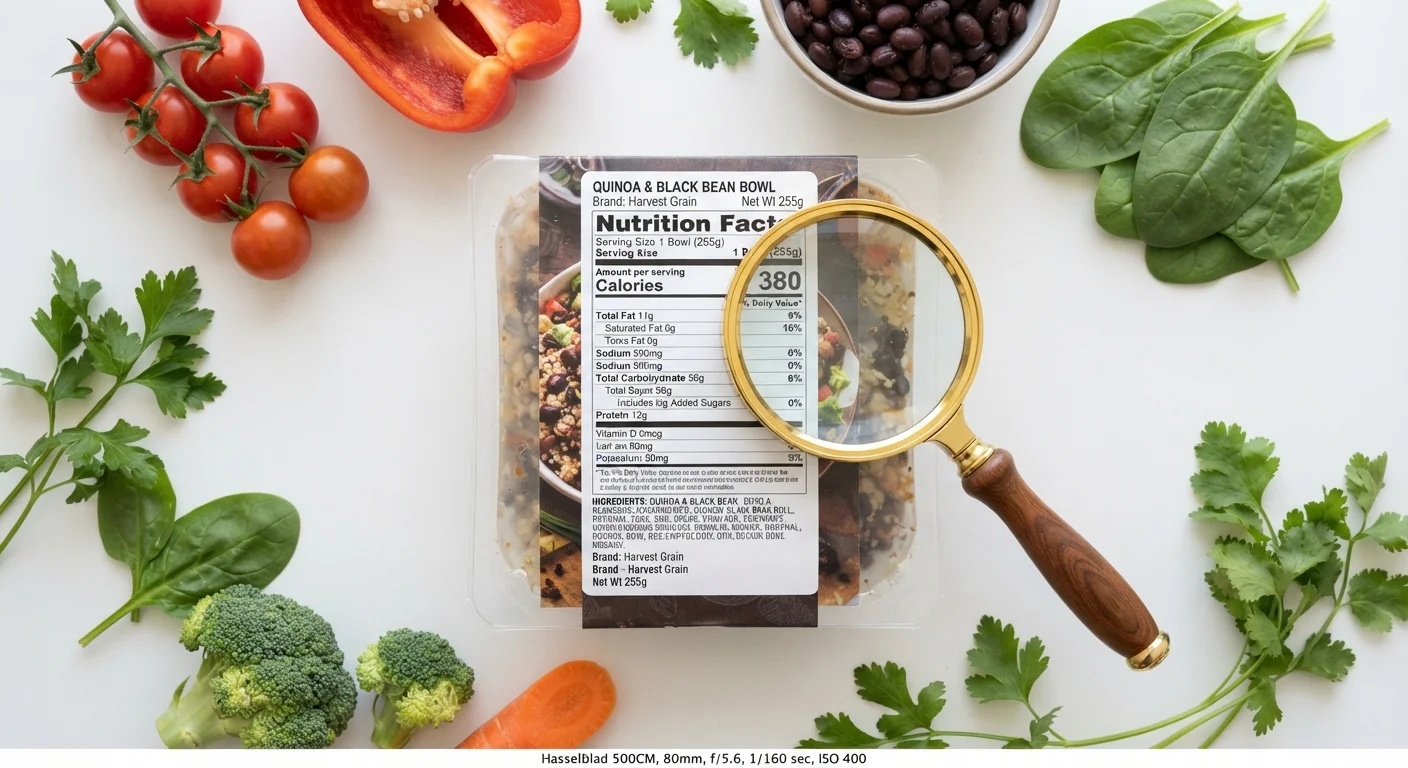
Every figure on a Nutrition Facts label — calories, fat, sodium, vitamins — is based on one serving, not the whole package. The serving size is printed near the top of the label in a bold, larger font.
Check two things: the serving size description (e.g., 1 cup or 3 crackers) and the number of servings per container. If the package contains 2.5 servings and you eat the whole thing, multiply every number by 2.5 to get your actual intake.
Check the calorie count in context
Calories appear in large type directly below the serving size. They tell you how much energy one serving provides. The FDA considers 400 or more calories per serving to be high and 40 or fewer to be low for a general reference.
Calories alone don't tell you whether a food is nutritious. A handful of mixed nuts and a candy bar can have similar calorie counts but very different nutritional profiles. Use calories as one data point, not the whole story. For more on this concept, see how portion sizes and energy balance are connected.
Understand % Daily Value (%DV)
The right-hand column on a Nutrition Facts label shows % Daily Value, which tells you how much of a nutrient one serving contributes toward a general daily reference amount. This reference is based on a 2,000-calorie diet — your actual needs may differ.
A quick rule of thumb from the FDA: 5% DV or less is considered low for a nutrient; 20% DV or more is considered high. Use this to quickly identify foods that are high in nutrients you want more of (such as fiber or calcium) or high in nutrients to moderate (such as sodium or saturated fat).
To understand what these percentages mean for vitamins and minerals specifically, see what micronutrient percentages actually mean.
Identify nutrients to moderate and nutrients to seek
The Nutrition Facts label is organized to support informed choices. Nutrients grouped toward the top — saturated fat, trans fat, sodium, and added sugars — are ones most Americans consume in excess, so lower %DVs are generally preferable.
Nutrients grouped toward the bottom — dietary fiber, vitamin D, calcium, iron, and potassium — tend to be under-consumed in the general US diet, so higher %DVs here are beneficial.
Trans fat is one nutrient where the goal is as close to zero as possible. Even small amounts, consumed consistently, are associated with cardiovascular risk according to dietary health authorities.
Read the ingredient list
Below the Nutrition Facts panel, you'll find the ingredient list. Ingredients are listed in descending order by weight — the first ingredient makes up the largest proportion of the product.
If a whole food (such as whole wheat flour, oats, or tomatoes) appears first or second, that's a meaningful signal about the product's composition. If added sugars appear multiple times under different names — such as high-fructose corn syrup, cane sugar, dextrose, or maltose — their combined contribution may be higher than any single listing suggests.
A shorter ingredient list often (though not always) indicates less processing. Recognizable ingredients are generally a positive sign, but heavily processed foods can also contain familiar names.
Put it all together when comparing products
Label reading becomes most powerful when you compare two similar products side by side — for example, two breakfast cereals or two yogurt varieties. Make sure both are displayed in the same serving size before comparing figures; if not, adjust the numbers proportionally.
Look for differences in added sugars, sodium, fiber, and protein as starting points. These four often vary meaningfully between similar products and have well-established connections to dietary quality. For a broader walkthrough of label decisions, this field guide for everyday shoppers goes deeper into practical decision-making.
Don't Judge a Food by One Number
Fixating on a single nutrient — such as calories or fat — can be misleading. A food that is high in fat may also be rich in beneficial nutrients, while a low-calorie item may offer little nutritional value. Always look at the label as a whole before drawing conclusions.
Practice With One Label Today
Pick up any packaged item in your kitchen and locate the serving size, total fat, sodium, and the first three ingredients. You don't need to analyze everything at once — building familiarity one label at a time makes the skill stick. Our daily nutrition checklist can help you connect label reading to your broader eating habits.
Labels Inform — They Don't Diagnose
Nutrition labels are a general educational tool, not a medical guide. If you have a specific health condition, food allergy, or dietary requirement, consult a registered dietitian or your healthcare provider before making significant changes to your diet. This article provides general information only and is not medical advice.
This article is for informational purposes only and is not medical advice. Always consult a qualified healthcare professional for guidance tailored to your individual health needs.