

Key Takeaways
Start here
What Is the Immune System?
Next
The Two Lines of Defense
Go deeper
Key Players: Cells, Antibodies, and Organs
Understand risks
What Can Go Wrong?
Apply it
Supporting Your Immune Health
What Is the Immune System?
The immune system is a vast, interconnected network of cells, tissues, and organs whose primary job is to defend your body against threats — including bacteria, viruses, fungi, parasites, and even your own cells when they malfunction. It operates continuously and largely without your awareness.
Think of it less like a single shield and more like a layered security system with guards, sensors, rapid-response units, and a long-term intelligence database. Each component plays a distinct role, but they communicate and cooperate to mount a coordinated defense.
For a detailed look at what happens from the moment a pathogen gets inside you, see what actually happens inside your body during an infection.
Antigen
A molecule — usually found on the surface of a pathogen — that the immune system recognizes as foreign and uses as a target.
Antibody
A Y-shaped protein produced by immune cells that binds to a specific antigen to neutralize or flag pathogens for destruction.
Pathogen
Any microorganism that can cause disease, including bacteria, viruses, fungi, and parasites.
Cytokine
Small signaling proteins released by immune cells to communicate and coordinate the body's response to infection or injury.
Lymphocyte
A category of white blood cell that includes T cells and B cells — the core cells of the adaptive immune response.
Inflammation
A protective response by the immune system that increases blood flow and immune cell activity to an affected area; it can cause redness, swelling, and heat.
The Two Lines of Defense
Immunologists broadly divide immune responses into two systems that work in sequence.
Innate Immunity
This is your body's first and fastest line of defense. It activates within minutes to hours of detecting a threat. The innate system doesn't distinguish between one virus and another — it recognizes broad patterns that signal danger and immediately responds with inflammation, fever, and cellular attack. Skin and mucous membranes are part of this layer too, acting as physical barriers before any cell-level response is needed.
Adaptive Immunity
When the innate system flags a specific invader, the adaptive immune system takes over — usually within several days. This response is precise. Specialized cells identify the exact pathogen, mount a targeted attack, and — crucially — store a memory of it. This memory is why you rarely get chickenpox twice, and it's the biological foundation that makes vaccines effective. Learn more about that process in how vaccines train the immune system.
Key Players: Cells, Antibodies, and Organs
Several distinct components make the immune system work.
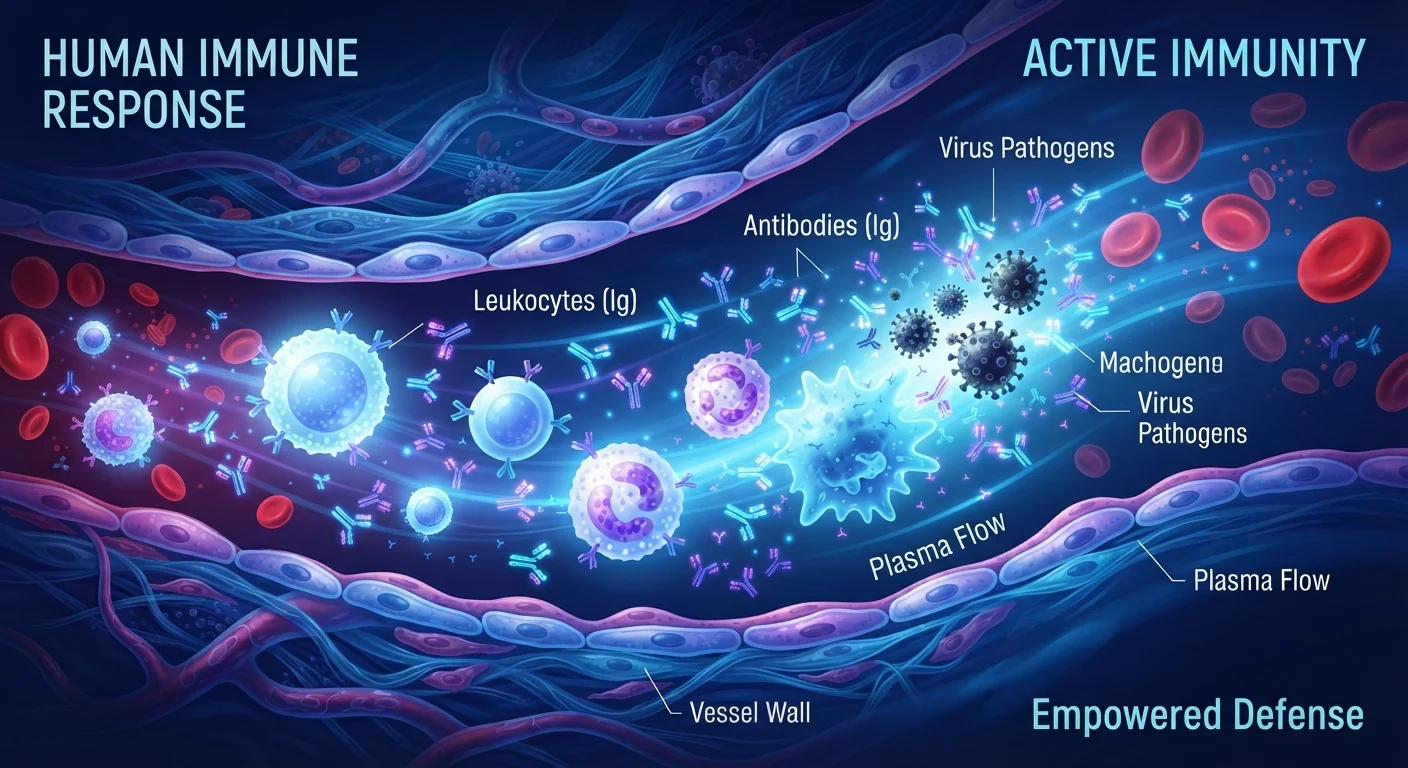
- White blood cells (leukocytes): The core immune cells, produced in bone marrow. Subtypes include neutrophils (fast responders that engulf bacteria), macrophages (patrol cells that consume debris and signal other immune cells), T cells (direct killers and coordinators), and B cells (antibody producers).
- Antibodies: Y-shaped proteins secreted by B cells that recognize and bind to specific antigens — molecular markers on the surface of pathogens. This binding can neutralize threats directly or mark them for destruction.
- Lymph nodes and spleen: Filtering stations where immune cells congregate, communicate, and intercept pathogens traveling through lymph fluid or blood.
- Thymus: A gland where T cells mature and are trained to distinguish the body's own cells from foreign ones.
- Gut-associated lymphoid tissue (GALT): A significant portion of immune activity occurs in the gastrointestinal tract. The gut microbiome plays a recognized role in immune regulation — one reason gut health matters far beyond digestion.
For a plain-language glossary of these and other immune terms, see key immune system terms every adult should know.
Understanding Immune Memory
When B cells encounter a specific pathogen, some become "memory cells" that persist for years or even a lifetime. If the same pathogen appears again, these memory cells enable a faster, stronger response — often clearing the infection before you notice symptoms. This is the same principle vaccines leverage to build protection.
What Can Go Wrong?
The immune system can fail in three broad ways.
Immunodeficiency
When the immune system is underactive or partially absent, the body struggles to fight off infections that a healthy person handles easily. This can be inherited (as in primary immunodeficiency disorders) or acquired (as in HIV infection, or as a side effect of certain medications).
Autoimmunity
Sometimes the immune system misidentifies the body's own tissues as foreign and attacks them. Conditions such as rheumatoid arthritis, lupus, and Type 1 diabetes fall into this category. Understanding this failure mode is explored in depth in when your immune system turns on itself.
Hypersensitivity
Allergies and asthma are examples of an immune system that over-reacts to harmless substances — pollen, pet dander, certain foods — treating them as genuine threats and triggering inflammation that causes symptoms.
Don't Self-Diagnose Immune Problems
Frequent colds, fatigue, or slow healing can have many causes — most of them unrelated to serious immune dysfunction. Avoid drawing conclusions about your immune health from symptoms alone. A healthcare provider can order appropriate tests and provide an accurate assessment.
Supporting Your Immune Health
No single food, supplement, or habit can "supercharge" the immune system — that framing is not supported by clinical evidence. What research does consistently show is that foundational lifestyle factors create the conditions for normal, healthy immune function:
- Sleep: During sleep, the body produces cytokines — signaling proteins essential to immune response. Chronic sleep deprivation is associated with reduced immune efficiency.
- Nutrition: Micronutrients including vitamins C, D, zinc, and selenium support immune cell production and function. A varied, whole-food diet is the most evidence-based approach.
- Physical activity: Moderate, regular exercise is associated with improved immune surveillance. Extreme over-training without recovery, however, can temporarily suppress immunity.
- Stress management: Prolonged psychological stress elevates cortisol, which can suppress immune responses over time.
- Not smoking: Smoking impairs the respiratory tract's physical defenses and alters immune cell behavior.
If you have specific concerns about your immune health — including recurring infections, unexplained symptoms, or a known condition — speak with a qualified healthcare provider. This article provides general educational information and is not a substitute for personalized medical advice.
This article is for informational purposes only and does not constitute medical advice. Always consult a qualified healthcare professional regarding any health concerns or before making changes to your care.
Supplements Are Not a Substitute
Many supplements are marketed with immune health claims, but evidence for most is limited or mixed. The NIH cautions that supplements should complement — not replace — a healthy diet and lifestyle. Discuss any supplement use with your healthcare provider, especially if you take medications or have existing health conditions.