

Key Takeaways
Infection
An infection occurs when harmful microorganisms — such as bacteria, viruses, fungi, or parasites — enter your body and begin to multiply. Your immune system detects these invaders and mounts a defense to eliminate them. The symptoms you feel during an illness are largely the result of this internal battle, not just the pathogen itself.
Clinically, an infection is distinguished from colonization: colonization means a microorganism is present without causing tissue damage or an immune response, while infection involves active host-pathogen conflict.
Step One: Breaking Through Your Body's Defenses
Before any infection can take hold, a pathogen must overcome your body's first line of defense. Your skin, the mucous membranes lining your nose and throat, saliva, stomach acid, and tiny hair-like structures called cilia all work to physically block or expel foreign invaders. These barriers eliminate the vast majority of pathogens before they ever reach deeper tissue.
When a pathogen does breach these defenses — through a cut in the skin, an inhaled droplet that reaches the lungs, or contaminated food that survives stomach acid — it gains access to tissue where it can begin to replicate. Understanding how infections spread helps explain why different pathogens target different entry points. Not all invaders are the same, either — bacteria, viruses, fungi, and parasites each behave differently once inside the body.
The Innate Response: Your Body's Rapid Reaction Force
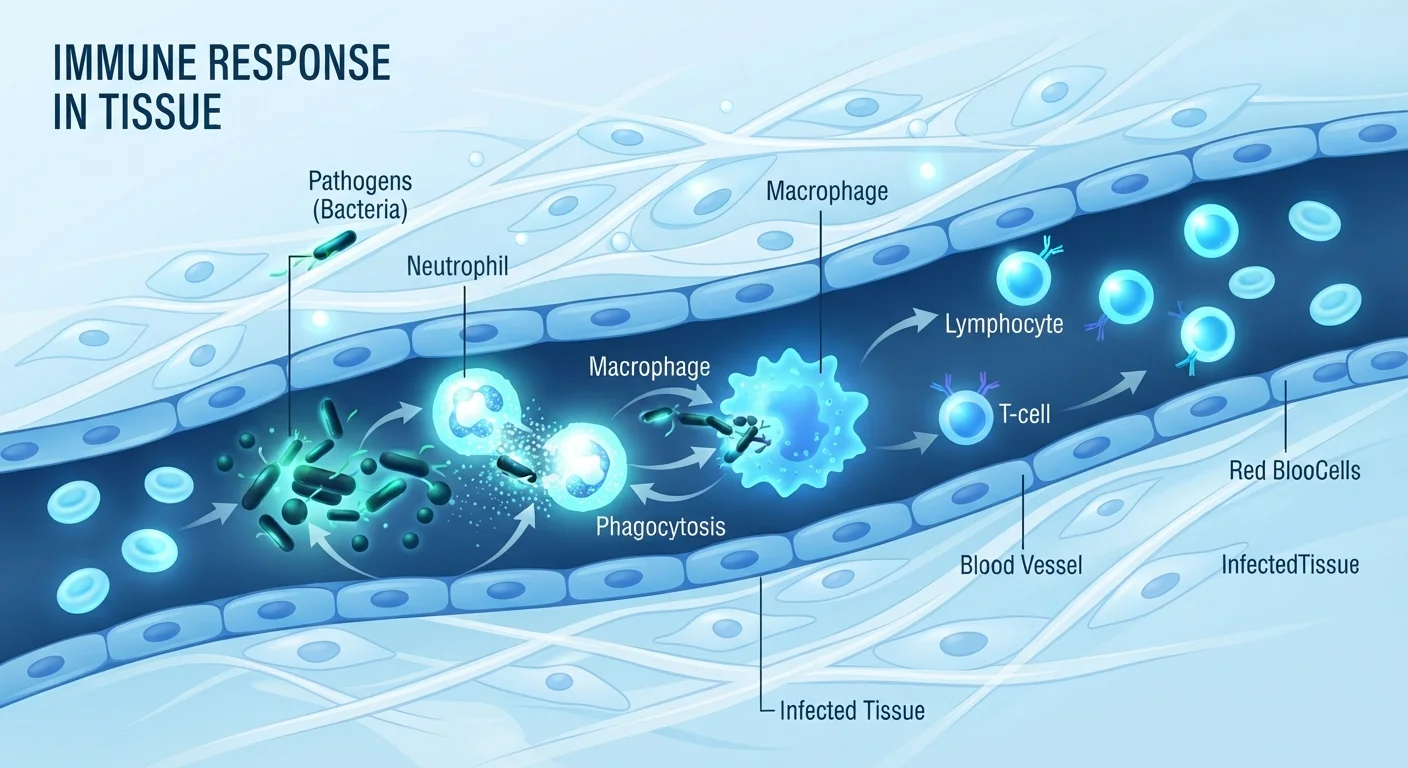
Within minutes to hours of detecting a pathogen, your innate immune system activates. This is your body's non-specific, fast-acting defense — it doesn't need to recognize the exact pathogen to respond. Specialized cells called macrophages and neutrophils rush to the site of invasion, engulfing and destroying pathogens in a process called phagocytosis.
Simultaneously, damaged and infected cells release signaling molecules called cytokines. These chemical messengers trigger inflammation — redness, swelling, warmth, and pain at the infection site. Inflammation is both a protector and a signal, directing more immune cells to where they're needed while creating conditions hostile to pathogens.
Fever is also triggered at this stage. Immune cells release molecules that instruct the brain to raise body temperature, which can slow pathogen replication and speed up immune activity.
~70%
Of immune cells located in the gut
According to research published in clinical immunology literature, a significant majority of the body's immune tissue is concentrated in the gastrointestinal tract.
4–7 days
Typical innate immune response window
The CDC notes that the innate immune response is generally the primary defense during the first several days of most common infections.
Billions
Antibody variants the adaptive system can produce
Immunological research estimates the human adaptive immune system is capable of generating an enormous diversity of antibodies to recognize novel pathogens.
The Adaptive Response: Precision Targeting
If the innate response doesn't fully contain the infection, the adaptive immune system takes over — typically within several days. This system is far more precise. Antigen-presenting cells carry fragments of the pathogen to the lymph nodes, where they're shown to T cells and B cells.
T cells coordinate the attack and directly kill infected cells. B cells produce antibodies — proteins specifically shaped to bind to that pathogen and neutralize it or mark it for destruction. This targeted response takes longer to develop but is highly effective. For a fuller picture of these players, see our plain-language guide to the immune system.
Crucially, after the infection clears, some of these B and T cells remain as memory cells. If the same pathogen returns, your body can respond dramatically faster — often before you feel ill at all.
“The immune system is a remarkably elegant system that has co-evolved with pathogens over millions of years. Understanding its logic helps us appreciate both its power and its limits.”
— Anthony Fauci, Former Director, National Institute of Allergy and Infectious Diseases (NIAID)
Symptoms, Recovery, and When to Seek Help
Most symptoms of infection — fatigue, fever, aching muscles, congestion — are byproducts of your immune system's work, not just direct pathogen damage. Once your immune response gains the upper hand, pathogen levels drop, inflammation subsides, and tissues begin to heal. Recovery timelines vary significantly depending on the pathogen, your overall health, and whether treatment is involved.
For a concrete example of this process in action, our article on the lifecycle of a common cold walks through each stage from exposure to recovery. It's also worth knowing how infections differ from situations where the immune system misfires — as in autoimmune conditions, where the body mistakenly attacks its own tissue.
Support Your Immune System Daily
Adequate sleep, balanced nutrition, regular physical activity, and stress management all play documented roles in maintaining healthy immune function. These habits don't replace medical treatment, but they provide a foundation your immune system can build on. Speak with a healthcare provider if you have concerns about immune health.
This article is for general informational purposes only and is not a substitute for professional medical advice, diagnosis, or treatment. Always consult a qualified healthcare provider with questions about your health or a specific medical condition.