

Key Takeaways
The Common Cold
The common cold is a viral infection of the upper respiratory tract — primarily the nose and throat. It is caused by more than 200 different viruses, with rhinoviruses responsible for the majority of cases. The infection is self-limiting, meaning the immune system clears it without medical treatment in most healthy adults.
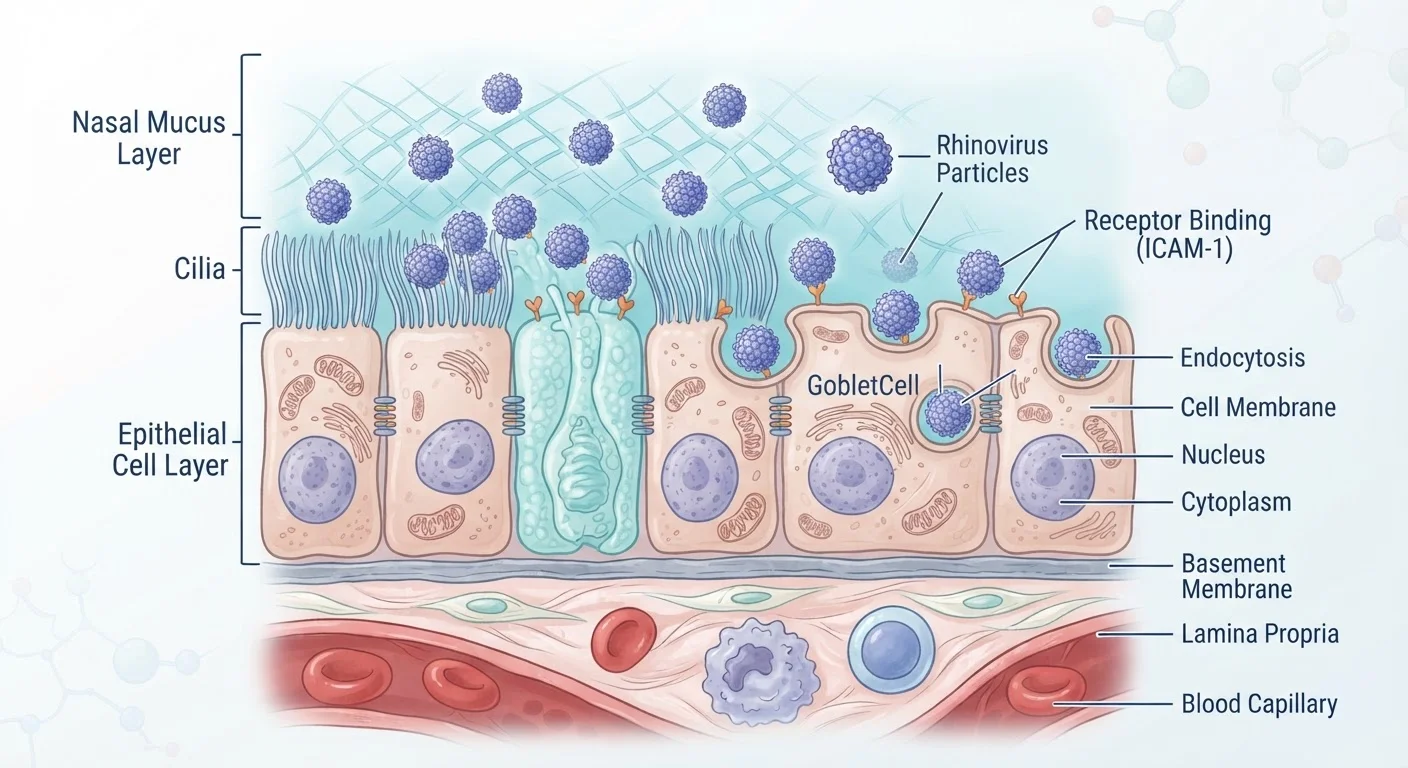
Rhinoviruses replicate most efficiently at temperatures slightly below core body temperature (around 91–95°F), which is why the nasal passages — cooler than the rest of the body — are the primary site of infection.
Stage 1: Exposure and Entry
A cold begins the moment a virus — most often a rhinovirus — finds a way into your body. This typically happens through three routes: inhaling airborne droplets from an infected person's cough or sneeze, touching a contaminated surface and then touching your nose, mouth, or eyes, or direct contact with an infected person.
Once inside, the virus targets the mucous membranes lining your nasal passages. It binds to receptor proteins on the surface of cells there and begins to replicate rapidly. At this point, you have no symptoms and no awareness that an infection has begun.
Cold vs. Flu: A Common Point of Confusion
Cold and flu symptoms can overlap, but influenza tends to come on suddenly and is typically more severe — often including high fever, body aches, and extreme fatigue. Colds usually start gradually and remain focused in the upper respiratory tract. If you're unsure which you have, a healthcare provider can help distinguish between the two.
Stage 2: Incubation — The Quiet Phase
After exposure, there is an incubation period — the time between when the virus enters your body and when symptoms first appear. For most cold-causing viruses, this window is one to three days. During this period, the virus continues replicating while your immune system begins to detect the intrusion.
Your immune system's first responders, including cells called macrophages and dendritic cells, identify the viral threat and trigger an inflammatory response. It is this immune response — not the virus itself — that produces most of the symptoms you will feel.
200+
Viruses that can cause the common cold
According to the CDC, rhinoviruses account for up to 50% of all common cold cases, but dozens of other virus types are also responsible.
2–3 days
Typical incubation period before symptoms appear
The NIH notes that most respiratory cold viruses have an incubation period of one to three days from exposure to symptom onset.
2–3 per year
Average colds an adult experiences annually
The CDC estimates that adults in the United States get an average of two to three colds per year, while young children may experience more.
Stage 3: Peak Symptoms
Symptoms typically peak between days 2 and 3 of the infection. The classic pattern includes a runny or stuffy nose, sore throat, sneezing, mild fatigue, and sometimes a low-grade fever. Congestion occurs because blood vessels in the nasal lining dilate as part of the inflammatory response, and mucus production increases to trap and flush out the virus.
This is also when viral shedding — the release of virus particles — is at its highest, making you most contagious to others. Staying home, covering coughs and sneezes, and washing hands frequently during this stage significantly reduces the risk of spreading the virus.
Supportive Care During Peak Symptoms
While there is no cure for a cold, staying well-hydrated, resting, and using saline nasal rinses can help ease symptoms and support recovery. Over-the-counter symptom relief options exist, but always read labels carefully and consult a pharmacist or provider — especially for children, pregnant individuals, or those with underlying health conditions.
Stage 4: Recovery and Immune Clearance
By days 4 through 7, the adaptive immune system — including B cells producing antibodies and T cells targeting infected cells — has mounted a more targeted defense. Viral replication slows, mucus typically shifts from clear to thicker and yellowish (a normal part of healing, not necessarily a sign of bacterial infection), and symptoms begin to fade.
Most people recover fully within 7 to 10 days. The immune system retains a memory of the specific viral strain encountered, offering some protection against reinfection from that exact strain. Because there are hundreds of cold-causing viruses, though, prior infections do not make you immune to colds generally.
This article is for general informational purposes only and does not constitute medical advice. Always consult a qualified healthcare provider for guidance on symptoms, diagnosis, or treatment.