

Key Takeaways
Our Verdict
Understanding the difference between bacterial, viral, fungal, and parasitic infections helps you have more informed conversations with your healthcare provider and avoid common mistakes - like expecting antibiotics to cure a viral illness. Each pathogen is biologically distinct, spreads differently, and responds only to specific treatments. When in doubt about any infection, a qualified clinician is the right first call.
| Best for | Recommended |
|---|---|
| Readers wanting a foundational overview of infection types | This full comparison guide |
| Those trying to understand bacterial vs. viral distinctions in depth | Viral Infection vs. Bacterial Infection article |
| Anyone unsure whether their symptoms need medical attention | Recognising the Signs That an Infection May Need Medical Attention |
Why the Type of Infection Matters
When you come down with an infection, the cause determines everything - including whether a prescribed treatment will actually work. The four main categories of infectious agents are bacteria, viruses, fungi, and parasites. While they can sometimes produce overlapping symptoms, they are biologically very different organisms that behave in distinct ways inside the body.
Treating a viral infection with antibiotics, for example, has no effect on the virus whatsoever - and contributes to a serious global health concern known as antimicrobial resistance. Getting the category right is the foundation of effective care. See our guide to what happens inside your body during an infection to understand how each pathogen type triggers the immune response.
| Bacteria | Viruses | Fungi | Parasites | |
|---|---|---|---|---|
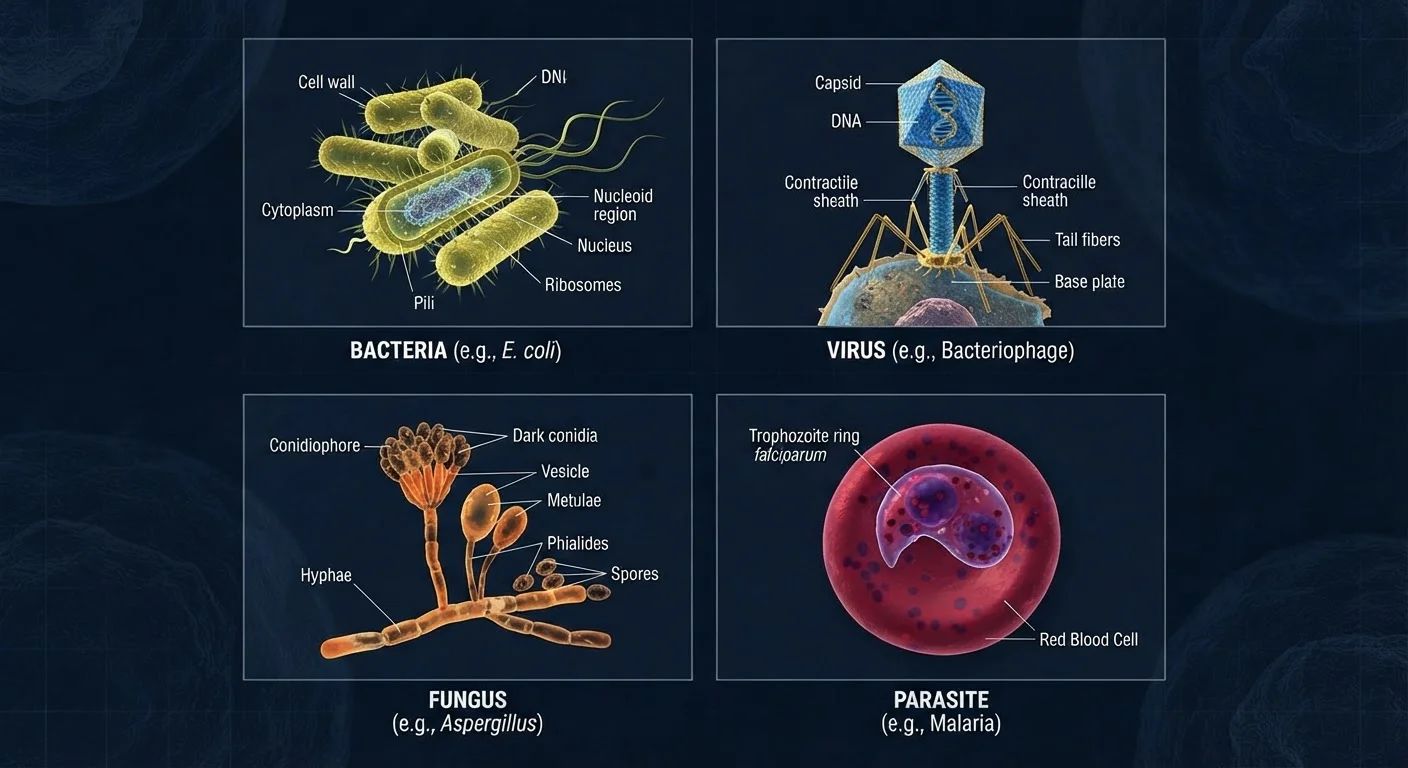
| Type of organism | Single-celled living organism | Non-living genetic packet | Eukaryotic organism (yeast/mold) | Protozoa or multicellular worm |
| Example infections | Strep throat, UTIs, TB | Flu, cold, COVID-19 | Athlete's foot, thrush | Malaria, Giardia, tapeworm |
| How they replicate | Independently, by dividing | Inside host cells only | Spores or budding | Varies by species |
| Primary treatment | Antibiotics | Antivirals or supportive care | Antifungal medications | Antiparasitic drugs |
| Do antibiotics work? | Yes (specific types) | No | No | No |
| Diagnosed by | Culture, blood test | PCR, rapid test, symptoms | Culture, skin scraping | Blood test, stool test |
Bacteria: Single-Celled Organisms with Many Faces
Bacteria are single-celled, living microorganisms that exist virtually everywhere - in soil, water, and on the human body. Many bacteria are harmless or even beneficial (such as those in the gut microbiome), but pathogenic species can cause illnesses ranging from strep throat and urinary tract infections to more serious conditions like tuberculosis or bacterial pneumonia.
Bacterial infections are typically treated with antibiotics, which work by targeting structures unique to bacterial cells - such as the cell wall - without harming human cells. However, not every antibiotic treats every bacterium. A lab culture may be needed to identify the specific species and determine the right antibiotic. Overusing or misusing antibiotics accelerates resistance, making previously treatable infections harder to manage.
Always Complete Prescribed Antibiotics
If a healthcare provider prescribes a full course of antibiotics, completing it matters - even if you feel better early. Stopping early can leave residual bacteria that may be harder to treat next time. Never share antibiotics or take leftover prescriptions, as this can do more harm than good.
Viruses: Hijackers That Need a Host
Viruses are not technically alive in the traditional sense - they are packets of genetic material (DNA or RNA) enclosed in a protein coat. They cannot reproduce on their own; they must invade a host cell and hijack its machinery to replicate. Common viral infections include influenza, the common cold, COVID-19, and chickenpox.
Because viruses use human cells to replicate, developing treatments that target viruses without harming the host is much more difficult. Antiviral medications exist for some viruses (such as influenza or HIV), but many viral infections are managed supportively - rest, fluids, and symptom relief - while the immune system does the heavy lifting. Antibiotics are completely ineffective against viruses. For a deeper look at distinguishing the two, see why telling viral and bacterial infections apart matters.
Fungi and Parasites: Less Common but Important
Fungi are more complex organisms - they include yeasts, molds, and mushrooms. Fungal infections in humans range from superficial (such as athlete's foot or oral thrush) to systemic infections that can be life-threatening, particularly in people with weakened immune systems. Antifungal medications target components of fungal cell membranes not found in human cells, making them effective without broad toxicity - though some antifungals can still carry side effects.
Parasites are organisms that live on or inside a host and derive nutrients at the host's expense. They range in size from microscopic protozoa (such as Giardia or the malaria-causing Plasmodium) to macroscopic worms. Parasitic infections are more prevalent in tropical and subtropical regions, though they occur globally. Treatment depends heavily on the parasite species involved, and typically involves antiparasitic drugs. Understanding how any of these pathogens reach you in the first place is equally important - explore how infections spread between people for a clear breakdown of transmission routes.
Avoid Self-Diagnosing Infection Type
Symptoms alone are rarely enough to reliably identify whether an infection is bacterial, viral, fungal, or parasitic. Guessing the type and self-treating - especially with leftover antibiotics or over-the-counter antifungals - can delay appropriate care and worsen outcomes. If you are unsure, a healthcare provider is the safest route to an accurate diagnosis.
When to See a Healthcare Provider
Many mild infections - especially common viral illnesses - resolve without medical intervention. However, you should consult a healthcare professional if symptoms are severe, prolonged, or worsening, if you develop a high or persistent fever, if you belong to a higher-risk group (such as older adults, pregnant individuals, young children, or those with chronic conditions), or if you suspect a fungal or parasitic infection, which often require specific testing to diagnose.
A clinician can order the appropriate tests - blood work, cultures, or imaging - to identify the type of pathogen involved and recommend targeted treatment. Never self-prescribe antibiotics or antifungals. For guidance on warning signs, see signs that an infection may need medical attention.
This article is for general informational and educational purposes only and does not constitute medical advice. Always consult a qualified healthcare provider for personal health concerns, diagnosis, or treatment decisions.