

Key Takeaways
Option A
Viral Infection
Caused by submicroscopic pathogens that hijack your own cells to replicate.
Best for: Understanding why antibiotics won't help and why rest and supportive care are often the primary tools.
Option B
Bacterial Infection
Caused by single-celled living organisms that multiply independently in the body.
Best for: Understanding when antibiotics are genuinely necessary and how to avoid contributing to antibiotic resistance.
If you have a common cold or seasonal flu
Viral Infection (context)
Colds and influenza are caused by viruses. Antibiotics won't help, and supportive care — rest, fluids, and over-the-counter symptom relief — is the standard approach.
If you have a confirmed strep throat or urinary tract infection
Bacterial Infection (context)
These are typically bacterial in origin and often respond well to antibiotics prescribed by a clinician after proper evaluation.
If you're unsure which type of infection you have
See a healthcare provider
Symptoms like fever, fatigue, and sore throat can appear in both viral and bacterial infections. A clinician may use tests to determine the cause before recommending treatment.
Two Very Different Biological Worlds
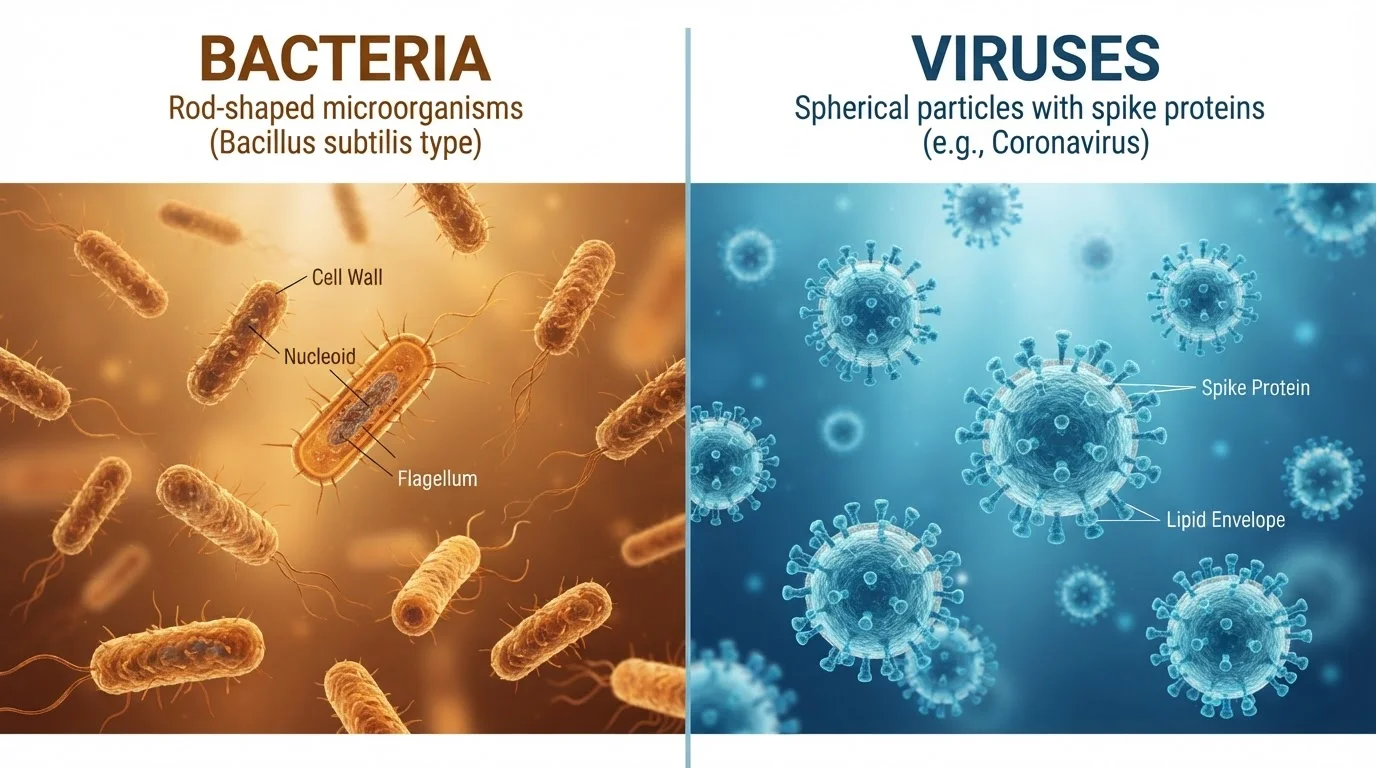
When most people feel sick, they think about germs — but that word covers a wide range of organisms that behave very differently inside the body. Bacteria and viruses are the two most common culprits behind infectious illness, yet they differ in almost every fundamental way: in structure, how they reproduce, and crucially, how they're treated.
Bacteria are single-celled living organisms. They have their own cellular machinery, can reproduce independently, and exist in virtually every environment on Earth. Most bacteria are harmless or even beneficial — the trillions living in your gut, for example, play a vital role in digestion and immune function. Only a small fraction of bacterial species cause disease.
Viruses, by contrast, are not technically alive in the same sense. They are packages of genetic material — either DNA or RNA — wrapped in a protein coat. They cannot reproduce on their own. Instead, they invade host cells and hijack those cells' machinery to make copies of themselves, often destroying the host cell in the process. To understand more about how this process unfolds, see what actually happens inside your body during an infection.
| Criterion | Viral Infection | Bacterial Infection |
|---|---|---|
| Causative agent | Virus (non-living genetic material) | Bacterium (living single-celled organism) |
| How it reproduces | Hijacks host cells to replicate | Divides independently inside the body |
| Treated with antibiotics? | No — antibiotics are ineffective | Often yes, if clinically indicated |
| Antiviral medications available? | Yes, for specific viruses only | Not applicable |
| Common examples | Cold, flu, COVID-19, chickenpox | Strep throat, UTI, bacterial pneumonia |
| Typical treatment approach | Supportive care; antivirals in some cases | Antibiotics when prescribed by clinician |
| Contagiousness | Frequently highly contagious person-to-person | Varies widely by bacteria and route |
Why the Distinction Changes Everything About Treatment
The single most important practical consequence of this difference is how each type of infection is — or isn't — treated with antibiotics.
Antibiotics work by targeting specific structures or processes found in bacteria, such as their cell walls or their ability to copy DNA. Because viruses lack these structures entirely and operate using your own cells' machinery, antibiotics have no effect on them whatsoever. Taking antibiotics for a viral illness like the common cold or influenza will not shorten the illness, reduce symptoms, or prevent complications.
~30%
Antibiotic prescriptions that may be unnecessary
The CDC has estimated that roughly 28–30% of antibiotic prescriptions written in outpatient settings in the U.S. may not be clinically necessary, often due to prescribing for viral illnesses.
700,000+
Annual global deaths from antibiotic-resistant infections
The World Health Organization reports that antimicrobial resistance already causes hundreds of thousands of deaths annually worldwide, with projections indicating significant growth if trends continue.
What it will do is expose you to the side effects of antibiotics — such as digestive upset or yeast overgrowth — and contribute to a growing global crisis: antibiotic resistance. When antibiotics are overused or misused, bacteria can evolve to survive them, making future bacterial infections much harder to treat. This is why clinicians are careful about prescribing antibiotics only when genuinely indicated.
For viral infections, treatment is generally supportive: rest, fluids, fever management, and in some cases antiviral medications (which are specific to certain viruses, such as influenza or herpes viruses). For bacterial infections that require treatment, a clinician will typically prescribe an antibiotic matched to the specific bacteria involved. For a broader look at how these pathogens differ, see how bacterial, viral, fungal, and parasitic infections differ.
Can Symptoms Tell You Which One You Have?
Unfortunately, symptoms alone are often an unreliable guide. Both viral and bacterial infections can cause fever, fatigue, body aches, and inflammation. However, there are some patterns that clinicians use as starting points.
Infections that tend to be viral include the common cold, influenza, most sore throats, viral gastroenteritis (stomach flu), and COVID-19. Bacterial infections include strep throat, urinary tract infections (UTIs), many cases of pneumonia, certain ear infections, and foodborne illnesses caused by organisms like Salmonella or E. coli.
That said, these categories overlap. A viral respiratory illness can sometimes lead to a secondary bacterial infection — for example, a cold complicated by bacterial sinusitis or pneumonia. This is precisely why self-diagnosing based on how you feel is risky. A healthcare provider may use throat swabs, urine cultures, blood tests, or imaging to confirm what's actually happening before recommending a treatment path. To learn which symptoms generally warrant professional evaluation, see signs that an infection may need medical attention.
Transmission Matters Too
Both viral and bacterial infections can spread through similar routes — respiratory droplets, direct contact, contaminated surfaces, or food and water. Understanding how pathogens travel can help you take practical steps to reduce exposure for yourself and those around you. For a detailed breakdown, see how infections spread between people.
This article is for general informational purposes only and does not constitute medical advice. Always consult a qualified healthcare professional for personal health concerns, diagnosis, or treatment decisions.