

Key Takeaways
Vaccine-Induced Immunity
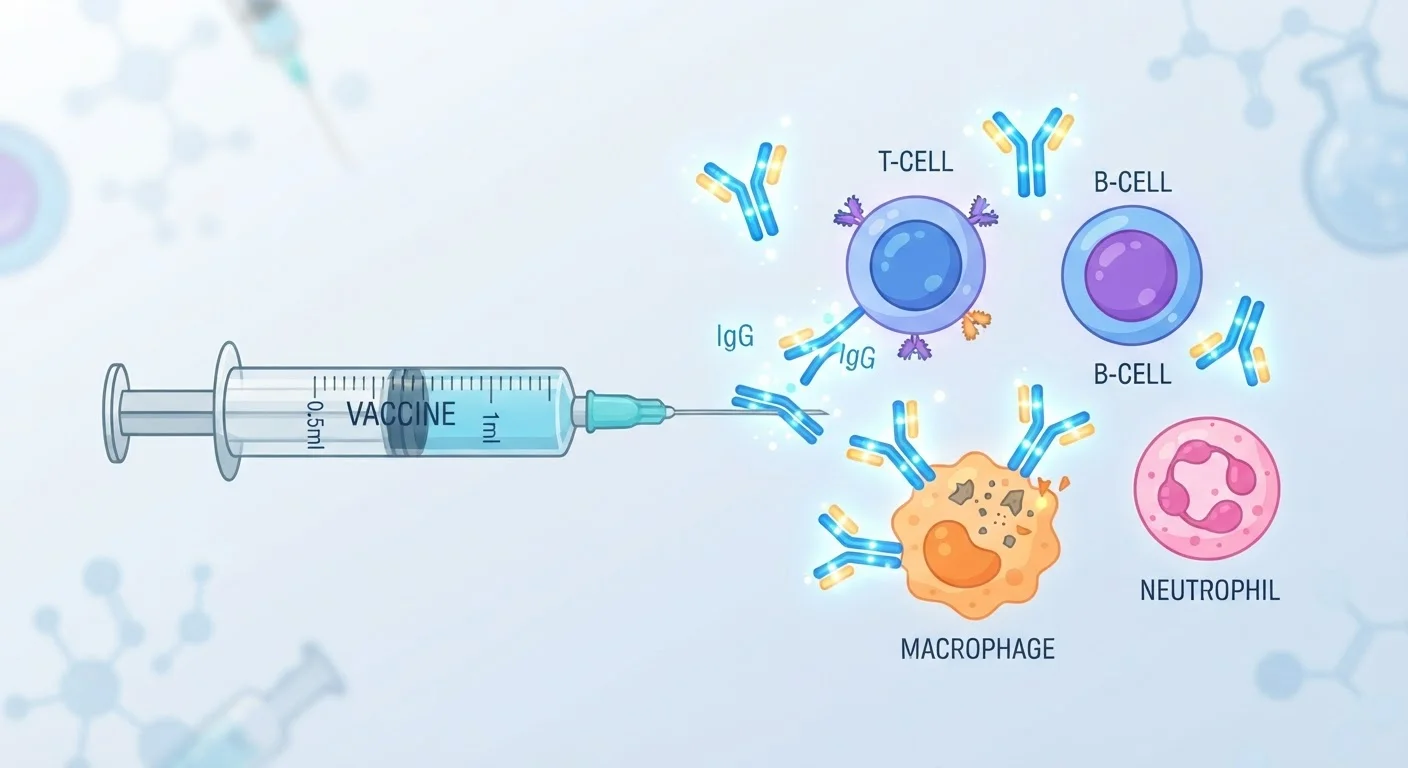
Vaccine-induced immunity is the protection your body builds after receiving a vaccine. Vaccines expose your immune system to a harmless version of - or piece of - a pathogen, prompting your body to create a defence it can deploy rapidly if you encounter the real threat later. This process is designed to mimic natural infection without causing disease.
The immune response generated involves both humoral immunity (antibody production by B cells) and cellular immunity (activation of T cells), creating durable immunological memory.
The Immune System's Learning Process
Your immune system operates like a highly adaptive security network. When it encounters a new pathogen - a virus, bacterium, or other germ - it mounts an initial defence, studies the threat, and files away the details for future reference. This filing system is called immunological memory, and it is the biological mechanism vaccines are designed to trigger.
To understand vaccines, it helps to understand the two broad layers of immunity. The innate and adaptive immune systems play distinct roles: the innate system provides rapid, non-specific defence, while the adaptive system launches a slower but precisely targeted response. Vaccines specifically engage the adaptive system, which is responsible for building lasting memory.
When a vaccine is introduced into the body, the adaptive immune system produces antibodies - proteins that recognise and neutralise specific pathogens - and activates memory B and T cells. If you later encounter the real pathogen, these memory cells recognise it immediately and mount a rapid, powerful defence before the infection can take hold. For a plain-language guide to terms like antibodies and antigens, see our immune system glossary.
Types of Vaccines and How Each Works
Not all vaccines are built the same way, but they share a common goal: presenting the immune system with enough information about a pathogen to prepare a defence, without triggering actual disease.
2-3 million
Deaths prevented by vaccines annually
The World Health Organization estimates vaccines prevent 2 to 3 million deaths every year globally from diseases such as diphtheria, tetanus, and measles.
~95%
Effectiveness of MMR vaccine against measles
According to the CDC, two doses of the MMR vaccine are approximately 97% effective against measles and around 88% effective against mumps.
14+
Diseases prevented by childhood vaccine schedule
The CDC's recommended childhood immunisation schedule covers protection against more than 14 potentially serious infectious diseases before age two.
- Live-attenuated vaccines use a weakened, living form of the pathogen (e.g., MMR, chickenpox). They closely mimic natural infection and typically produce strong, long-lasting immunity.
- Inactivated vaccines use a killed version of the pathogen (e.g., flu shots, polio). They are stable and safe for most people, though they may require booster doses.
- Subunit and protein vaccines deliver just specific pieces of the pathogen - usually surface proteins - rather than the whole organism (e.g., hepatitis B, pertussis component of DTaP).
- mRNA vaccines provide genetic instructions for your cells to produce a harmless pathogen protein, which then triggers an immune response. The mRNA itself does not enter the cell's nucleus and breaks down quickly after use.
Each approach activates the same fundamental adaptive immune response - the differences lie in how the immune system is introduced to the pathogen's signature.
“Vaccines are one of the most effective tools we have to prevent infectious disease. By training the immune system in advance, they give the body a critical head start against pathogens that might otherwise cause serious harm.”
— Anthony Fauci, Former Director, National Institute of Allergy and Infectious Diseases (NIAID)
What Happens After Vaccination
After a vaccine is administered, the immune system needs time to build its response - typically one to two weeks for meaningful protection to develop, though this varies by vaccine type and individual health. During this window, the body is actively producing antibodies and expanding populations of memory cells.
Stay Current With Your Vaccination Schedule
Immunity from some vaccines can wane over time, and new vaccines become available as science advances. Keeping an up-to-date record of your immunisations - and discussing any gaps with your healthcare provider - ensures your protection stays as strong as possible. The CDC's immunisation schedule is a useful reference point for adults and children alike.
Common post-vaccination experiences - arm soreness at the injection site, fatigue, mild fever, or headache - are normal immune system activity, not signs of illness. They reflect inflammation, a key part of the adaptive immune response being recruited. In most people, these symptoms resolve within one to three days.
It is important to note that no vaccine offers absolute protection. Effectiveness rates vary by pathogen and vaccine formulation, and individual immune responses differ based on factors such as age and underlying health conditions. However, even when a vaccinated person does contract an infection, vaccines are generally associated with significantly reduced severity and lower risk of complications.
This article is for general informational and educational purposes only and does not constitute medical advice. Speak with a qualified healthcare provider regarding your personal vaccination needs, health status, and any concerns about specific vaccines.