

| Two main immunity types | Innate (fast, general) and Adaptive (slow, targeted) (NIH National Institute of Allergy and Infectious Diseases) |
| Antibody classes | 5 types (IgG, IgM, IgA, IgE, IgD) (Merck Manual, Professional Edition) |
| White blood cell lifespan | Hours to years, depending on cell type (NIH National Cancer Institute) |
| Where T cells mature | The thymus gland, located behind the sternum (NIH National Institute of Allergy and Infectious Diseases) |
| Primary infection-fighting cells | Lymphocytes, neutrophils, macrophages (CDC, Understanding the Immune System) |
Why Immune System Vocabulary Matters
When a doctor mentions your T-cells are low, or a news headline warns of a new antigen variant, it helps to know what those words actually mean. Immune system terminology shows up in medical appointments, vaccine conversations, and health news - yet most of us were never taught it in plain terms.
This reference guide breaks down the core vocabulary of immune health, written for everyday readers rather than medical students. Whether you're navigating a new diagnosis, trying to understand how vaccines work, or simply curious about how your body defends itself, these definitions give you a reliable foundation. Just like decoding fitness jargon can help beginners feel more confident at the gym - see our beginner fitness glossary - learning immune system language makes health conversations far less intimidating.
| Two main immunity types | Innate (fast, general) and Adaptive (slow, targeted) (NIH National Institute of Allergy and Infectious Diseases) |
| Antibody classes | 5 types (IgG, IgM, IgA, IgE, IgD) (Merck Manual, Professional Edition) |
| White blood cell lifespan | Hours to years, depending on cell type (NIH National Cancer Institute) |
| Where T cells mature | The thymus gland, located behind the sternum (NIH National Institute of Allergy and Infectious Diseases) |
| Primary infection-fighting cells | Lymphocytes, neutrophils, macrophages (CDC, Understanding the Immune System) |
Essential Immune System Terms Defined
The terms below represent the vocabulary you're most likely to encounter in clinical settings, public health guidance, and health media. They are organized from foundational concepts outward.
Antigen
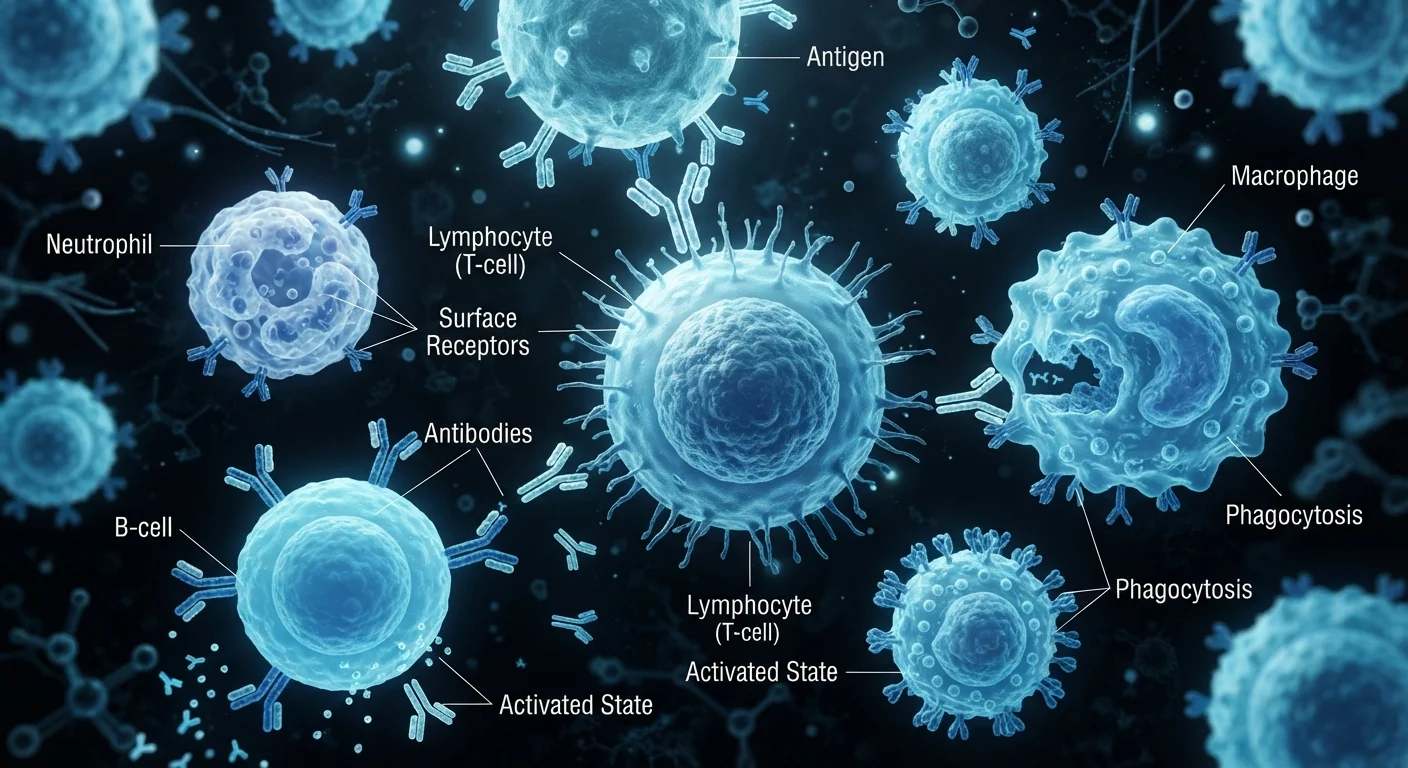
Any substance - typically a protein on the surface of a virus, bacterium, or foreign particle - that the immune system recognizes as foreign and mounts a defense against. Vaccines work by introducing a harmless antigen so your body learns to recognize a real threat.
Antibody
A Y-shaped protein produced by B cells that binds specifically to an antigen, neutralizing it or marking it for destruction. Each antibody is tailored to one specific antigen, which is why past infections or vaccines can confer lasting protection.
Lymphocyte
A category of white blood cell central to adaptive immunity. The two main types are B cells (which produce antibodies) and T cells (which destroy infected cells and coordinate immune responses).
T Cell
A type of lymphocyte that matures in the thymus and plays multiple roles: helper T cells coordinate the immune response, while cytotoxic T cells directly kill infected or cancerous cells.
B Cell
A lymphocyte that produces antibodies when activated by an antigen. Some B cells become memory cells after an infection, enabling faster responses to the same pathogen in the future.
Cytokine
Small signaling proteins released by immune cells that regulate the intensity and duration of immune responses. Some cytokines promote inflammation to fight infection; others signal the immune system to stand down once a threat is cleared.
Innate Immunity
The body's fast-acting, non-specific first line of defense. It responds immediately to any foreign substance using physical barriers (skin, mucus), fever, and generalist immune cells - no prior exposure to a pathogen is needed.
Adaptive Immunity
A slower but highly targeted immune response that learns from exposure to specific pathogens. It involves lymphocytes and produces immunological memory, which is why you rarely catch the same illness twice in the same form.
Inflammation
A normal immune response in which blood flow increases to a site of infection or injury, bringing immune cells to the area. Acute inflammation aids healing; chronic inflammation, when persistent without a clear cause, is associated with a range of health conditions.
Pathogen
Any microorganism - including viruses, bacteria, fungi, and parasites - capable of causing disease in a host. The immune system is designed to detect and eliminate pathogens before they cause serious harm.
Immunoglobulin
Another term for antibody. Immunoglobulins are classified into five types (IgG, IgM, IgA, IgE, IgD), each with distinct roles in different parts of the immune response and body tissues.
Autoimmune Response
A malfunction in which the immune system mistakenly targets the body's own healthy cells and tissues. Conditions such as rheumatoid arthritis, lupus, and type 1 diabetes involve autoimmune mechanisms.
Hormonal health has its own overlapping vocabulary - if you've encountered terms like cytokines in discussions of hormonal conditions, our hormonal health glossary offers useful context on how immune and endocrine systems intersect.
When to Talk to a Doctor About Immunity
Frequent infections, slow wound healing, or unexplained fatigue can sometimes signal an underlying immune condition. This glossary is educational and cannot substitute for clinical evaluation. If you have concerns about your immune health, speak with a qualified healthcare provider who can assess your individual situation.
This article is for informational purposes only and is not medical advice. Always consult a qualified healthcare professional for questions about your personal health, symptoms, or treatment.