

Key Takeaways
Start here
What the Digestive System Actually Does
Next
The Journey of Food: Organ by Organ
Then
Common Things That Go Wrong
Broaden your view
Why Gut Health Affects More Than Digestion
Take action
When to See a Doctor
What the Digestive System Actually Does
Your digestive system is essentially a long, muscular tube - roughly 30 feet from end to end - whose primary job is to convert food into fuel. It extracts nutrients your body needs to function, filters out what it cannot use, and expels the rest as waste.
This process, called digestion, is both mechanical and chemical. Mechanical digestion involves physically breaking food into smaller pieces through chewing and muscular contractions. Chemical digestion uses enzymes, acids, and bile to break those pieces down further into molecules small enough to be absorbed into the bloodstream.
Peristalsis
The wave-like muscle contractions that move food through the esophagus and intestines - similar to squeezing a tube of toothpaste from one end to the other.
Enzyme
A protein that acts as a biological catalyst, speeding up the chemical reactions that break food molecules into smaller, absorbable pieces.
Gut microbiome
The community of trillions of microorganisms - mostly bacteria - living in the digestive tract that influence digestion, immunity, and overall health.
Villi
Tiny finger-like projections lining the small intestine that dramatically increase the surface area available to absorb nutrients into the bloodstream.
Gut-brain axis
A two-way communication network between the gut and the brain, mediated by nerves, hormones, and immune signals, that links digestive function to mood and cognition.
Without an efficient digestive system, your body could not access the carbohydrates, proteins, fats, vitamins, and minerals it depends on for energy, tissue repair, and immune defense.
The Journey of Food: Organ by Organ
Understanding digestion is easier when you trace food's path step by step.
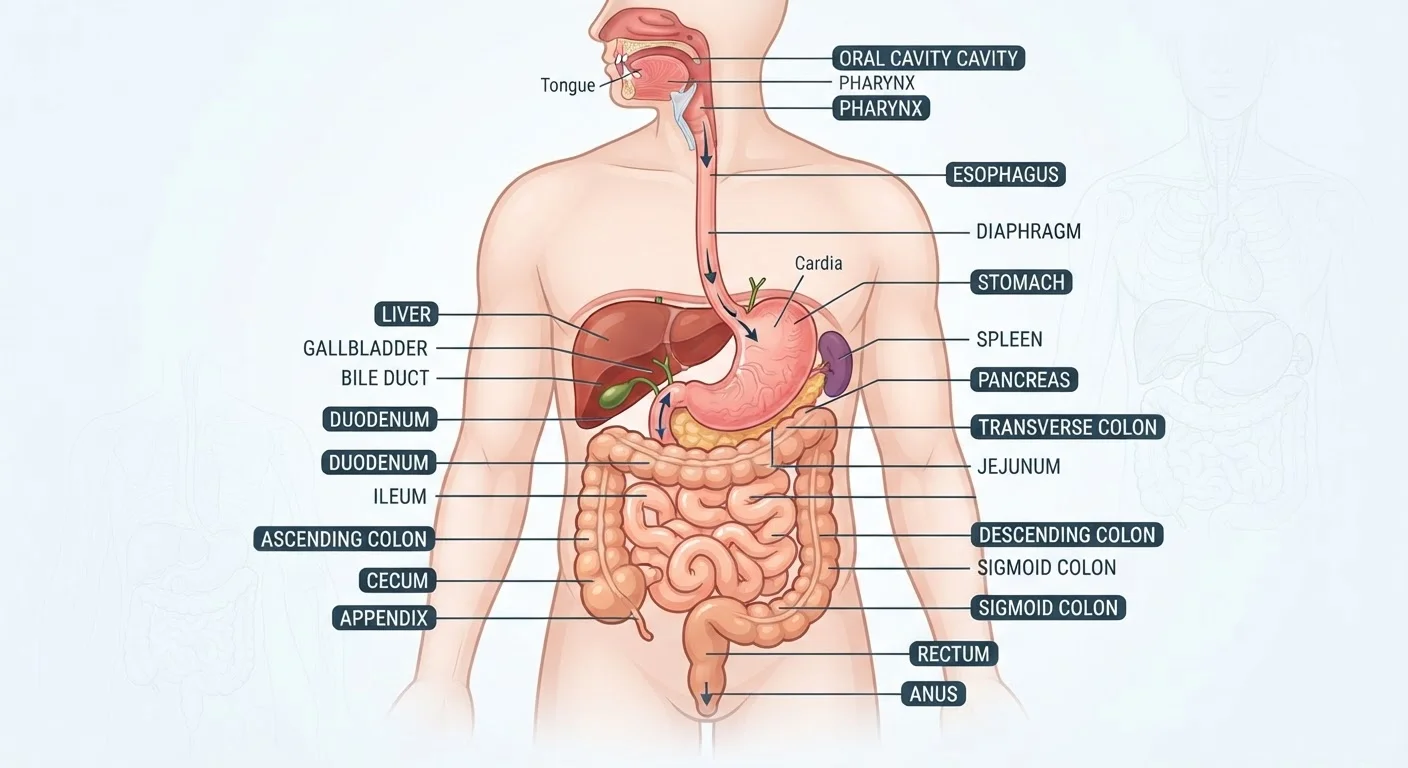
- Mouth: Chewing breaks food mechanically while saliva starts breaking down carbohydrates using an enzyme called amylase.
- Esophagus: A muscular tube that uses rhythmic contractions - called peristalsis - to push food down to the stomach. A ring of muscle called the lower esophageal sphincter prevents stomach acid from flowing back up.
- Stomach: Gastric acid and enzymes further break food into a semi-liquid called chyme. The stomach can hold roughly one liter and typically empties over two to four hours.
- Small intestine: This 20-foot organ is where most nutrient absorption happens. The liver and pancreas deliver bile and enzymes here to help break down fats, proteins, and carbohydrates. The intestinal lining is covered in tiny finger-like projections called villi that dramatically increase the surface area for absorption.
- Large intestine (colon): Water and remaining electrolytes are absorbed here. Gut bacteria ferment undigested fiber, producing gases and short-chain fatty acids. The colon compacts leftover material into stool.
- Rectum and anus: Stool is stored in the rectum until the body signals readiness to eliminate it.
For a closer look at how specific symptoms map to each part of this system, see our symptom-by-symptom digestive guide.
Common Things That Go Wrong
Digestive problems are among the most frequently reported health complaints in the United States. Many are manageable, but they can significantly affect quality of life if ignored.
Do Not Self-Diagnose Digestive Conditions
Many digestive symptoms overlap - bloating and cramping, for example, appear in IBS, IBD, food intolerance, and other conditions that require very different treatments. Attempting to self-diagnose based on symptoms alone can delay appropriate care and, in some cases, cause harm. A healthcare provider can order the right tests and give you an accurate diagnosis.
- Gastroesophageal reflux disease (GERD): Stomach acid repeatedly flows back into the esophagus, causing heartburn and potential damage to the esophageal lining.
- Irritable bowel syndrome (IBS): A functional disorder marked by abdominal pain and irregular bowel habits - diarrhea, constipation, or both - without visible structural damage.
- Constipation: Fewer than three bowel movements per week, often accompanied by straining or hard stools, commonly linked to low fiber intake, dehydration, or inactivity.
- Inflammatory bowel disease (IBD): An umbrella term for Crohn's disease and ulcerative colitis - chronic immune-mediated conditions causing gut inflammation that requires medical management.
- Food intolerances: Difficulty digesting specific foods, such as lactose (milk sugar) or gluten, which can cause bloating, gas, and diarrhea.
Gut health also changes with age. Our article on digestive disorders across the lifespan explores how these conditions present differently from childhood to older adulthood.
Why Gut Health Affects More Than Digestion
The gut does far more than process food. Approximately 70 percent of the body's immune cells reside in or near the digestive tract, making gut health inseparable from immune function. For a plain-language explanation of that connection, see our guide on how the immune system works.
The gut also communicates continuously with the brain via the gut-brain axis - a two-way signaling network involving nerves, hormones, and the immune system. This is why emotional stress often triggers digestive symptoms, and why gut dysfunction can influence mood and cognitive function.
Supporting Your Microbiome With Diet
Eating a variety of plant-based foods rich in fiber - vegetables, legumes, whole grains, and fruits - provides fuel for beneficial gut bacteria. Fermented foods such as yogurt and kefir contain live cultures that may contribute to microbial diversity. These are general dietary patterns, not prescriptions; speak with a registered dietitian if you want guidance tailored to your specific health situation.
The gut microbiome - the trillions of microorganisms living in your intestines - plays a key role in all of this. These microbes assist with digestion, produce certain B vitamins and vitamin K, crowd out harmful pathogens, and help regulate inflammation. Research into the microbiome is still developing rapidly, and much remains to be confirmed by large clinical trials. For a deeper look at what the evidence currently shows - particularly for men - visit our article on gut health and men's wellbeing.
When to See a Doctor
Many digestive symptoms are temporary and resolve on their own. However, some patterns warrant prompt professional evaluation.
Schedule an appointment with a healthcare provider if you experience:
- Heartburn or reflux occurring more than twice a week
- Unexplained weight loss
- Blood in your stool or vomit
- Persistent abdominal pain lasting more than a few days
- A noticeable, unexplained change in bowel habits lasting more than a few weeks
- Difficulty swallowing
Seek emergency care immediately for severe abdominal pain, signs of dehydration, or vomiting blood. These can indicate serious conditions requiring urgent intervention.
Digestive health is not something to manage alone by guessing - an accurate diagnosis from a qualified healthcare professional is the foundation of effective care. If you are unsure whether your symptoms are significant, err on the side of contacting your doctor.
This article is for general informational and educational purposes only and does not constitute medical advice. Always consult a qualified healthcare professional for personal health concerns, diagnosis, or treatment decisions.