

| Conditions peak in childhood | Colic, reflux, constipation, celiac disease (NIDDK, Pediatric Gastroenterology literature) |
| IBS prevalence in adults | ~10-15% globally (International Foundation for Gastrointestinal Disorders) |
| Diverticular disease at age 60+ | ~50% of Americans affected (National Institute of Diabetes and Digestive and Kidney Diseases (NIDDK)) |
| Colorectal cancer screening start age | Age 45 (average risk) (U.S. Preventive Services Task Force) |
| Gut microbiome diversity | Declines after age 65 on average (NIH Human Microbiome Project research) |
Why Gut Health Looks Different at Every Age
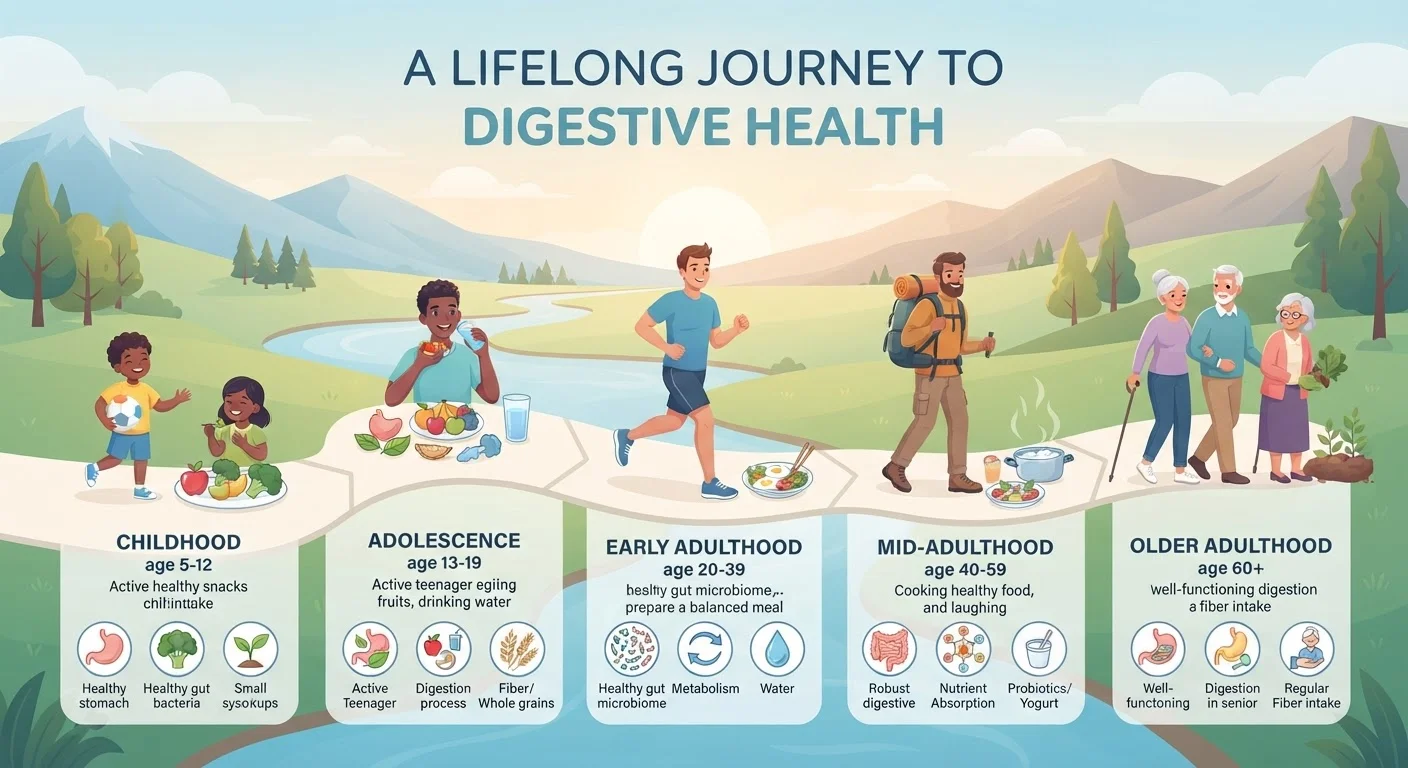
Your digestive system is not a static machine. From infancy through older adulthood, the gut undergoes significant structural, microbial, and functional changes that influence which conditions tend to emerge - and how they present. For beginners navigating health information, understanding this lifespan lens is a practical first step toward recognizing symptoms and knowing when to seek care.
For a plain-language foundation on how the digestive system works, see our overview of digestive health from top to bottom.
| Conditions peak in childhood | Colic, reflux, constipation, celiac disease (NIDDK, Pediatric Gastroenterology literature) |
| IBS prevalence in adults | ~10-15% globally (International Foundation for Gastrointestinal Disorders) |
| Diverticular disease at age 60+ | ~50% of Americans affected (National Institute of Diabetes and Digestive and Kidney Diseases (NIDDK)) |
| Colorectal cancer screening start age | Age 45 (average risk) (U.S. Preventive Services Task Force) |
| Gut microbiome diversity | Declines after age 65 on average (NIH Human Microbiome Project research) |
Childhood and Adolescence: Building a Gut Microbiome
In early life, the gut microbiome - the community of trillions of microorganisms living in the digestive tract - is still developing. This makes infants and young children particularly vulnerable to certain conditions.
- Colic and reflux are among the most common issues in infancy. Gastroesophageal reflux (GER), where stomach contents back up into the esophagus, is often temporary and resolves as infants grow.
- Constipation is frequently reported in toddlers and school-age children, often linked to diet transitions, toilet training stress, or low fiber intake.
- Celiac disease, an immune reaction to gluten, can first appear in childhood once gluten-containing foods are introduced. Symptoms may include diarrhea, bloating, poor growth, and fatigue.
- Inflammatory bowel disease (IBD), including Crohn's disease, can debut during adolescence. Teens may experience abdominal pain, blood in stool, weight loss, or delayed growth.
Parents concerned about persistent or severe digestive symptoms in children should consult a pediatrician rather than attempting self-diagnosis or home management.
Gut Microbiome
The vast community of bacteria, viruses, and fungi living in the digestive tract. A healthy microbiome supports digestion, immune function, and overall well-being.
Motility
The coordinated muscle contractions that move food and waste through the digestive system. Slowed motility can lead to constipation and other symptoms.
GERD
Gastroesophageal reflux disease - a chronic condition where stomach acid repeatedly flows back into the esophagus, causing heartburn and potential tissue damage.
Diverticular Disease
A condition involving small pouches (diverticula) that form in the colon wall. It becomes more common with age and can range from asymptomatic to causing pain or infection.
Celiac Disease
An autoimmune disorder in which ingesting gluten triggers an immune response that damages the lining of the small intestine, impairing nutrient absorption.
Malabsorption
A condition where the digestive tract fails to absorb sufficient nutrients from food. It can result from structural damage, infection, or age-related changes in digestive function.
Adulthood: When Lifestyle Becomes the Dominant Factor
During the adult years - roughly ages 20 through 60 - lifestyle factors such as diet, stress, alcohol use, and medication exposure play an outsized role in digestive health. Several conditions tend to peak or first appear during this period.
- Irritable bowel syndrome (IBS) is one of the most commonly diagnosed functional gut disorders in adults, affecting an estimated 10-15% of the global population according to the International Foundation for Gastrointestinal Disorders. It produces symptoms like cramping, bloating, and changes in bowel habits without visible structural damage. To understand how IBS differs from related conditions, our article on IBS, IBD, and Crohn's explains the key distinctions.
- Acid reflux and GERD (gastroesophageal reflux disease) commonly emerge or worsen in adulthood, particularly with weight gain, pregnancy, or certain dietary habits.
- Peptic ulcers caused by Helicobacter pylori infection or prolonged NSAID use are also more prevalent in this group.
Men's digestive patterns can shift notably across decades - our guide to men's physical health by decade puts these changes in broader context.
10-15%
Adults worldwide affected by IBS
According to the International Foundation for Gastrointestinal Disorders, IBS is one of the most common functional digestive disorders diagnosed in adulthood.
~50%
Americans over 60 with diverticular changes
The NIDDK estimates that roughly half of people aged 60 and older show evidence of diverticula in the colon, though many experience no symptoms.
Age 45
Recommended colorectal cancer screening start
The U.S. Preventive Services Task Force updated its recommendation to begin colorectal cancer screening at age 45 for average-risk adults.
Older Adulthood: Slowing Systems and Elevated Risks
After age 60, the digestive tract undergoes changes that raise both the likelihood and the complexity of gut disorders. Motility - the movement of food through the digestive tract - tends to slow. Stomach acid production may decrease. The gut microbiome often becomes less diverse.
- Diverticular disease becomes increasingly common; by age 60, roughly half of Americans show evidence of diverticula (small pouches in the colon wall), according to the National Institute of Diabetes and Digestive and Kidney Diseases (NIDDK).
- Colorectal cancer risk rises with age, making regular screening a critical preventive step. The U.S. Preventive Services Task Force recommends screening beginning at age 45 for average-risk adults.
- Constipation re-emerges as a concern, driven by reduced physical activity, medication side effects, and slower gut motility.
- Malabsorption of nutrients like vitamin B12, calcium, and iron becomes more likely as stomach acid decreases, which can have downstream effects on energy, bone health, and cognition.
Dietary habits are tightly linked to digestive resilience at every age. Our summary of gastroenterologist-recommended habits covers evidence-informed practices worth knowing. Older adults - and anyone managing a chronic condition - should consult a healthcare provider before making significant changes to diet or supplement routines.
This article is for general informational and educational purposes only. It is not a substitute for professional medical advice, diagnosis, or treatment. Always consult a qualified healthcare provider with questions about your health or a specific medical condition.