

Key Takeaways
Option A
IBS (Irritable Bowel Syndrome)
A functional gut disorder with no visible tissue damage.
Best for: Understanding a common condition where the gut is sensitive and reactive but structurally normal.
Option B
IBD / Crohn's Disease
Inflammatory diseases involving measurable, physical damage to the digestive tract.
Best for: Recognizing conditions where immune-driven inflammation causes real tissue injury requiring medical management.
If you experience recurring bloating, cramping, and altered bowel habits without systemic symptoms
Discuss IBS with your doctor
IBS is the more likely explanation when gut symptoms are chronic but blood tests and imaging return normal results. A gastroenterologist can confirm this through a structured evaluation.
If you notice blood in your stool, unexplained weight loss, or persistent fever alongside gut symptoms
Seek evaluation for IBD or Crohn's disease
These warning signs point toward inflammatory disease rather than a functional disorder and require prompt diagnostic testing including bloodwork and colonoscopy.
If symptoms affect areas outside the digestive tract, such as joints, eyes, or skin
Seek evaluation for IBD or Crohn's disease
IBD, particularly Crohn's disease, can cause extraintestinal manifestations that IBS does not, making specialist assessment critical.
Three Names, One Confusing Overlap
Abdominal cramping. Unpredictable bowel movements. Bloating that disrupts daily life. These are experiences shared by people living with IBS, IBD, and Crohn's disease - yet the three conditions are fundamentally different in what causes them, how they damage (or don't damage) the body, and how they are treated.
The confusion is understandable. All three abbreviations involve the gut, all three produce overlapping symptoms, and all three are commonly discussed together in health conversations. But conflating them can lead to delayed diagnoses and inappropriate care. Understanding the distinctions is a meaningful first step toward getting the right help.
For a broader look at how gut symptoms can masquerade as something minor, see conditions that disguise themselves as ordinary indigestion.
IBS vs. IBD: The Core Distinction
IBS - Irritable Bowel Syndrome - is classified as a functional gastrointestinal disorder. This means the gut behaves abnormally, often due to heightened sensitivity or disrupted nerve-muscle communication, but a colonoscopy or biopsy would show no visible inflammation or tissue damage. IBS is real and can be significantly disabling, but it does not cause physical injury to the intestinal lining.
IBD - Inflammatory Bowel Disease - is an umbrella term for conditions in which the immune system mistakenly attacks the gastrointestinal tract, producing chronic inflammation and measurable tissue damage. Unlike IBS, IBD shows up on imaging, blood tests, and biopsies. Left untreated, IBD can cause serious complications including intestinal scarring, nutritional deficiencies, and in some cases, an elevated risk of colorectal cancer.
| Criterion | IBS | IBD / Crohn's Disease |
|---|---|---|
| Condition type | Functional disorder | Immune-mediated inflammatory disease |
| Visible tissue damage | None | Yes - confirmed by biopsy or imaging |
| Common symptoms | Cramping, bloating, diarrhea, constipation | Cramping, diarrhea, rectal bleeding, weight loss |
| Systemic (whole-body) effects | Rare | Common (joints, eyes, skin) |
| Diagnosed by | Ruling out other conditions | Blood tests, colonoscopy, biopsy |
| Primary treatment approach | Diet, lifestyle, symptom management | Anti-inflammatory or immunosuppressive medication |
| Risk of complications | Low | Significant without treatment |
If you want to understand how chronic inflammation drives disease at a biological level, our article on the science behind chronic inflammation provides helpful context.
Where Does Crohn's Disease Fit In?
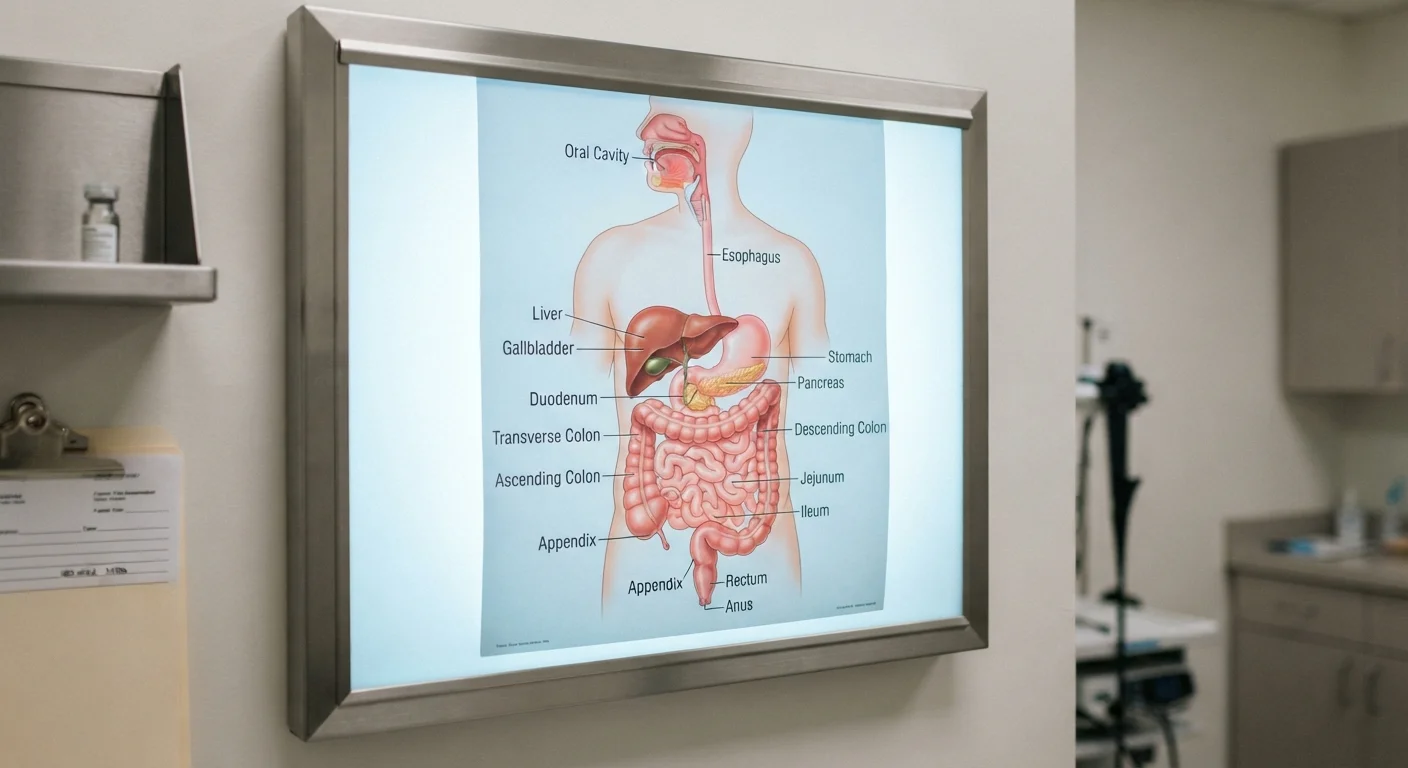
Crohn's disease is one of the two main forms of IBD - the other being ulcerative colitis. What sets Crohn's apart is its reach: it can affect any segment of the digestive tract, from the mouth to the anus, though it most commonly targets the small intestine and the beginning of the large intestine. Inflammation in Crohn's can penetrate through all layers of the intestinal wall, not just the surface lining.
This transmural (full-thickness) inflammation means Crohn's carries a higher risk of complications such as fistulas (abnormal tunnels between organs), abscesses, and bowel obstructions. Crohn's is also associated with symptoms outside the gut, including joint pain, eye inflammation, and skin conditions - none of which occur with IBS.
~10-15%
Adults affected by IBS worldwide
The International Foundation for Gastrointestinal Disorders estimates IBS affects roughly 10-15% of the global adult population, making it one of the most common functional gut disorders.
~3 million
Americans living with IBD
The CDC estimates approximately 3 million US adults have been diagnosed with inflammatory bowel disease, including Crohn's disease and ulcerative colitis.
Up to 5 years
Average diagnostic delay for Crohn's
Research published in gastroenterology journals indicates some patients wait several years between first symptoms and a confirmed Crohn's diagnosis, often due to symptom overlap with IBS.
For a symptom-by-symptom breakdown of what different gut complaints may signal, the gut symptom reference guide is a useful companion resource.
Diagnosis and Why Getting It Right Matters
Because IBS, IBD, and Crohn's share symptoms, no self-diagnosis is reliable. A physician will typically use a combination of tools: blood tests to check for inflammation markers (such as CRP and ESR), stool tests, imaging, and colonoscopy with biopsy. Only through this process can a functional disorder be distinguished from an inflammatory one.
Treatment differences are significant. IBS management generally focuses on dietary adjustments, stress management, and medications that regulate gut motility or sensitivity. IBD and Crohn's, by contrast, typically require anti-inflammatory or immunosuppressive medications, and in some cases, surgery. Using IBS-focused strategies when someone actually has Crohn's can allow serious disease progression to go unchecked.
When to See a Doctor Promptly
Certain symptoms should never be attributed to IBS without a professional evaluation first. Blood in the stool, significant unintended weight loss, persistent fever, or symptoms that awaken you from sleep are considered red-flag signs. These warrant timely medical assessment to rule out IBD, Crohn's, or other serious conditions. Do not delay seeking care if any of these are present.
Changes in bowel habits that persist beyond a few weeks - particularly if accompanied by blood in the stool, unintentional weight loss, or fever - should always be evaluated by a healthcare professional. These are not symptoms to manage at home.
This article is for general informational purposes only and does not constitute medical advice. Always consult a qualified healthcare professional for evaluation, diagnosis, and treatment of any health condition.