

| Most common digestive complaint | Bloating affects an estimated 10-30% of adults (American Journal of Gastroenterology) |
| IBS prevalence (US adults) | Approximately 10-15% (American College of Gastroenterology) |
| GERD prevalence (US adults) | Affects roughly 20% of Americans (National Institute of Diabetes and Digestive and Kidney Diseases (NIDDK)) |
| Normal bowel movement frequency | 3 times per day to 3 times per week (Cleveland Clinic) |
| Dehydration risk with diarrhea | Can develop within hours in vulnerable individuals (CDC) |
| Gut-brain axis connection | Over 90% of the body's serotonin is produced in the gut (California Institute of Technology / published neuroscience research) |
How to Use This Guide
Digestive symptoms are among the most common reasons adults seek medical care - yet they're also among the easiest to misread. A bloated stomach might feel alarming but be entirely benign. Conversely, a symptom that seems minor can occasionally point to something that warrants prompt attention.
This reference guide walks through the most frequent digestive complaints one by one, explaining what each may signal, what typically makes it worse or better, and when it's time to speak with a clinician. It is not a diagnostic tool. For any ongoing, severe, or worsening symptoms, consult a qualified healthcare professional.
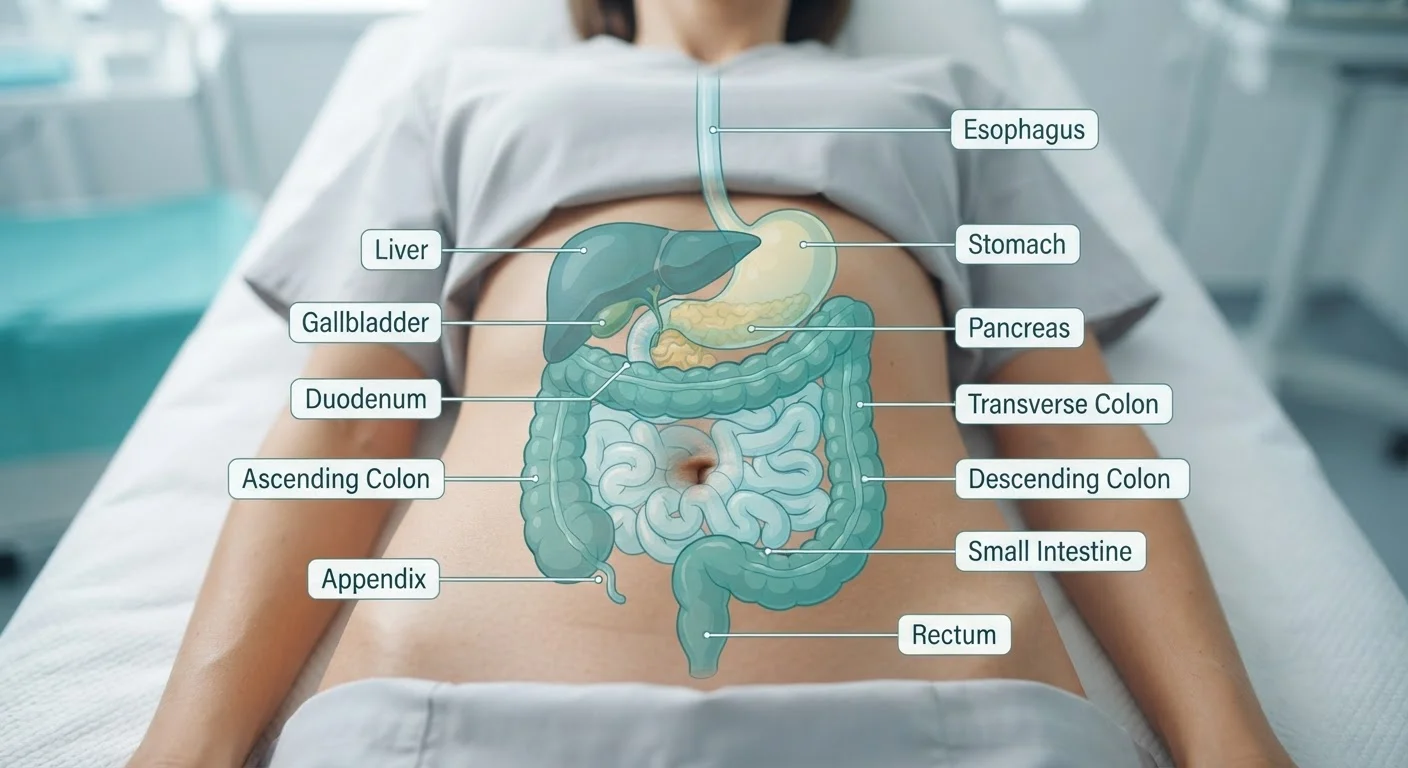
For a deeper look at how the digestive system works before diving into symptoms, see our plain-language guide to what your gut actually does.
| Most common digestive complaint | Bloating affects an estimated 10-30% of adults (American Journal of Gastroenterology) |
| IBS prevalence (US adults) | Approximately 10-15% (American College of Gastroenterology) |
| GERD prevalence (US adults) | Affects roughly 20% of Americans (National Institute of Diabetes and Digestive and Kidney Diseases (NIDDK)) |
| Normal bowel movement frequency | 3 times per day to 3 times per week (Cleveland Clinic) |
| Dehydration risk with diarrhea | Can develop within hours in vulnerable individuals (CDC) |
| Gut-brain axis connection | Over 90% of the body's serotonin is produced in the gut (California Institute of Technology / published neuroscience research) |
Symptom-by-Symptom Breakdown
Bloating and Abdominal Distension
What it feels like: A sensation of fullness, tightness, or visible swelling in the abdomen, often worse after eating.
Common causes: Excess gas from swallowed air or fermentation of food in the colon, food intolerances (especially lactose or fructose), constipation, or irritable bowel syndrome (IBS). Hormonal fluctuations can also trigger bloating, particularly around menstruation - see our article on period pain versus something more serious for related context.
When to seek care: Persistent bloating not linked to diet, accompanied by unexplained weight loss, or associated with changes in bowel habits.
Abdominal Cramping
What it feels like: Intermittent, wave-like pain that may ease after passing gas or having a bowel movement.
Common causes: IBS, gas buildup, gastroenteritis (stomach flu), food intolerances, or menstrual cramps. Cramps that consistently occur after eating may point to a motility issue or food sensitivity.
When to seek care: Severe, sudden, or constant pain - rather than intermittent cramping - always warrants evaluation. Cramping with fever, vomiting, or blood in stool is a red flag.
Diarrhea and Loose Stools
What it feels like: Frequent, watery, or unformed bowel movements, sometimes urgent.
Common causes: Viral or bacterial infection, food poisoning, IBS, inflammatory bowel disease (IBD), medication side effects, or food intolerances. Stress and anxiety also stimulate gut motility - a well-documented connection explained in our article on the gut-brain axis.
When to seek care: Diarrhea lasting more than two days in adults, signs of dehydration, blood or mucus in stool, or high fever.
Constipation
What it feels like: Fewer than three bowel movements per week, hard or dry stools, straining, or a sense of incomplete emptying.
Common causes: Low fiber intake, inadequate hydration, physical inactivity, certain medications (particularly opioids and some antacids), or hypothyroidism. Chronic constipation can also indicate a functional gut disorder.
When to seek care: New-onset constipation with no clear dietary cause, constipation alternating with diarrhea, or any rectal bleeding.
Heartburn and Acid Reflux
What it feels like: A burning sensation in the chest or throat, often worse after meals, bending, or lying down. May be accompanied by a sour taste.
Common causes: Gastroesophageal reflux disease (GERD), overeating, fatty or spicy foods, alcohol, caffeine, or being overweight. Pregnancy also increases reflux risk.
When to seek care: Frequent reflux (more than twice weekly), difficulty swallowing, persistent cough, or chest pain that is not clearly digestive in origin - chest pain should always be evaluated promptly to rule out cardiac causes.
Nausea
What it feels like: An unsettled stomach with the urge to vomit, which may or may not result in vomiting.
Common causes: Gastroenteritis, food poisoning, acid reflux, IBS, medications, motion sickness, pregnancy, or anxiety. Nausea after meals may indicate gastroparesis (delayed stomach emptying) or an ulcer.
When to seek care: Prolonged nausea, vomiting that prevents keeping fluids down, vomiting blood, or nausea with severe abdominal pain.
Peristalsis
The wave-like muscular contractions that move food and waste through the digestive tract. Disruptions in peristalsis can cause symptoms like constipation or diarrhea.
GERD
Gastroesophageal reflux disease - a chronic condition where stomach acid flows back into the esophagus, causing persistent heartburn or irritation.
IBS (Irritable Bowel Syndrome)
A functional gut disorder characterized by recurring abdominal pain, bloating, and changes in bowel habits without identifiable structural damage to the intestines.
IBD (Inflammatory Bowel Disease)
A group of chronic conditions - including Crohn's disease and ulcerative colitis - involving persistent inflammation of the gastrointestinal tract.
Motility
The ability of the digestive tract muscles to contract and move contents along. Poor motility can lead to bloating, nausea, or constipation.
Gastroparesis
A condition in which the stomach empties too slowly, causing nausea, bloating, and early fullness after eating. It is often associated with diabetes or nerve damage.
Overlapping Symptoms: Why Diagnosis Isn't Always Straightforward
Many digestive conditions share symptoms, making self-diagnosis unreliable. IBS, IBD, and Crohn's disease, for example, all involve abdominal pain and altered bowel habits - yet they are fundamentally different conditions requiring different management. Our article on why IBS, IBD, and Crohn's are so often confused explains the distinctions clearly.
Similarly, persistent indigestion is not always simple - several serious conditions can present identically. See conditions that disguise themselves as ordinary indigestion for more detail.
60-70M
Americans affected by digestive diseases
According to the National Institute of Diabetes and Digestive and Kidney Diseases (NIDDK), digestive conditions are among the most prevalent chronic health issues in the US.
~20%
US adults with chronic GERD symptoms
NIDDK estimates roughly one in five American adults experiences acid reflux symptoms at least weekly.
1 in 7
Adults meet diagnostic criteria for IBS
Global prevalence estimates from the Rome Foundation suggest IBS is consistently underdiagnosed in primary care settings.
If you are unsure whether your symptoms are ordinary or something more, our guide on when gut symptoms become red flags outlines the warning signs that should never be ignored. And if you are preparing to see a doctor, our checklist of questions to ask your doctor can help you get the most from your appointment.
This article is for general informational and educational purposes only and does not constitute medical advice. Always consult a qualified healthcare professional for evaluation, diagnosis, or treatment of any health concern.