
Group Classes, Solo Training, and Outdoor Exercise: Weighing the Trade-Offs

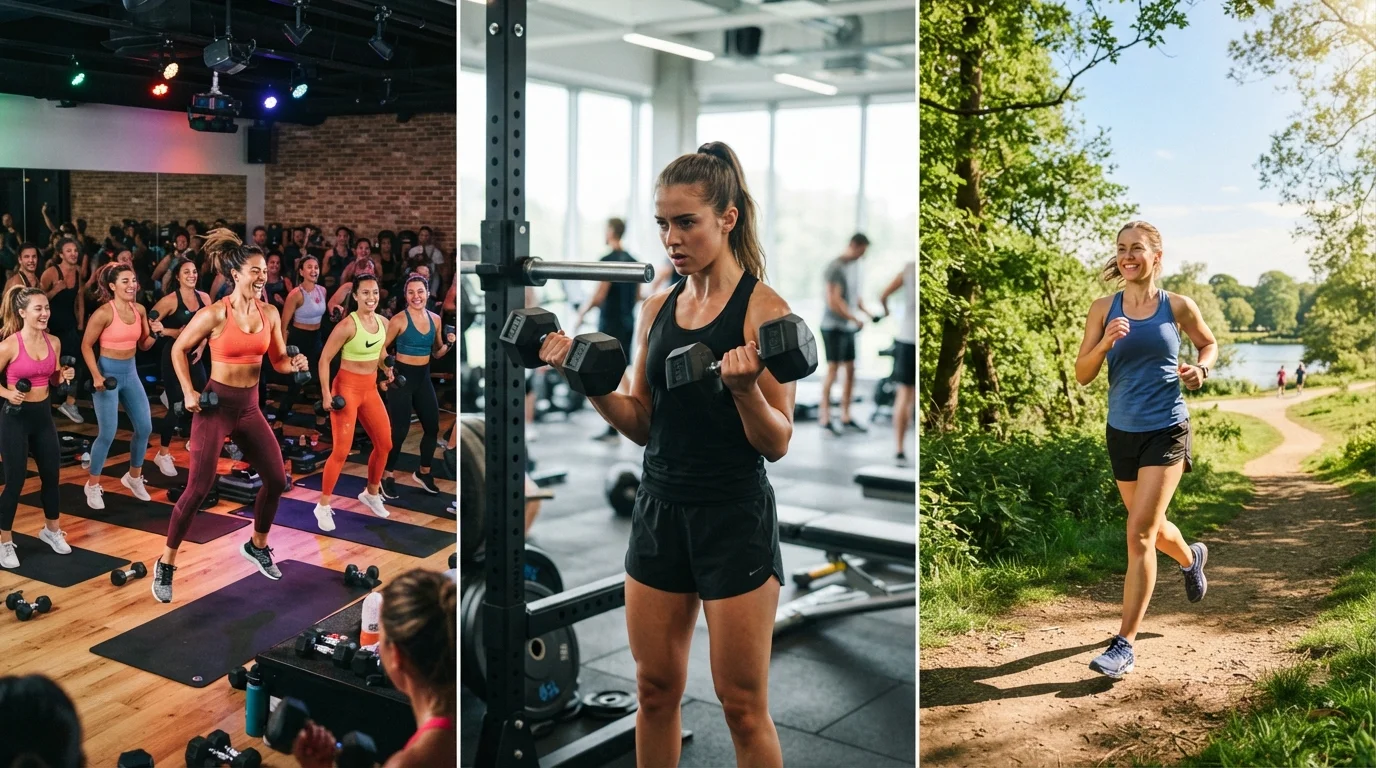
Key Takeaways
Built-in structure reduces decision fatigue for beginners
Group classes provide a pre-planned sequence led by an instructor, so participants don't need to design their own workout. This is especially valuable for those who don't yet know how to structure an effective session.
Social environment increases accountability and motivation
Exercising alongside others creates a sense of commitment that can be harder to replicate alone. Exercise adherence research consistently identifies social support as a meaningful factor in maintaining physical activity habits.
Instructor-led cueing improves safety in real time
A qualified instructor can offer general form reminders during a class, which reduces the risk of technique errors that beginners might not recognize on their own.
Fixed pace may not suit every fitness level
Group classes move at a tempo set for the group, which can feel too demanding or too easy depending on your current conditioning. Beginners may find themselves pushing beyond safe limits to keep up.
Individual form corrections are limited in large classes
Instructors typically cannot monitor every participant simultaneously, meaning technique errors can go unnoticed. This is particularly relevant for complex movements like squats or kettlebell swings.
Scheduling constraints reduce flexibility
Classes run at fixed times, which doesn't suit everyone's work or family schedule. Missing a class can make it easier to skip the next one, disrupting consistency.
Our Verdict
Group classes, solo training, and outdoor exercise each fill a genuine role in a well-rounded fitness life. The format that suits you best depends on how you're motivated, what your schedule allows, and what kind of variety keeps you consistent. Most people benefit from drawing on more than one setting across their week rather than committing exclusively to one.
Beginners who want structure and accountability will often do well starting with group classes, while those who prefer flexibility and self-direction may find solo or outdoor training a better fit from day one.
Why Your Training Environment Matters
The type of exercise you do - cardio, strength, flexibility - gets most of the attention. But the setting you train in shapes your habits just as powerfully. Where and how you work out affects your motivation, your technique, your consistency, and ultimately your results.
This article breaks down the three most common training formats - group classes, solo training, and outdoor exercise - so you can weigh the genuine trade-offs and find what fits your life. If you're still figuring out what kinds of movement to include, our overview of major exercise categories is a useful starting point.
This Is General Fitness Guidance
The information in this article is intended as general education about training formats - not as personalized exercise programming. Individual fitness needs vary based on health status, goals, and physical condition. If you have a chronic health condition, are recovering from injury, or are pregnant, consult a qualified healthcare provider or certified fitness professional before beginning any new exercise routine.
Group Classes: Structured, Social, and Motivating
Group fitness classes - whether that's cycling, yoga, HIIT, or dance cardio - are a popular entry point for beginners. A qualified instructor leads the session, which removes the guesswork about what to do next.
Built-in structure reduces decision fatigue for beginners
Group classes provide a pre-planned sequence led by an instructor, so participants don't need to design their own workout. This is especially valuable for those who don't yet know how to structure an effective session.
Social environment increases accountability and motivation
Exercising alongside others creates a sense of commitment that can be harder to replicate alone. Exercise adherence research consistently identifies social support as a meaningful factor in maintaining physical activity habits.
Instructor-led cueing improves safety in real time
A qualified instructor can offer general form reminders during a class, which reduces the risk of technique errors that beginners might not recognize on their own.
The accountability of showing up to a scheduled class helps many people build consistency early on, and the shared energy of a group can push you harder than you might go alone. Research in exercise adherence consistently identifies social support as a factor in sustaining physical activity habits.
That said, group classes have real limitations. Instructors cannot monitor every participant simultaneously, which means form errors can go uncorrected - a meaningful concern for beginners. The pace is also set for the group, not for you individually, which can feel too fast or too slow depending on where you are in your fitness journey. For a deeper look at the beginner experience specifically, see the honest pros and cons of group classes for beginners.
Fixed pace may not suit every fitness level
Group classes move at a tempo set for the group, which can feel too demanding or too easy depending on your current conditioning. Beginners may find themselves pushing beyond safe limits to keep up.
Individual form corrections are limited in large classes
Instructors typically cannot monitor every participant simultaneously, meaning technique errors can go unnoticed. This is particularly relevant for complex movements like squats or kettlebell swings.
Scheduling constraints reduce flexibility
Classes run at fixed times, which doesn't suit everyone's work or family schedule. Missing a class can make it easier to skip the next one, disrupting consistency.
Solo Training: Control, Flexibility, and Self-Reliance
Training on your own - whether at a gym or at home - puts you fully in charge of every variable: the exercises, the load, the rest periods, and the schedule. For many people, that flexibility is the single biggest advantage.
~50%
Adults who cite lack of time as exercise barrier
According to the U.S. Centers for Disease Control and Prevention, time constraints are among the most commonly reported barriers to regular physical activity among American adults.
20-30 min
Minimum effective solo session length
The American College of Sports Medicine notes that even shorter bouts of moderate-intensity exercise, accumulated throughout the day, contribute meaningfully to weekly physical activity targets.
Solo sessions allow you to progress at your own pace and focus on the specific goals that matter to you. If you're building a strength routine, you can structure it precisely; if you need to cut a session short one day, there's no class to miss. This format pairs well with understanding resistance training options, since solo environments give you full access to free weights, machines, or bodyweight work.
The challenge is that solo training demands internal motivation. Without external accountability, sessions are easier to skip. Beginners also lack built-in feedback on technique, which can lead to ingrained movement habits that are harder to correct later. If you're new to exercising independently, comparing home and gym environments can help you decide where to start.
Outdoor Exercise: Fresh Air, Variable Terrain, and Mental Benefits
Running, cycling, hiking, and bodyweight training in a park represent a distinct category. Outdoor exercise combines physical movement with exposure to natural environments, and there's meaningful evidence that this combination can reduce perceived exertion, lower stress markers, and improve mood - benefits sometimes called the "green exercise" effect in exercise science literature.
Outdoor settings also introduce variable terrain - inclines, uneven surfaces, wind resistance - that naturally challenges your body in ways a flat treadmill doesn't. This kind of varied stimulus can complement structured indoor training. Mixing training types is one of the more reliable strategies for long-term progress.
The downsides are practical: weather is unpredictable, safe routes aren't always accessible, and lighting or surface conditions can raise injury risk if you're not careful. Outdoor settings also lack equipment, limiting the range of exercises you can perform without prior planning.
How to Choose - or Combine - Training Formats
There's no hierarchy here. The format that produces results is the one you'll consistently show up for. A few practical questions can help guide your choice:
- Do you thrive with external structure? Group classes reduce decision fatigue and provide a coach's cueing.
- Do you need schedule flexibility? Solo or outdoor sessions can happen on your timetable.
- Do you want lower stress alongside physical activity? Outdoor movement offers benefits that indoor settings typically don't.
- Are you brand new to exercise? Starting with beginner-friendly routines in any setting is more important than finding the optimal one.
Many people find that mixing formats across the week - a group class for motivation, a solo session for focused strength work, and an outdoor walk or run for mental recovery - produces the most sustainable habit. Don't forget that regardless of format, rest and recovery remain essential to any training plan.
This article is for general informational purposes only and is not a substitute for professional medical or fitness advice. Consult a qualified healthcare provider or certified fitness professional before starting a new exercise program, especially if you have an existing health condition.