

Key Takeaways
Our Verdict
Whole foods remain the nutritional foundation most healthcare professionals recommend, delivering nutrients in complex, bioavailable packages the body recognises. Fortified foods, however, serve a genuine and evidence-supported role in addressing specific shortfalls — particularly for iron, folate, and vitamin D — that are common among women. The most effective approach for most people is a diet built primarily around whole foods, supplemented strategically by fortified options where gaps exist.
| Best for | Recommended |
|---|---|
| Women prioritising broad, synergistic nutritional benefits | Whole Foods |
| Women with identified deficiencies or restricted dietary patterns | Fortified Foods |
| Pregnant women or those planning pregnancy needing folate | Fortified Foods alongside Whole Foods |
| Most women seeking a sustainable everyday eating pattern | A combination of both approaches |
Why Nutrient Gaps Are a Real Concern for Women
Many women — across all age groups and dietary patterns — fall short of key nutrients. Iron, calcium, folate, vitamin D, and magnesium are among the most commonly under-consumed. These gaps are not always the result of poor choices; they can reflect higher physiological demands (menstruation, pregnancy, breastfeeding), food access, or digestive differences.
Understanding where your nutrients come from, and how well your body actually uses them, is a practical first step toward filling those gaps. Two main strategies tend to come up in this conversation: eating more whole foods, or leaning on fortified foods and products. Both have a place — but they work differently.
For broader context on building a nutritious daily diet, see our Balanced Diet Basics hub.
What Whole Foods Bring to the Table
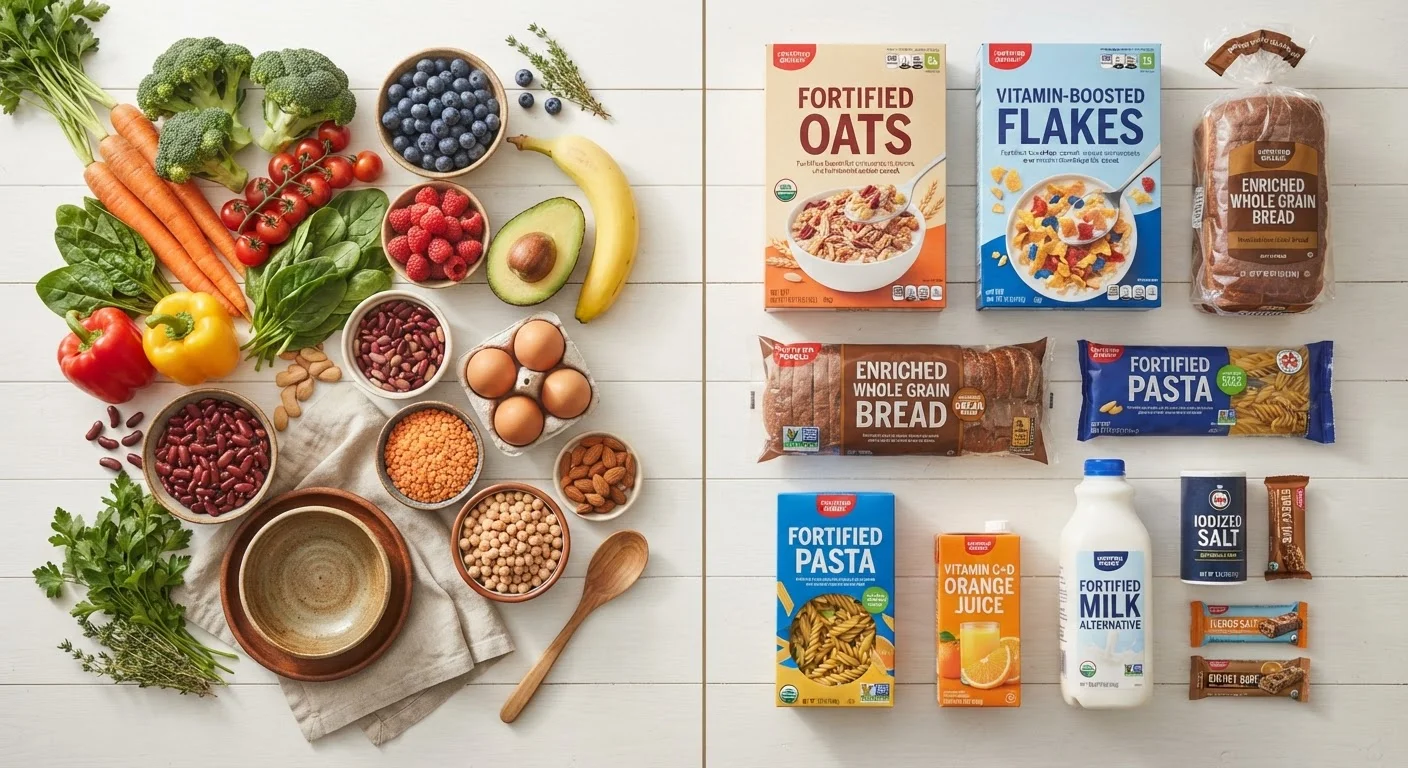
Whole foods — think leafy greens, legumes, eggs, nuts, seeds, fish, and fruit — deliver nutrients in their naturally occurring form, bundled with fibre, antioxidants, and phytonutrients (plant compounds with health-supporting properties). This combination matters because nutrients rarely act alone in the body.
For example, the vitamin C in an orange does more than just provide vitamin C — it also helps your body absorb the plant-based iron found in spinach eaten at the same meal. This kind of nutrient interaction, sometimes called a food synergy effect, is difficult to replicate in processed or fortified products.
Whole foods also tend to support gut health through their fibre content, and research broadly associates whole-food dietary patterns with lower risk of chronic disease. That said, whole foods alone can still leave gaps — particularly for nutrients like vitamin D, which few foods contain naturally in significant amounts.
To understand how different vitamins behave once inside your body, our article on fat-soluble and water-soluble vitamins is a helpful read.
Pair Foods to Boost Absorption
You can enhance nutrient absorption from whole foods with simple pairings. Try eating vitamin C-rich foods (bell peppers, citrus) alongside plant iron sources (spinach, lentils) to improve iron uptake. Similarly, consuming vitamin D-containing foods with a source of healthy fat can support absorption of this fat-soluble vitamin.
How Fortified Foods Fill Specific Gaps
Fortified foods have nutrients added to them during manufacturing — either to restore what processing removes (called enrichment) or to add nutrients not naturally present. Common examples include folic acid in bread and cereals, vitamin D in plant milks, and iron in breakfast cereals.
Public health programmes have used food fortification with measurable success. Mandatory folic acid fortification of grain products, for instance, has been associated with significant reductions in neural tube defects in countries where it has been implemented. For women who follow plant-based diets or have low appetite, fortified foods can provide a reliable and accessible route to nutrients that would otherwise be difficult to obtain.
The limitations are real, however. Fortified nutrients are added in isolated forms that may not be absorbed as efficiently as naturally occurring counterparts. Fortified products can also carry added sugars, sodium, or refined carbohydrates that offset some of their nutritional value. And relying heavily on fortified foods may create a false sense of nutritional security while leaving fibre and phytonutrient intake low.
For a closer look at how whole and processed foods compare more broadly, see Whole Foods vs. Ultra-Processed Foods.
| Whole Foods | Fortified Foods | |
|---|---|---|
| Nutrient form | Naturally occurring, complex | Isolated, synthetically added |
| Bioavailability | Often higher due to food synergy | Variable; depends on nutrient form |
| Additional benefits | Fibre, phytonutrients, antioxidants | Consistent, measurable added dose |
| Accessibility | Cost and season dependent | Widely available year-round |
| Risk of over-consumption | Very low for most nutrients | Possible with multiple fortified products |
| Best use case | Foundation of daily diet | Targeted gap-filling |
Making the Right Choice for Your Life Stage
Women's nutritional needs are not static. Adolescence, pregnancy, postpartum recovery, perimenopause, and older adulthood each bring distinct demands. A teenager who menstruates heavily may benefit from iron-fortified cereals alongside iron-rich whole foods like lentils. A woman in her first trimester is often advised to use folic acid supplementation alongside a folate-rich diet. A post-menopausal woman may need to pay closer attention to calcium and vitamin D from all available sources.
No single dietary strategy fits every scenario. What matters is understanding your own starting point — ideally confirmed through a blood test with your doctor — and building a pattern that addresses your specific needs without unnecessarily restricting whole food variety.
Don't Self-Diagnose Nutrient Deficiencies
It can be tempting to assume you are deficient in a nutrient based on symptoms alone, but many deficiency signs overlap with other conditions. Taking high doses of fortified products or supplements without confirmed need can lead to excess intake of certain nutrients, which carries its own risks. Always work with a healthcare provider to identify and address genuine gaps.
If you are curious how plant-based eating affects these trade-offs, our piece on plant-based vs. omnivorous dietary patterns explores the nutritional considerations in depth.
This article is for general informational purposes only and does not constitute medical or dietary advice. Always consult a qualified healthcare professional before making significant changes to your diet, especially during pregnancy, postpartum recovery, or if you have a diagnosed health condition.