
Estrogen, Progesterone, and Testosterone: What Each Hormone Actually Does in the Female Body

Key Takeaways
Sex Hormones
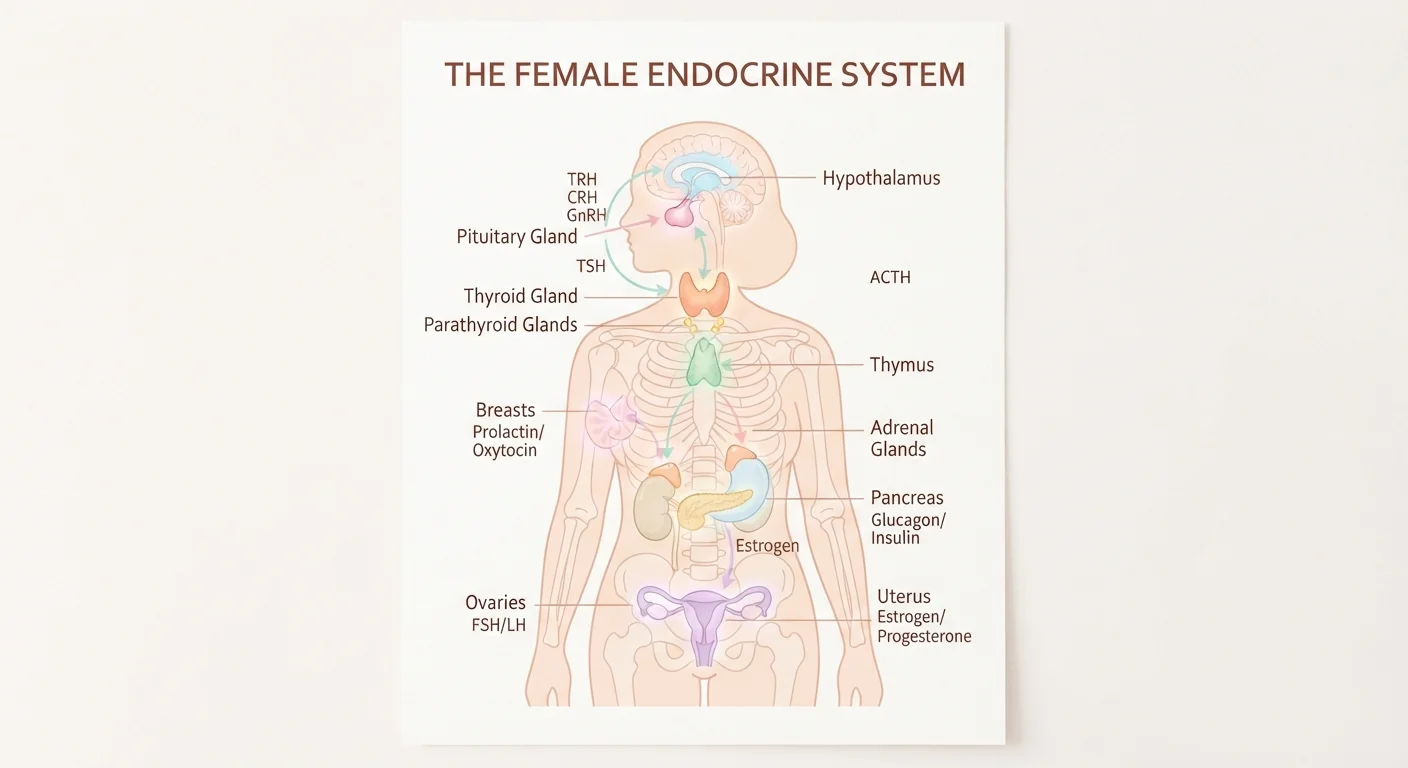
Sex hormones are chemical messengers produced mainly in the ovaries, adrenal glands, and fat tissue. In women, the three primary sex hormones are estrogen, progesterone, and testosterone. They travel through the bloodstream and give instructions to cells all over the body — influencing everything from bone density and mood to reproductive health and energy levels.
These hormones belong to a class called steroid hormones, meaning they are derived from cholesterol and can cross cell membranes to directly influence gene expression.
Why These Three Hormones Matter
When the word "hormones" comes up in conversation about women's health, estrogen tends to steal the spotlight. But the full picture is richer — and more interesting — than that. Estrogen, progesterone, and testosterone each carry their own distinct responsibilities, and all three are present and essential in the female body at every life stage.
Understanding what these hormones actually do helps you make sense of changes you may already be experiencing — from premenstrual mood shifts to energy dips to changes that come with age. For a deeper dive into how these levels shift across your lifetime, see how your body's chemistry shifts from puberty to menopause.
This article is for general educational purposes only and is not a substitute for professional medical advice. Please consult a qualified healthcare provider for any personal health concerns.
Estrogen: The Builder and Regulator
Estrogen is produced mainly in the ovaries, with smaller amounts made in the adrenal glands and fat tissue. It exists in several forms; estradiol is the most active during the reproductive years. Its roles are far-reaching:
- Reproductive development: Estrogen drives puberty — breast development, pubic hair growth, and the beginning of the menstrual cycle.
- Bone health: It helps the body absorb calcium and slows bone loss. This is why bone density often decreases after menopause, when estrogen levels drop.
- Cardiovascular function: Estrogen supports healthy blood vessel flexibility and cholesterol balance.
- Brain and mood: It influences serotonin, a neurotransmitter linked to mood regulation, which helps explain why mood can shift with hormonal changes across the cycle.
- Skin and tissue: It supports collagen production, keeping skin, vaginal tissue, and mucous membranes healthy and resilient.
~300+
Tissues in the body with estrogen receptors
Research published in endocrinology literature indicates estrogen receptors are found in over 300 tissue types, explaining the hormone's wide-ranging influence beyond reproduction.
~1%
Rate of bone loss per year post-menopause
The National Osteoporosis Foundation notes that women can lose up to 1–2% of bone mass per year in the years following menopause, largely linked to declining estrogen levels.
6–8x
Lower testosterone levels in women vs. men
According to general endocrinological reference ranges, women typically have roughly 6 to 8 times lower circulating testosterone than men, though the hormone remains physiologically significant.
To understand how estrogen fluctuates during each phase of the cycle, see our menstrual cycle explainer.
Progesterone: The Balancer
Progesterone is produced primarily after ovulation by a temporary structure in the ovary called the corpus luteum. If pregnancy occurs, the placenta takes over production. Its key roles include:
- Preparing the uterus: After ovulation, progesterone thickens the uterine lining to prepare it for a fertilized egg. If pregnancy doesn't occur, levels fall and the lining sheds — beginning menstruation.
- Counterbalancing estrogen: Progesterone prevents the uterine lining from growing excessively under the influence of estrogen alone.
- Calm and sleep: It has a mild calming effect on the nervous system, which may support sleep quality in the second half of the cycle.
- Thyroid and immune function: Progesterone interacts with thyroid hormones and plays a role in immune tolerance during pregnancy.
Tracking Your Cycle Can Reveal Patterns
Keeping a simple daily log of energy, mood, sleep quality, and physical symptoms over two to three months can help you and your healthcare provider identify hormonal patterns. Many people find that recognizing these rhythms — rather than being surprised by them — reduces distress and supports better self-care planning.
Progesterone levels are naturally low in the first half of the menstrual cycle and rise after ovulation — a pattern that underpins the physical and emotional changes many women notice month to month.
Testosterone: Not Just a "Male" Hormone
One of the most common misconceptions in women's health is that testosterone is irrelevant to women. In reality, women produce testosterone in the ovaries and adrenal glands — and it plays a meaningful role in daily wellbeing:
- Libido: Testosterone is closely linked to sexual desire in women.
- Muscle strength and metabolism: It contributes to muscle mass maintenance and fat distribution.
- Energy and motivation: Many women report that low testosterone levels correlate with persistent fatigue and low drive.
- Bone density: Like estrogen, testosterone supports bone strength.
- Mood: It plays a supporting role in confidence, focus, and emotional resilience.
Women produce significantly less testosterone than men, but even small changes in its levels can have noticeable effects. For a full glossary of hormonal terminology, key terms in hormonal health is a helpful reference.
How These Hormones Work Together
No hormone operates in isolation. Estrogen, progesterone, and testosterone rise and fall in coordinated patterns throughout the menstrual cycle, across life stages, and in response to stress, sleep, nutrition, and overall health. When one hormone shifts significantly, the others often respond.
This interconnection is why hormonal health is rarely about a single number on a lab report — it is about patterns, context, and how you feel overall. If you are curious about the hormonal myths that often complicate these conversations, common myths about female hormones offers research-grounded clarity.
“Hormones don't act in isolation — they are part of an intricate signaling network that responds continuously to what is happening in and around the body. Understanding that network is the foundation of understanding women's health.”
— Dr. Jerilynn Prior, Professor of Endocrinology, University of British Columbia, and founder of the Centre for Menstrual Cycle and Ovulation Research
If you have concerns about your hormone levels — whether due to irregular cycles, mood changes, fatigue, or other symptoms — speak with a healthcare provider. Blood tests can provide a clearer picture, and support options vary widely depending on individual circumstances.
This article provides general health information and is not intended as medical advice. Always consult a qualified healthcare professional for diagnosis or treatment.