
The Hormonal Lifecycle: How Your Body's Chemistry Shifts from Puberty to Menopause

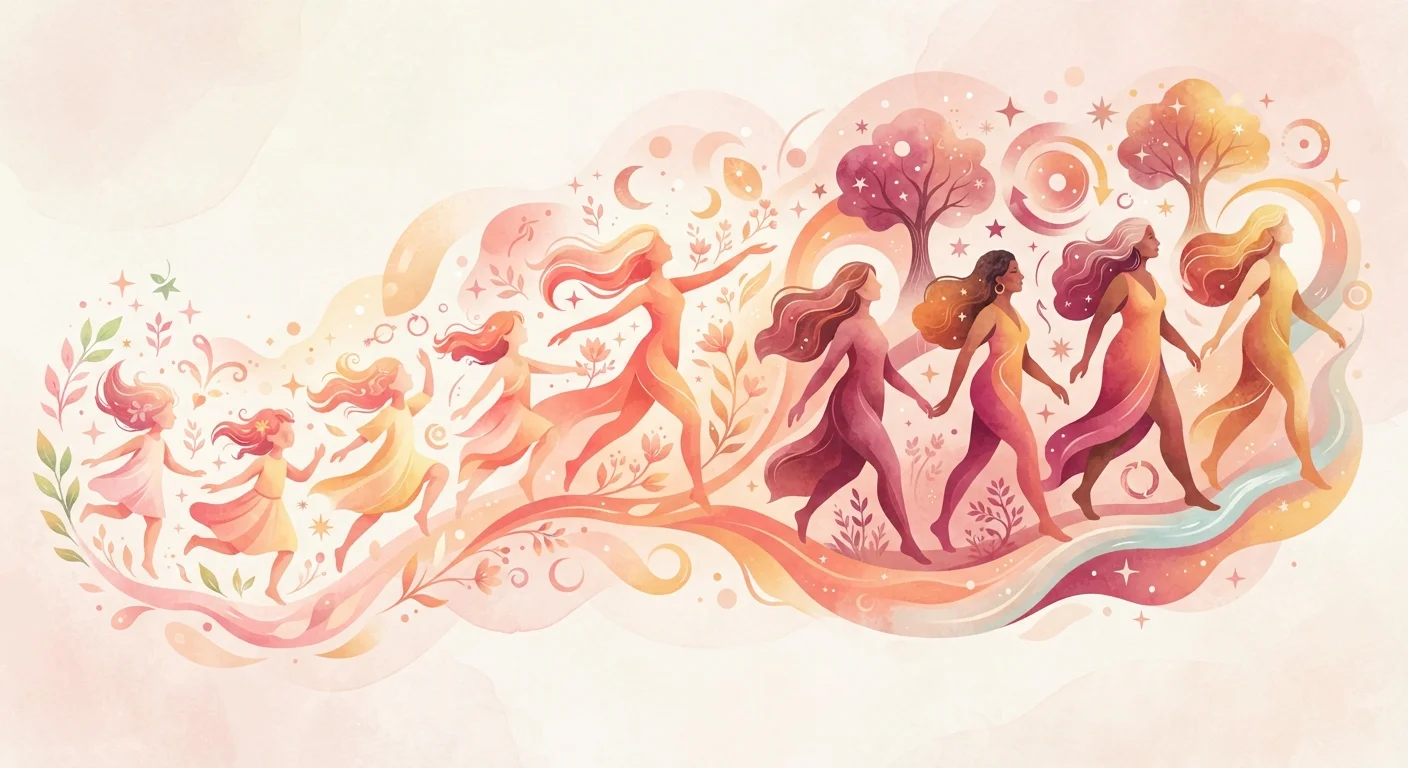
Key Takeaways
What Are Hormones, Really?
Hormones are chemical messengers produced by glands — collectively called the endocrine system — that travel through the bloodstream and instruct organs and tissues how to behave. Think of them as the body's internal communication network: quiet, constant, and profoundly influential.
For women, the most discussed hormones are estrogen and progesterone, produced primarily by the ovaries. But others matter enormously too: follicle-stimulating hormone (FSH) and luteinizing hormone (LH) are released by the brain's pituitary gland to coordinate the menstrual cycle, while testosterone (present in women in smaller amounts) influences libido and bone density. Even cortisol (the stress hormone) and thyroid hormones intersect with reproductive health — as explored in our guide to thyroid disorders.
Understanding the basics of these messengers helps make sense of symptoms that can otherwise feel confusing or alarming.
~40 years
Duration of a woman's reproductive hormonal cycle
From menarche to menopause, most women experience approximately four decades of cyclical hormonal change.
51
Average age of menopause in the U.S.
According to the North American Menopause Society, the average age of natural menopause in the United States is approximately 51.
2–12 years
Typical duration of perimenopause
Research suggests perimenopause can last anywhere from a couple of years to over a decade before menopause is confirmed.
Puberty: The First Great Hormonal Shift
Puberty is the body's opening act. It typically begins between ages 8 and 13, triggered when the brain signals the pituitary gland to release FSH and LH. These hormones prompt the ovaries to start producing estrogen, setting off a cascade of physical changes: breast development, growth spurts, widening hips, and eventually the first menstrual period (menarche).
Estrogen also begins shaping bone density and influencing mood and cognition — which is why many young people notice emotional intensity during this period. Cycles may be irregular for the first one to two years as the hormonal feedback loop finds its rhythm.
Irregular Cycles in Early Puberty Are Common
It can take one to two years after the first period for cycles to become consistent. This is a normal part of the hormonal system establishing its rhythm. If irregularity persists beyond this window, or is accompanied by significant pain or heavy bleeding, discuss it with a healthcare provider.
This phase is also when conditions like polycystic ovary syndrome (PCOS) can first emerge. If periods are extremely irregular or painful beyond typical cramping, a healthcare provider can help investigate. Learn more in our overview of PCOS and its hormonal roots.
The Reproductive Years: A Monthly Hormonal Rhythm
From the mid-teens through the mid-to-late 40s, most women experience a monthly hormonal cycle lasting roughly 21 to 35 days. This cycle has four phases driven by rising and falling estrogen, progesterone, FSH, and LH:
- Menstrual phase: Estrogen and progesterone are at their lowest, triggering the uterine lining to shed.
- Follicular phase: Estrogen rises as a follicle (egg sac) matures, often bringing a lift in energy and mood.
- Ovulation: An LH surge triggers egg release — many women notice peak energy and libido here.
- Luteal phase: Progesterone rises to prepare the uterine lining. If pregnancy doesn't occur, both hormones drop, which can bring premenstrual symptoms.
These monthly shifts explain a great deal about emotional and physical experience. For a closer look at how mood tracks these changes, see our article on why your mood shifts throughout the month.
Track your cycle — even loosely — using a simple app or calendar. Patterns in energy, mood, and physical symptoms often correspond to hormonal phases, and this information is genuinely useful when talking to your doctor.
Self-reported cycle tracking helps clinicians identify irregularities and contextualize symptoms that might otherwise be attributed to unrelated causes.
If you notice a symptom that feels new or out of character at any life stage, bring it up at your next appointment rather than waiting to see if it resolves. Many hormonal conditions are most manageable when caught early.
Early identification of hormonal imbalances — including thyroid dysfunction, PCOS, and perimenopause — is associated with better management outcomes.
Pregnancy and Postpartum: Hormones in Overdrive
Pregnancy triggers the most dramatic hormonal surge most women will ever experience. Human chorionic gonadotropin (hCG) — the hormone detected by pregnancy tests — rises sharply in early pregnancy and is largely responsible for nausea. Estrogen and progesterone climb steadily to sustain the pregnancy, support fetal development, and prepare the body for birth.
After delivery, these hormones drop steeply — one of the sharpest hormonal declines in human physiology. This plunge contributes to postpartum mood changes ranging from the common "baby blues" (typically resolving within two weeks) to postpartum depression, a more serious condition requiring professional support.
Postpartum Depression Is a Medical Condition
Postpartum depression affects roughly 1 in 7 women and is distinct from the brief "baby blues." It is linked in part to the steep postpartum hormonal drop but is a recognized clinical condition requiring professional support — not a reflection of a mother's capabilities or feelings toward her child. If low mood, anxiety, or intrusive thoughts persist beyond two weeks after birth, please reach out to a healthcare provider promptly.
Breastfeeding introduces another hormonal actor: prolactin, which suppresses ovulation and can reduce estrogen levels, sometimes causing vaginal dryness or lowered libido. These are normal physiological responses — though always worth discussing with a healthcare provider if they cause concern.
If you are pregnant or recently postpartum, please consult a qualified healthcare professional before making any changes to your diet, medications, or care routine.
Perimenopause: The Long Transition
Perimenopause — the transition toward menopause — can begin as early as the mid-30s, though it most commonly starts in the mid-40s. It is defined by erratic fluctuations in estrogen and progesterone as the ovaries gradually reduce their output. Cycles may become shorter, longer, heavier, or lighter.
Common experiences during perimenopause include:
- Hot flashes and night sweats
- Disrupted sleep
- Mood changes and increased anxiety
- Brain fog or difficulty concentrating
- Changes in libido and vaginal comfort
This phase can last anywhere from a few years to more than a decade, making it one of the most variable hormonal transitions. Because symptoms overlap with other conditions — including thyroid dysfunction — a healthcare provider can help distinguish causes through blood tests and clinical evaluation.
Perimenopause Timing Varies Widely
There is no single "normal" timeline for perimenopause. Genetics, smoking history, and certain medical treatments (such as chemotherapy) can all influence when it begins. Women who experience menopause before age 40 — known as premature ovarian insufficiency — should seek prompt medical evaluation, as it carries distinct long-term health considerations.
Menopause and Beyond: A New Hormonal Baseline
Menopause is defined as 12 consecutive months without a menstrual period, marking the end of ovarian reproductive function. The average age in the United States is around 51. Estrogen and progesterone settle at persistently low levels, and FSH rises as the brain continues — unsuccessfully — to stimulate the ovaries.
This new baseline has lasting health implications. Lower estrogen is associated with accelerated bone loss (increasing the risk of osteoporosis), changes in cardiovascular risk profile, and shifts in metabolism. The postmenopausal years also often bring a stabilization of mood for many women once the hormonal turbulence of perimenopause resolves.
Nutritional needs shift meaningfully in this phase too. Our guide on nutrition across a woman's decades covers key dietary priorities for postmenopausal health.
“Menopause is not a disease — it is a natural biological transition. The goal of care should be to support women through that transition in ways that preserve quality of life and long-term health, not simply to suppress symptoms.”
— Dr. JoAnn Manson, Professor of Medicine, Harvard Medical School, and leading researcher in women's health
Supporting Your Hormonal Health at Every Stage
While hormonal changes are a natural part of life, how you experience them is influenced by factors you can support:
- Nutrition: Adequate protein, healthy fats, and micronutrients like magnesium, zinc, and B vitamins all play documented roles in hormone production. Explore the detail in our piece on how nutrition interacts with hormone regulation. You can also find cycle-specific guidance in our hormonal cycle nutrition primer.
- Sleep: Hormonal regulation, including cortisol and growth hormone cycles, depends heavily on consistent, quality sleep.
- Stress management: Chronically elevated cortisol can interfere with estrogen and progesterone balance.
- Regular healthcare: Routine check-ins with a provider allow for monitoring of bone density, cardiovascular markers, and hormonal status across life stages.
Hormonal health sits within the broader context of reproductive wellness — a lifelong conversation between your body and your choices.
This article is for general informational and educational purposes only and does not constitute medical advice. Always consult a qualified healthcare professional for guidance specific to your health situation.