

Key Takeaways
Start here
What Is the Thyroid and What Does It Do?
Next
Hypothyroidism: When the Thyroid Slows Down
Then
Hyperthyroidism: When the Thyroid Goes Into Overdrive
Broaden your view
Other Common Thyroid Conditions
Take action
Diagnosis, Management, and When to See a Doctor
What Is the Thyroid and What Does It Do?
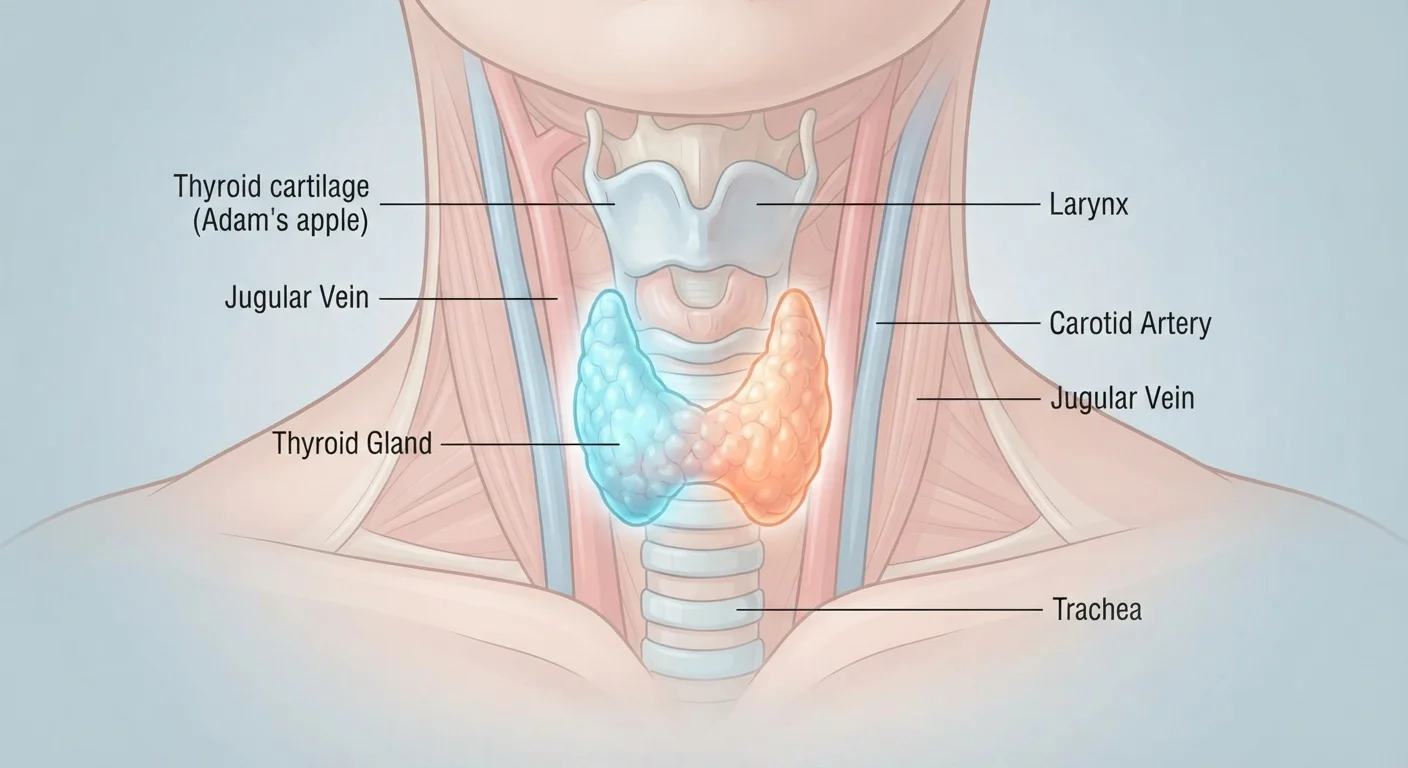
The thyroid is a small, butterfly-shaped gland located at the base of your neck, just in front of your windpipe. Despite its modest size, it plays a central role in how your body functions from moment to moment.
Its primary job is to produce two hormones - triiodothyronine (T3) and thyroxine (T4) - that regulate your metabolism. These hormones influence heart rate, body temperature, energy levels, digestion, mood, and even how quickly your cells divide and repair. A separate gland in the brain called the pituitary releases thyroid-stimulating hormone (TSH) to tell the thyroid how much T3 and T4 to make.
When the thyroid produces the right amount of hormones, this system runs smoothly. When it produces too little or too much, the effects ripple through nearly every organ system. Understanding how these hormones connect to broader body chemistry is useful context - the hormonal lifecycle guide covers how thyroid function interacts with other hormonal shifts across life stages.
TSH (Thyroid-Stimulating Hormone)
A hormone released by the brain's pituitary gland that signals the thyroid to produce more or less thyroid hormone. High TSH usually indicates an underactive thyroid; low TSH suggests overactivity.
T3 and T4
The two main hormones produced by the thyroid gland. They regulate how quickly the body uses energy, controls temperature, and supports organ function.
Autoimmune condition
A health condition in which the body's immune system mistakenly attacks its own healthy cells or tissues. Hashimoto's thyroiditis and Graves' disease are both autoimmune thyroid conditions.
Metabolism
The set of chemical processes your body uses to convert food into energy and support all bodily functions. Thyroid hormones are key regulators of metabolic rate.
Hashimoto's Thyroiditis
The most common cause of hypothyroidism in the US. The immune system gradually damages the thyroid, reducing its ability to produce adequate hormones.
Graves' Disease
An autoimmune disorder and the most frequent cause of hyperthyroidism. Abnormal antibodies overstimulate the thyroid, causing it to produce excessive hormone.
Hypothyroidism: When the Thyroid Slows Down
Hypothyroidism means the thyroid is underactive - it isn't producing enough hormones to keep your body running at a normal pace. The most common cause in the United States is Hashimoto's thyroiditis, an autoimmune condition in which the immune system mistakenly attacks the thyroid gland over time.
Common symptoms include:
- Persistent fatigue and sluggishness
- Unexplained weight gain
- Feeling cold when others are comfortable
- Dry skin, brittle nails, and hair thinning or loss
- Constipation
- Depression or difficulty concentrating (often called "brain fog")
- Slowed heart rate
Symptoms often develop gradually and can be easy to dismiss as stress or aging. Left untreated, hypothyroidism can raise cholesterol levels and strain the heart. Diagnosis is confirmed through a blood test showing elevated TSH (the brain is signaling the thyroid to work harder) and low T4.
Track Your Symptoms Before Your Appointment
Thyroid symptoms often develop slowly, making them easy to overlook or attribute to other causes. Keeping a brief symptom journal - noting fatigue levels, weight changes, mood, and temperature sensitivity - for a few weeks before your appointment gives your doctor more useful information and can lead to a faster, more accurate evaluation.
Hyperthyroidism: When the Thyroid Goes Into Overdrive
Hyperthyroidism occurs when the thyroid produces too much hormone, effectively speeding up the body's processes. The leading cause is Graves' disease, another autoimmune condition in which antibodies stimulate the thyroid to produce hormone continuously, regardless of the body's actual needs.
Common symptoms include:
- Unintentional weight loss despite a normal or increased appetite
- Rapid or irregular heartbeat (palpitations)
- Feeling excessively warm or sweating without exertion
- Anxiety, irritability, or nervousness
- Trembling hands
- Frequent bowel movements or diarrhea
- Difficulty sleeping
- Bulging eyes (specifically associated with Graves' disease)
Because hyperthyroidism can stress the heart and bones, timely diagnosis and treatment matter. Treatment options include medications that reduce hormone production, radioactive iodine therapy, or surgery - all determined by a healthcare provider based on the individual's circumstances.
Severe Hyperthyroidism Requires Prompt Care
A rare but serious complication called thyroid storm can occur when hyperthyroidism becomes extreme - causing a very rapid heart rate, high fever, and confusion. This is a medical emergency. If you or someone you know experiences these combined symptoms suddenly, seek emergency medical care immediately.
Other Common Thyroid Conditions
Beyond hypothyroidism and hyperthyroidism, several other thyroid conditions deserve mention:
- Thyroid nodules
- Lumps or growths within the thyroid gland. Most are benign and cause no symptoms, but some can affect hormone production or, rarely, be cancerous. A doctor evaluates nodules with ultrasound and sometimes a biopsy.
- Goiter
- An enlarged thyroid gland. A goiter can occur with hypothyroidism, hyperthyroidism, or even a normally functioning thyroid. Worldwide, iodine deficiency is a leading cause; in the US, autoimmune disease is more commonly responsible.
- Thyroid cancer
- A relatively uncommon but increasingly detected cancer. Most forms are highly treatable when caught early. Treatment typically involves surgical removal of part or all of the thyroid, sometimes followed by radioactive iodine therapy.
- Thyroiditis
- Inflammation of the thyroid that can cause temporary swings between hyperthyroid and hypothyroid states. Postpartum thyroiditis, occurring after childbirth, is one recognized form.
For readers interested in how thyroid conditions compare to other hormonal disorders, our plain-language comparison of common hormonal conditions provides useful context.
Diagnosis, Management, and When to See a Doctor
If you recognize several of the symptoms described above, the appropriate next step is to speak with a primary care provider. A simple blood test measuring TSH - and, if needed, T3, T4, and thyroid antibody levels - is the standard diagnostic starting point. Imaging such as a thyroid ultrasound may follow if the gland's structure needs to be evaluated.
General management approaches by condition:
- Hypothyroidism: Typically treated with a synthetic form of T4 hormone taken daily to restore normal levels. Dosing is individualized and adjusted over time through regular blood tests.
- Hyperthyroidism: May be managed with anti-thyroid medications, radioactive iodine, or surgery, depending on the underlying cause and severity.
- Nodules and cancer: Monitored or treated based on type, size, and biopsy results under specialist guidance.
Thyroid disorders are lifelong considerations for many people, but with proper medical care, most individuals live full, healthy lives. For a deeper look at how thyroid health specifically affects women, see our article on thyroid health in women. If you're building familiarity with broader hormonal terminology, the key terms in hormonal health reference is a practical companion.
Thyroid Conditions Can Mimic Other Disorders
Many thyroid symptoms - fatigue, mood changes, weight shifts, digestive changes - overlap with conditions such as depression, anemia, or type 2 diabetes. This is one reason why a blood test, rather than symptoms alone, is essential for an accurate diagnosis. Avoid self-diagnosing based on symptoms.
This article is for informational purposes only and does not constitute medical advice. Always consult a qualified healthcare professional for guidance about your individual health situation.