
PCOS, Endometriosis, and Fibroids: A Plain-Language Comparison of Three Common Hormonal Conditions

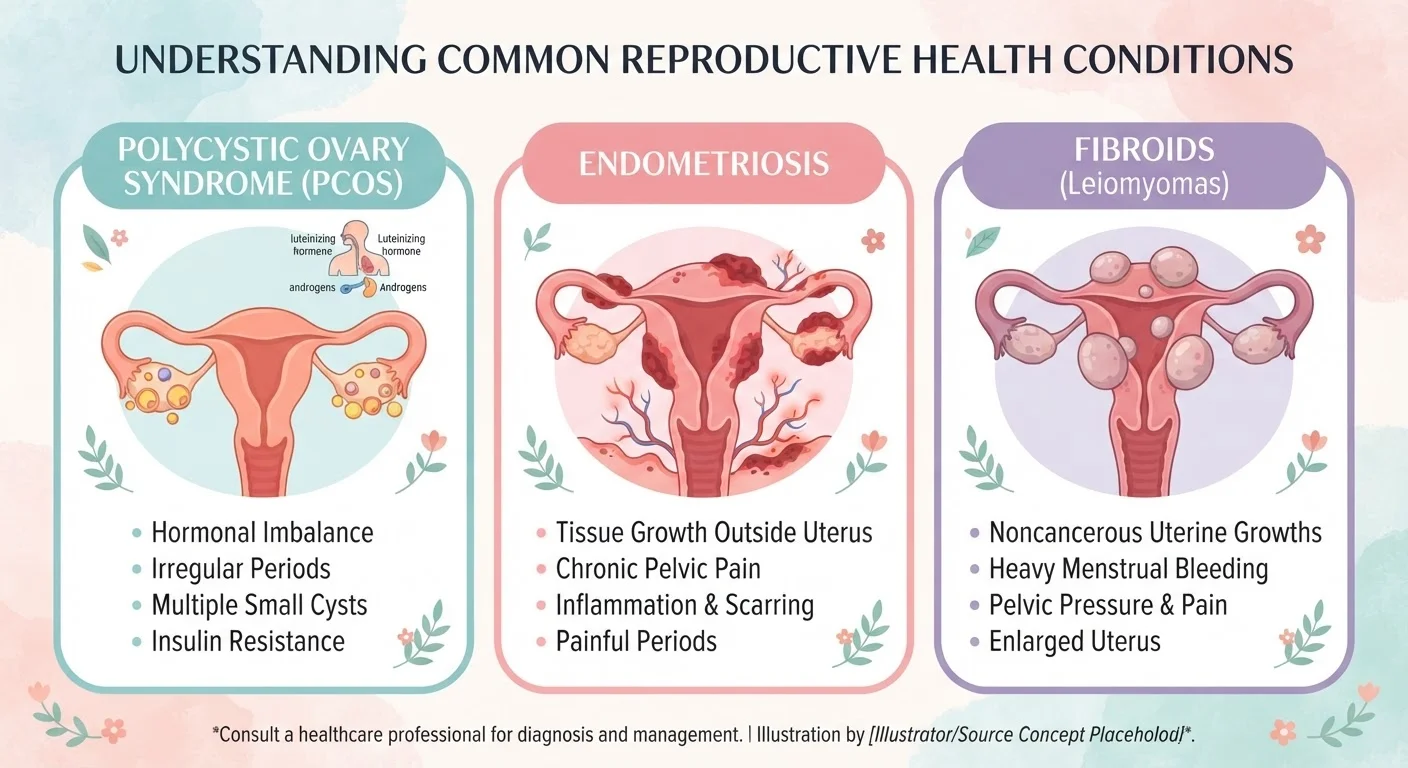
Key Takeaways
Our Verdict
PCOS, endometriosis, and fibroids each affect the reproductive system but arise from different biological processes. Because their symptoms can overlap — particularly around painful or irregular periods — they are frequently confused, underdiagnosed, or dismissed. Understanding what makes each condition distinct is the first step toward getting the right support.
| Best for | Recommended |
|---|---|
| Women experiencing irregular periods or signs of hormonal imbalance | PCOS awareness and evaluation |
| Women with severe pelvic pain, especially around menstruation | Endometriosis evaluation |
| Women with heavy menstrual bleeding or pelvic pressure | Fibroids evaluation |
Why These Three Conditions Are So Often Confused
If you've ever been told your painful periods are "just normal," or if you've searched your symptoms online only to land on three different condition names, you're not alone. PCOS (polycystic ovary syndrome), endometriosis, and uterine fibroids are among the most common gynecological conditions affecting women of reproductive age — yet they are routinely misunderstood, underdiagnosed, and even conflated with one another.
Part of the confusion is understandable: all three can disrupt the menstrual cycle, affect fertility, and cause significant discomfort. But they are biologically distinct, and the path to diagnosis and management differs for each. To understand what's happening in your body, it helps to start with the basics of what each condition actually is. For a plain-language foundation on the hormones involved, see our guide on what estrogen, progesterone, and testosterone each do.
The Three Conditions at a Glance
Here's a side-by-side look at the key features of each condition:
| PCOS | Endometriosis | Uterine Fibroids | |
|---|---|---|---|
| What it is | Hormonal & metabolic disorder | Uterine-like tissue growing outside uterus | Non-cancerous growths in uterine wall |
| Primary cause | Hormonal imbalance, insulin resistance | Immune & hormonal factors; cause unclear | Estrogen-sensitive tissue overgrowth |
| Main symptoms | Irregular periods, acne, excess hair | Severe pelvic pain, painful periods | Heavy bleeding, pelvic pressure |
| Effect on fertility | Can impair ovulation | Can cause scarring affecting conception | May affect implantation if large |
| Typical diagnosis method | Blood tests, ultrasound, symptom review | Laparoscopy (surgery), imaging | Pelvic ultrasound |
| Responds to hormonal therapy | Often, yes | Often, yes | Partially; shrinks after menopause |
| Cancerous risk | Not cancerous | Not cancerous | Rarely, very low risk |
Each of these conditions deserves its own careful attention. The sections below break down what sets them apart.
PCOS: A Hormonal and Metabolic Condition
Polycystic ovary syndrome is primarily a hormonal disorder. Despite the name, it doesn't require the presence of cysts on the ovaries to be diagnosed. PCOS is characterized by a combination of factors: irregular or absent ovulation, elevated levels of androgens (hormones like testosterone that are present in all women but higher than usual in PCOS), and sometimes the appearance of multiple small follicles on the ovaries visible on ultrasound.
Common signs include irregular or missed periods, unwanted facial or body hair, acne, and difficulty managing weight. PCOS is also associated with insulin resistance — meaning the body's cells don't respond efficiently to insulin — which can have implications beyond reproduction, including an increased risk of type 2 diabetes over time.
Diagnosis typically involves a combination of symptom review, blood tests to check hormone levels, and a pelvic ultrasound. Our dedicated article on PCOS and how it affects the body covers this in greater depth.
Track Your Cycle to Spot Patterns
If you suspect PCOS, keeping a record of your menstrual cycle — its length, regularity, and associated symptoms like acne or hair changes — can provide valuable information for your healthcare provider. Apps or even a simple journal work well. This record helps distinguish PCOS patterns from other causes of irregular periods and makes consultations more productive.
Endometriosis: A Condition of Tissue Growth
Endometriosis occurs when tissue similar to the lining of the uterus (called the endometrium) grows outside the uterus — on the ovaries, fallopian tubes, or other pelvic structures. This tissue responds to the menstrual cycle just as the uterine lining does: it thickens, breaks down, and bleeds. But because it has nowhere to exit the body, it causes inflammation, scarring, and significant pain.
The hallmark symptom is pelvic pain that is often severe, particularly before and during menstruation. Pain during sex, bowel movements, or urination is also common. Heavy periods and fertility challenges affect many — though not all — people with the condition.
One of the most difficult aspects of endometriosis is the diagnostic delay: on average, it can take many years from the onset of symptoms to a confirmed diagnosis, partly because symptoms overlap with other conditions and partly because definitive diagnosis has historically required surgical investigation. For a thorough look at the diagnostic process, see Endometriosis: Facts, Misconceptions, and the Diagnostic Journey.
Don't Accept Severe Pain as 'Normal'
Painful periods that interfere with daily life, work, or sleep are not something you have to tolerate as an inevitable part of being a woman. Severe menstrual or pelvic pain is a recognised symptom worth investigating. If your concerns have been dismissed in the past, it's entirely appropriate to seek a second opinion or ask specifically about endometriosis as a possible diagnosis.
Uterine Fibroids: Non-Cancerous Growths in the Uterus
Uterine fibroids (also called leiomyomas or myomas) are non-cancerous growths that develop within or on the uterine wall. They are made of smooth muscle and fibrous tissue, and they vary enormously in size — from a few millimetres to several centimetres. Many women have fibroids and never know it, because small fibroids often cause no symptoms at all.
When fibroids do cause symptoms, the most common are heavy or prolonged menstrual bleeding, pelvic pressure or fullness, frequent urination (if a fibroid presses on the bladder), and lower back pain. Unlike endometriosis, fibroids are rarely associated with severe menstrual pain, though discomfort is possible. Fibroids are most common in women in their 30s and 40s, and they typically shrink after menopause when estrogen levels drop.
Fibroids are usually detected via pelvic ultrasound. Most fibroids don't require treatment unless symptoms significantly affect quality of life — and a range of management options exists, from medication to minimally invasive procedures. Your healthcare provider is best placed to advise on what's appropriate for your situation.
Can You Have More Than One?
Yes — it is possible to have more than one of these conditions simultaneously. For example, endometriosis and fibroids can co-exist, and some research suggests women with endometriosis may have a modestly higher likelihood of also developing fibroids, though the conditions arise through different mechanisms. PCOS can also occur alongside either condition. This is one reason that symptoms alone are rarely enough to pin down a diagnosis: only a thorough clinical assessment can clarify what's actually happening.
If you're navigating any of these conditions alongside questions about contraception, the article Hormonal vs. Non-Hormonal Contraception: Understanding the Key Differences may help inform your conversations with a provider. And if you'd like to expand your hormonal health vocabulary, Key Terms in Hormonal Health Every Woman Should Recognise is a useful starting point.
This article is for general informational and educational purposes only and is not a substitute for professional medical advice, diagnosis, or treatment. If you have concerns about your symptoms or reproductive health, please speak with a qualified healthcare provider.