

Key Takeaways
The Menstrual Cycle
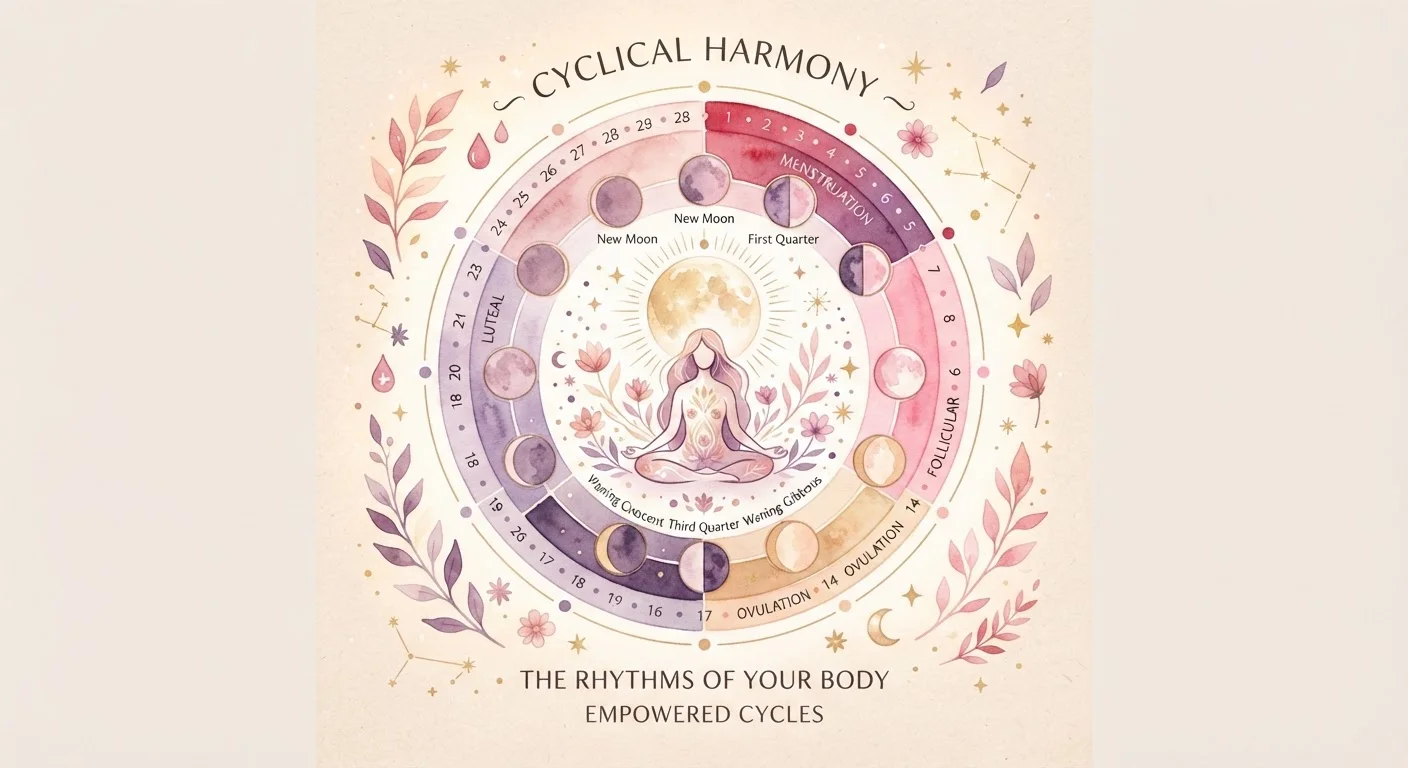
The menstrual cycle is a monthly series of hormonal and physical changes that prepare the body for a potential pregnancy. It typically lasts between 21 and 35 days and is divided into four distinct phases. Each phase is driven by shifting hormone levels that affect not just the reproductive system, but energy, mood, and overall wellbeing.
The cycle is regulated by a feedback loop involving the hypothalamus, pituitary gland, and ovaries — collectively called the hypothalamic-pituitary-ovarian (HPO) axis.
Phase 1: Menstrual Phase
The cycle begins with menstruation — the shedding of the uterine lining (endometrium) that built up during the previous cycle. This phase typically lasts 3 to 7 days. Estrogen and progesterone are at their lowest, which is why many women notice fatigue, cramping, or low mood during this time.
The uterus contracts to expel the lining, often causing the familiar discomfort of period pain. While mild cramping is common, severe pain that interferes with daily life is not something to simply endure — it deserves clinical attention. Learn more about what's considered typical versus concerning in our guide to cycle changes worth discussing with a clinician.
Cycle Length Is Individual
A 28-day cycle is frequently cited as the standard, but research shows that most women's cycles do not actually follow this exact pattern. Lengths between 21 and 35 days are all considered within the normal range. Your cycle being different from a friend's does not mean something is wrong. What matters most is consistency within your own pattern over time.
Phase 2: Follicular Phase
The follicular phase overlaps with menstruation and continues after bleeding stops, running roughly from day 1 to day 13. The pituitary gland releases FSH, which signals the ovaries to develop several follicles — fluid-filled sacs each containing an egg. One follicle eventually becomes dominant.
As follicles develop, they produce rising levels of estrogen. This hormone thickens the uterine lining in preparation for a potential pregnancy and is also associated with improved mood, sharper concentration, and higher energy — many women feel noticeably better during this phase. For a deeper look at how these hormones function, our jargon-free guide to hormonal health vocabulary is a helpful reference.
21–35 days
Normal menstrual cycle length range
According to the American College of Obstetricians and Gynecologists, significant variation within this window is considered physiologically normal.
~400
Ovulations in an average lifetime
Most women ovulate roughly 400 times between puberty and menopause, assuming no pregnancies or hormonal contraception use.
12–24 hours
Window an egg is viable after ovulation
Once released, an egg can be fertilized for only a short window, making ovulation timing a key factor in reproductive planning.
Phase 3: Ovulatory Phase
Ovulation is the cycle's central event: a surge in LH triggers the dominant follicle to release a mature egg. This phase is brief — typically 24 to 36 hours — and occurs around day 14 in a 28-day cycle, though timing varies.
The released egg travels down the fallopian tube toward the uterus. It can be fertilized for approximately 12 to 24 hours after release. Some women notice a slight twinge of pain on one side of the lower abdomen (called mittelschmerz), increased cervical mucus, or a subtle rise in basal body temperature — all normal ovulation signs.
“The menstrual cycle is not merely a reproductive event — it is a vital sign. Patterns in cycle length, flow, and symptoms can provide clinicians with meaningful insight into a woman's overall hormonal and systemic health.”
— American College of Obstetricians and Gynecologists, Leading U.S. professional body for obstetric and gynecological medicine
Phase 4: Luteal Phase
After ovulation, the ruptured follicle transforms into a structure called the corpus luteum, which secretes progesterone. This hormone stabilizes the uterine lining and creates a hospitable environment for a fertilized egg. Estrogen also rises again, but more modestly.
If pregnancy does not occur, the corpus luteum breaks down around day 26 to 28, progesterone and estrogen drop sharply, and the cycle begins again with menstruation. This hormonal decline is what drives the premenstrual symptoms many women experience — bloating, breast tenderness, irritability, or low mood.
Understanding this rhythm within your own body is part of a broader picture of hormonal health across your lifetime. Our article on how hormones shift from puberty to menopause places the monthly cycle in that wider context.
Start Tracking Your Cycle
Keeping a simple record of when your period starts and ends, along with any symptoms you notice, gives you a baseline for what is normal in your own body. Many free apps and paper charts make this straightforward. This information is also invaluable to share with a healthcare provider if any concerns arise. You may also find it useful to read about common myths about the menstrual cycle to separate fact from fiction.
This article is for general informational purposes only and does not constitute medical advice. If you have concerns about your menstrual cycle or reproductive health, please consult a qualified healthcare professional.