
What Iron Actually Does in the Body — and Signs You May Not Be Getting Enough

Key Takeaways
Dietary Iron
Iron is an essential mineral your body cannot make on its own — it must come from food. Its primary job is helping red blood cells carry oxygen from your lungs to every tissue and organ. Without enough iron, your cells start to run low on oxygen, which affects energy, focus, and overall function.
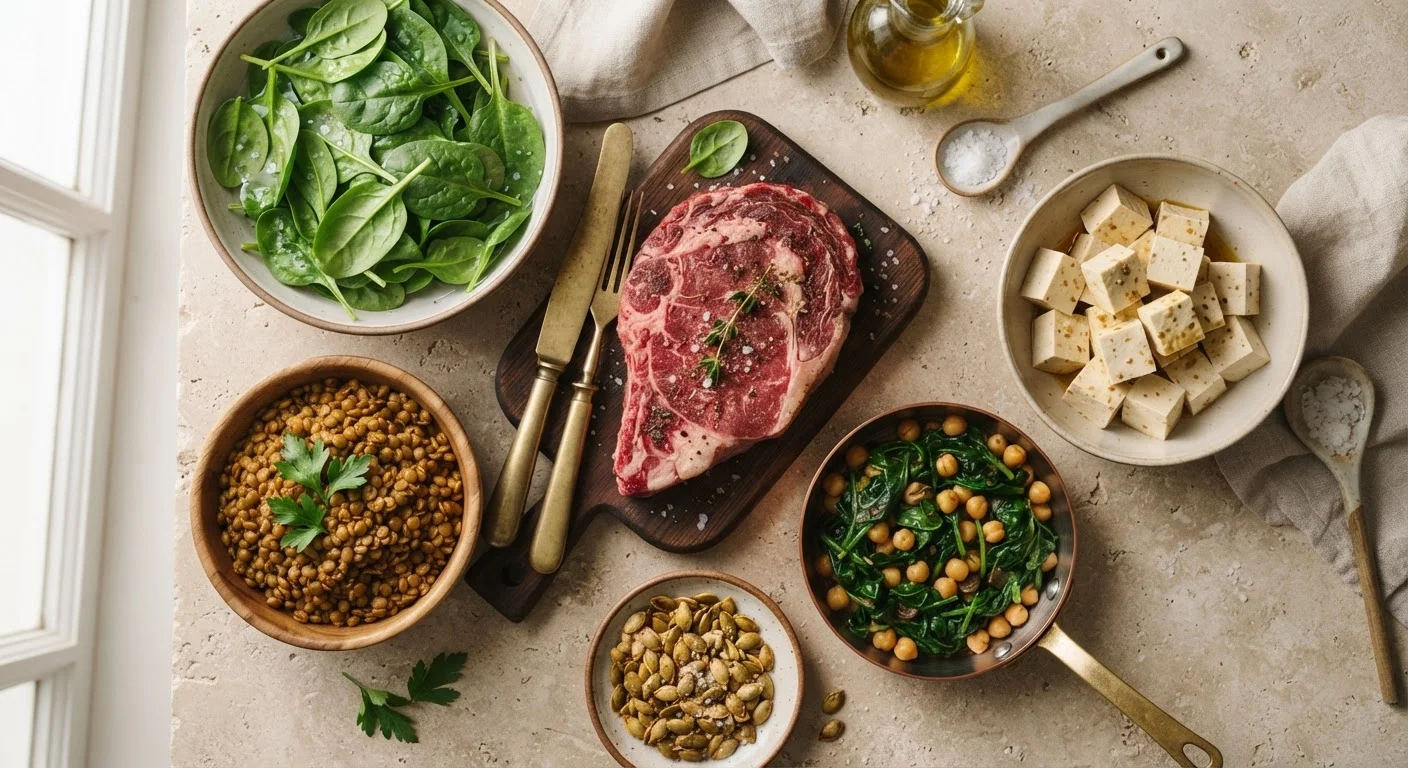
Iron exists in two dietary forms: heme iron (found in animal products, absorbed efficiently) and non-heme iron (found in plant foods, absorbed less readily but still valuable).
What Iron Actually Does in Your Body
Iron plays a central role in one of the body's most critical processes: delivering oxygen. It sits at the core of hemoglobin, the protein inside red blood cells responsible for picking up oxygen in the lungs and releasing it throughout the body. Without adequate iron, fewer functional red blood cells are produced, and tissues begin receiving less oxygen than they need.
Beyond oxygen transport, iron also supports:
- Energy metabolism — iron-containing enzymes help convert food into usable energy at the cellular level.
- Immune function — immune cells depend on iron to grow and respond effectively to infection.
- Cognitive performance — the brain is particularly sensitive to oxygen supply, so iron affects focus, memory, and mood.
- Muscle function — a protein called myoglobin, which stores oxygen in muscle tissue, also relies on iron.
Iron is one of several minerals your body cannot function without. For a broader view of how it fits alongside other essential minerals, see our guide to essential minerals.
Iron Supplements Require Medical Guidance
Unlike most vitamins, iron is not harmlessly excreted when consumed in excess. Taking iron supplements without a confirmed deficiency can lead to gastrointestinal discomfort and, over time, more serious complications. Always get a blood test and speak with a healthcare provider before starting supplementation. If you think you may be missing multiple micronutrients, our article on signs of missing key micronutrients outlines sensible next steps.
Signs You May Not Be Getting Enough
Iron deficiency develops gradually, which means early symptoms are easy to dismiss or attribute to a busy lifestyle. The most common signs include:
- Persistent fatigue — feeling tired even after a full night's sleep
- Shortness of breath during mild activity
- Pale or yellowish skin, including pale inner eyelids
- Cold hands and feet
- Brittle or spoon-shaped nails
- Frequent headaches or difficulty concentrating
- Unusual cravings for ice, dirt, or starch (a condition called pica)
Because many of these symptoms overlap with other conditions, they are not definitive on their own. A simple blood test measuring your hemoglobin and ferritin (the protein that stores iron) is the only way to know for certain. If several of these signs feel familiar, speak with your healthcare provider rather than self-diagnosing. Our article on deficiency symptoms that mimic other conditions explains why symptoms like these are so frequently misread.
A Simple Absorption Tip for Plant Eaters
If most of your iron comes from plant foods, try pairing them with a vitamin C source at the same meal — think lemon juice on lentils, tomatoes in bean dishes, or citrus alongside fortified cereal. This single habit can meaningfully increase how much iron your body actually absorbs from what you eat.
How to Get Iron From Food
Iron from food comes in two forms, and understanding the difference helps you make smarter choices:
| Type | Found In | Absorption Rate |
|---|---|---|
| Heme iron | Red meat, poultry, fish, shellfish | 15–35% absorbed |
| Non-heme iron | Lentils, beans, tofu, spinach, fortified cereals | 2–20% absorbed |
The gap in absorption rates does not mean plant-based iron is ineffective — it means pairing it strategically makes a real difference. Vitamin C converts non-heme iron into a form the body absorbs more easily. Squeeze lemon over lentil soup, add bell peppers to a bean stir-fry, or eat a handful of strawberries alongside fortified oatmeal.
Conversely, some compounds can inhibit iron absorption when eaten at the same time: calcium (from dairy), tannins (in coffee and tea), and phytates (in whole grains and legumes). This does not mean avoiding these foods — it simply means spacing them away from your highest-iron meal when possible.
Women have higher iron needs than men on average, particularly during reproductive years. Our article on iron and women's health covers this in more detail. Men who are concerned about their overall micronutrient intake may also find value in our piece on nutrients men commonly fall short on.
#1
Most common nutritional deficiency worldwide
The World Health Organization identifies iron deficiency as the most prevalent nutritional deficiency globally, affecting billions of people.
~10 mg
Daily iron recommended for adult men
The National Institutes of Health (NIH) sets the recommended dietary allowance for iron at approximately 8 mg/day for adult men and 18 mg/day for women aged 19–50.
3x
Better absorption with vitamin C pairing
Research indicates that consuming vitamin C alongside non-heme iron sources can increase absorption by up to three times compared to eating iron alone.