

Key Takeaways
Macronutrients
Macronutrients are the three main categories of nutrients your body needs in relatively large amounts to function: carbohydrates, proteins, and fats. Each one provides energy (measured in calories) and plays specific roles in keeping your body running. Unlike vitamins and minerals, which are needed in tiny amounts, macronutrients form the bulk of what you eat every day.
Carbohydrates and proteins each provide 4 calories per gram, while fats provide 9 calories per gram. These values, established through calorimetry, underpin how nutrition labels calculate total calorie content.
What Are Macronutrients and Why Do They Matter?
Every time you eat, your body receives a mixture of carbohydrates, proteins, and fats — the three macronutrients. Think of them as the raw materials your body uses to generate energy, build and repair tissue, and regulate the thousands of chemical processes happening inside you at any given moment.
No single macronutrient is your enemy, and none is magic. Each one has a job, and your body works best when it receives all three in reasonable proportions. Understanding what each one does helps you make more informed food choices without falling into the trap of all-or-nothing thinking that diet culture often promotes.
For a broader look at how nutrition myths can distort our view of these basics, see our article on common healthy eating myths.
45–65%
Recommended daily calories from carbohydrates
According to the USDA Dietary Guidelines for Americans, this range applies to most healthy adults and emphasises whole food sources.
9
Essential amino acids humans must get from food
These nine amino acids cannot be synthesised by the human body and must be supplied through dietary protein sources each day.
20–35%
Recommended daily calories from dietary fat
The USDA Dietary Guidelines suggest this range for most adults, with emphasis on unsaturated fat sources over saturated fats.
Carbohydrates: Your Body's Preferred Fuel
Carbohydrates are your body's primary energy source — and for good reason. Your brain, in particular, relies heavily on glucose (the sugar carbohydrates break down into) to function moment to moment. When you eat carbohydrates, your digestive system converts them into glucose, which your cells use directly for energy or store in your muscles and liver for later use.
Not all carbohydrates behave the same way. Complex carbohydrates — found in whole grains, legumes, vegetables, and fruit — digest more slowly, providing steady energy and important dietary fibre. Simple carbohydrates — found in table sugar, white bread, and many packaged snacks — digest quickly and can cause faster fluctuations in blood sugar levels.
The USDA Dietary Guidelines for Americans recommend that carbohydrates make up roughly 45–65% of total daily calories for most adults, with an emphasis on whole, minimally processed sources. Fibre, a special type of carbohydrate your body cannot fully digest, plays a critical supporting role — you can explore its benefits in our guide on fibre and healthy fats.
Proteins: Building Blocks for Almost Everything
Protein is often associated with muscle, but its role goes far beyond the gym. Proteins are made up of smaller units called amino acids, which your body uses to build and repair muscle tissue, produce enzymes and hormones, support immune function, and maintain healthy skin, hair, and nails.
Your body can manufacture some amino acids on its own, but nine — known as essential amino acids — must come from food. Animal proteins (meat, poultry, fish, eggs, dairy) contain all nine essential amino acids and are therefore called complete proteins. Many plant proteins are incomplete, meaning they are lower in one or more essential amino acids — though eating a varied plant-based diet throughout the day can easily cover all your needs.
Good everyday protein sources include chicken, fish, eggs, Greek yogurt, lentils, beans, tofu, and edamame. Variety is key — different protein sources also bring different vitamins and minerals to your plate.
Building a Balanced Protein Habit
Rather than loading most of your protein into one meal, spreading intake across breakfast, lunch, and dinner may help your body use it more effectively. Simple swaps — like adding eggs to breakfast or beans to a lunchtime salad — can meaningfully increase your daily protein without major meal overhauls.
Fats: Essential, Not Optional
Dietary fat has spent decades unfairly blamed for a range of health problems, but the science paints a more nuanced picture. Fat is essential for absorbing fat-soluble vitamins (A, D, E, and K), producing hormones, protecting organs, and maintaining healthy cell membranes. Your brain is roughly 60% fat by dry weight — a reminder that this macronutrient is far from optional.
The type of fat you eat matters considerably. Unsaturated fats — found in olive oil, avocados, nuts, and fatty fish — are broadly associated with heart health benefits in the research literature. Saturated fats — found in red meat and full-fat dairy — are generally recommended in moderation. Industrially produced trans fats, once common in processed foods, have been largely removed from the US food supply due to established health risks.
For a more detailed, evidence-based look at how different fats affect health, particularly for men, see our article on dietary fat and men's health.
Putting It Together: Simple Meal Planning With All Three Macros
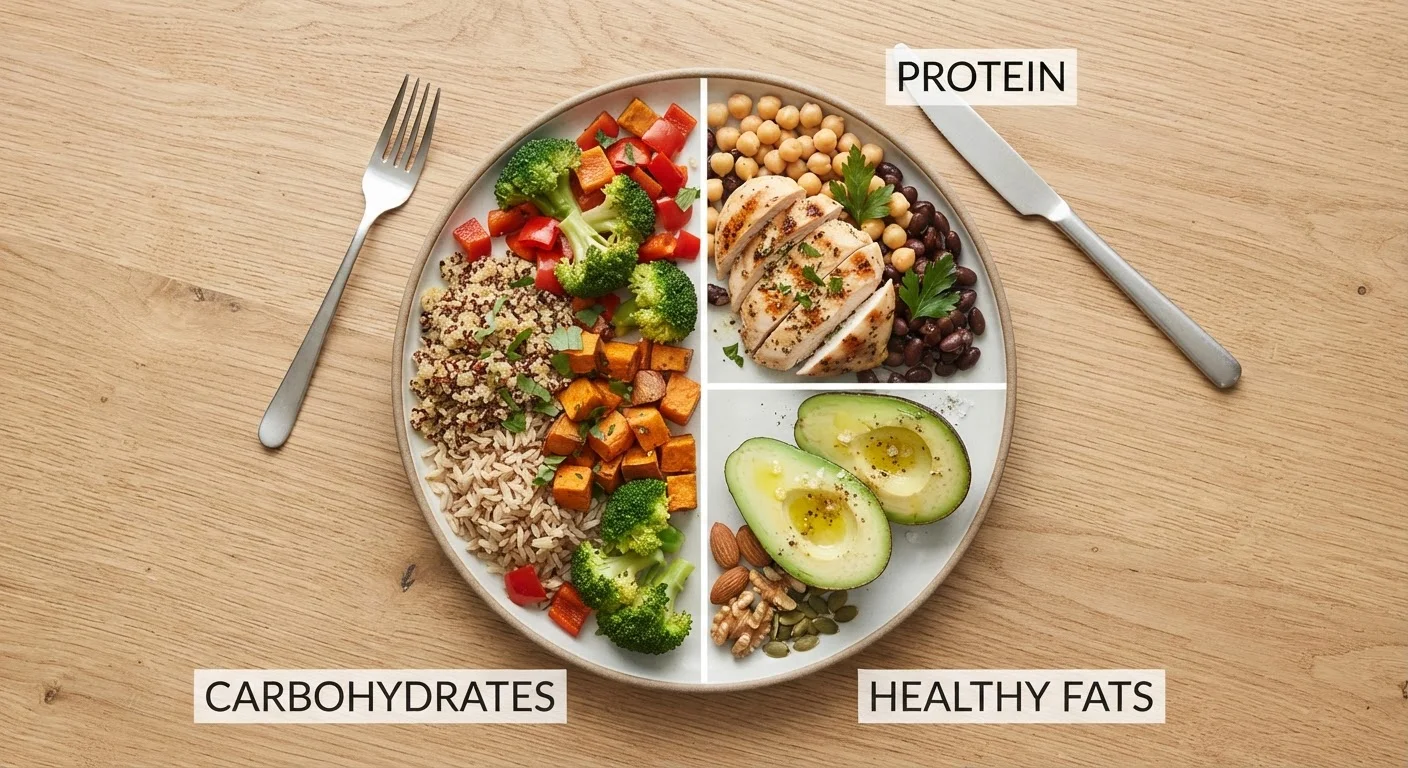
You do not need a nutrition degree or a food scale to eat a balanced diet. A practical starting point is to visualise your plate at each meal: aim for roughly half non-starchy vegetables, one quarter whole-grain or starchy carbohydrate, and one quarter lean protein — then add a small amount of healthy fat through your cooking oil, dressing, or toppings like nuts or avocado.
This general framework aligns with established guidance, including the USDA's MyPlate model, and naturally delivers a reasonable mix of all three macronutrients without requiring calorie counting. Consistency over perfection is the goal — one balanced meal does not outweigh a whole day's pattern, and vice versa.
Once you have a handle on macronutrients, the next layer of nutritional literacy involves micronutrients — the vitamins and minerals that power hundreds of bodily processes. Our article on micronutrients and daily nutrition is a natural next step.
This article is for general informational and educational purposes only and is not a substitute for professional medical or nutritional advice. Please consult a qualified healthcare provider or registered dietitian for guidance tailored to your individual health needs.