

Key Takeaways
Body Composition
Body composition refers to the proportion of fat mass versus lean mass (muscle, bone, water, and organs) that makes up your total body weight. Two men can weigh exactly the same yet have very different health profiles depending on how much of that weight is fat versus muscle. Understanding this distinction helps explain why the number on your scale is an incomplete measure of health.
Body composition is typically expressed as body fat percentage — the fraction of your total weight that consists of adipose (fat) tissue. Methods to measure it include dual-energy X-ray absorptiometry (DEXA), bioelectrical impedance analysis (BIA), and skinfold calipers, each with varying accuracy.
Why the Scale Tells Only Half the Story
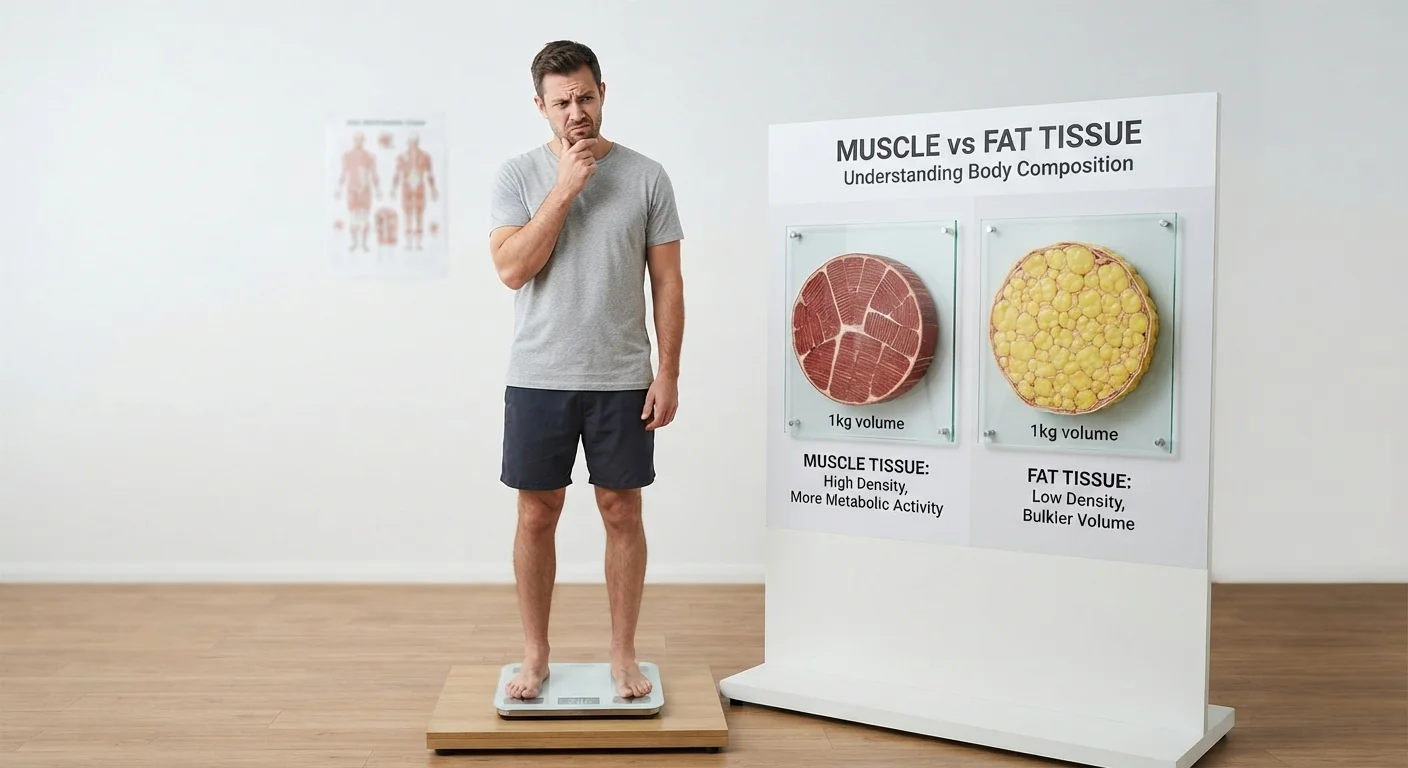
Step on a scale and you get a single number — your total body weight. That number includes muscle, bone, water, organs, and fat all added together. The problem is that not all weight is equal when it comes to your health. A kilogram of muscle and a kilogram of fat weigh the same, but they function very differently in the body.
Fat tissue, particularly excess visceral fat (fat stored around the abdominal organs), is associated with increased risks for cardiovascular disease, type 2 diabetes, and metabolic conditions. Lean tissue — primarily skeletal muscle — supports metabolism, insulin sensitivity, and physical function. Two men standing on the same scale and reading the same number may be in very different states of health.
This is why health professionals increasingly look beyond weight to assess body composition. If you've ever wondered why you can feel fitter and stronger without losing a pound, or why the scale seems stuck despite visible changes in how your clothes fit, body composition is likely the explanation.
~36%
U.S. adult men with obesity
According to the CDC's National Center for Health Statistics, approximately 36% of adult men in the U.S. meet the criteria for obesity based on BMI — a figure that underscores how widespread excess fat mass has become.
~1/3
Weight lost that may be muscle on crash diets
Research published in nutrition and obesity journals suggests that without adequate protein and resistance training, roughly one-third of weight lost during aggressive caloric restriction can come from lean tissue rather than fat.
10–20%
General healthy body fat range for adult men
Health and sports science references commonly cite 10–20% body fat as a broadly healthy range for adult men, though optimal levels vary with age, fitness level, and individual health status.
Fat Mass vs. Lean Mass: What Each One Means
Fat mass includes all the fat in your body — both essential fat (which supports hormone production and organ protection) and stored fat (which your body holds as an energy reserve). Some fat is necessary and healthy; the concern arises when stored fat accumulates beyond what the body needs, especially around the midsection.
Lean mass covers everything that isn't fat: skeletal muscle, bone density, connective tissue, water, and organs. Muscle is the component most directly influenced by exercise and nutrition choices. Higher lean mass is generally associated with a stronger metabolism, better blood sugar regulation, and greater functional strength as you age.
Understanding this split explains a common frustration: men who reduce calories drastically can lose lean muscle mass alongside fat, causing the scale to drop while their body fat percentage actually rises or stays unchanged. This is one reason managing weight without extreme dieting matters — preserving muscle while reducing excess fat is the goal, not simply making the number on the scale go down.
Track Trends, Not Just Numbers
Rather than fixating on a single weigh-in, consider tracking your waist circumference and how your clothes fit alongside any scale readings. These practical markers often reflect changes in body composition more meaningfully than weight alone. If you have access to a body fat measurement tool — even a consumer impedance scale — tracking trends over weeks gives more useful information than any single data point.
How to Improve Your Body Composition
Improving body composition means working to maintain or build lean muscle while managing excess body fat — and the evidence consistently points to two primary levers: resistance training and nutrition.
Resistance training — whether through free weights, machines, or bodyweight exercises — signals the body to preserve and build muscle tissue. Free weights, machines, and bodyweight work each offer a valid path to building strength; what matters most is consistency and progressive challenge over time. For a broader view of how different workout types affect your body, see the major exercise categories explained.
On the nutrition side, adequate protein intake is essential for muscle maintenance. Beyond protein, the overall quality and balance of your diet plays a direct role. What a balanced plate actually looks like offers a practical starting point, and what a balanced diet actually means can help you cut through conflicting nutrition advice.
This article provides general health information for educational purposes only and is not a substitute for professional medical advice, diagnosis, or treatment. Speak with a qualified healthcare provider before making changes to your diet or exercise routine.