
Why Flexibility Training Is Often Overlooked - and What You Lose Without It

Key Takeaways
Flexibility Training
Flexibility training refers to exercises designed to lengthen your muscles and increase the range of motion around your joints. Common methods include static stretching (holding a position), dynamic stretching (controlled movement through a range), and practices like yoga or Pilates. The goal is to help your body move more freely and with less resistance during everyday activities and exercise.
Range of motion (ROM) is influenced by both muscle length and joint structure. Flexibility training primarily targets the muscular and connective tissue components of ROM, while mobility work also involves neuromuscular control - the two concepts are related but distinct.
The Training Category Most People Skip
Walk into any gym and you will see treadmills occupied, weight racks busy, and group cardio classes full. What you will rarely see is a crowd gathered around the stretching mats. Flexibility training - one of the four major exercise categories alongside cardiovascular, strength, and balance work - is consistently the most neglected component of a fitness routine.
This is not an accident. Flexibility training does not produce the visible results people associate with working out. It does not spike heart rate or build obvious muscle. For beginners especially, it can feel passive or even unnecessary. But that perception comes at a real cost. To understand how flexibility fits alongside every other training type, see our overview of the major exercise categories.
What Actually Happens When Flexibility Declines
Muscles and connective tissue respond to how they are used. When you spend most of the day sitting - or when you train intensely without balancing that effort with stretching - muscles can shorten and stiffen over time. The consequences are gradual but meaningful.
- Reduced range of motion: Tight muscles limit how far a joint can move, which affects everything from squatting form to reaching overhead comfortably.
- Compensatory movement patterns: When one area is restricted, the body finds workarounds. These compensations often place excess stress on other joints, increasing injury risk over time.
- Slower recovery: Persistent muscle tension after training can delay how quickly your body restores normal function between sessions.
- Postural changes: Chronically shortened hip flexors and chest muscles - common in desk workers - can alter spinal alignment and contribute to discomfort.
2-3×
Recommended stretching sessions per week
The ACSM recommends flexibility training at least two to three times per week for healthy adults as part of a complete exercise program.
~4 weeks
Time to see range-of-motion improvements
Research in exercise physiology indicates that consistent stretching over approximately four weeks produces measurable increases in muscle flexibility and joint range of motion.
1 in 4
Adults who meet all physical activity guidelines
According to the CDC, fewer than one in four U.S. adults meet federal guidelines for both aerobic and muscle-strengthening activity - flexibility training is tracked even less.
These are not minor inconveniences. They accumulate quietly and often only become apparent when something goes wrong - a strain, a nagging joint, or difficulty performing a basic movement pattern. Functional fitness - training for real-life movement - is nearly impossible to sustain without an adequate baseline of flexibility.
What the Research Suggests
The ACSM includes flexibility training in its foundational exercise recommendations for healthy adults, noting that it supports joint health and functional movement across the lifespan. Studies published in exercise physiology journals have consistently found that regular static stretching increases muscle length and joint range of motion over weeks of consistent practice.
Importantly, research also shows that timing matters. Static stretching - holding a stretch for 20 to 60 seconds - is most effective after activity or in standalone sessions. Before exercise, dynamic stretching (moving through a range of motion in a controlled way) is generally preferred, as static holds performed before activity may temporarily reduce muscle force output.
Best Time to Stretch for Results
Incorporate static stretching at the end of your workout when muscles are already warm, or during dedicated flexibility sessions on recovery days. This is when muscle tissue is most responsive to lengthening. Avoid prolonged static holds immediately before strength or power-based exercise, as this can temporarily reduce force output.
For a deeper look at how to apply these two approaches correctly, our article on static stretching vs. dynamic warm-ups walks through the evidence and practical placement of each.
How to Start Without Overcomplicating It
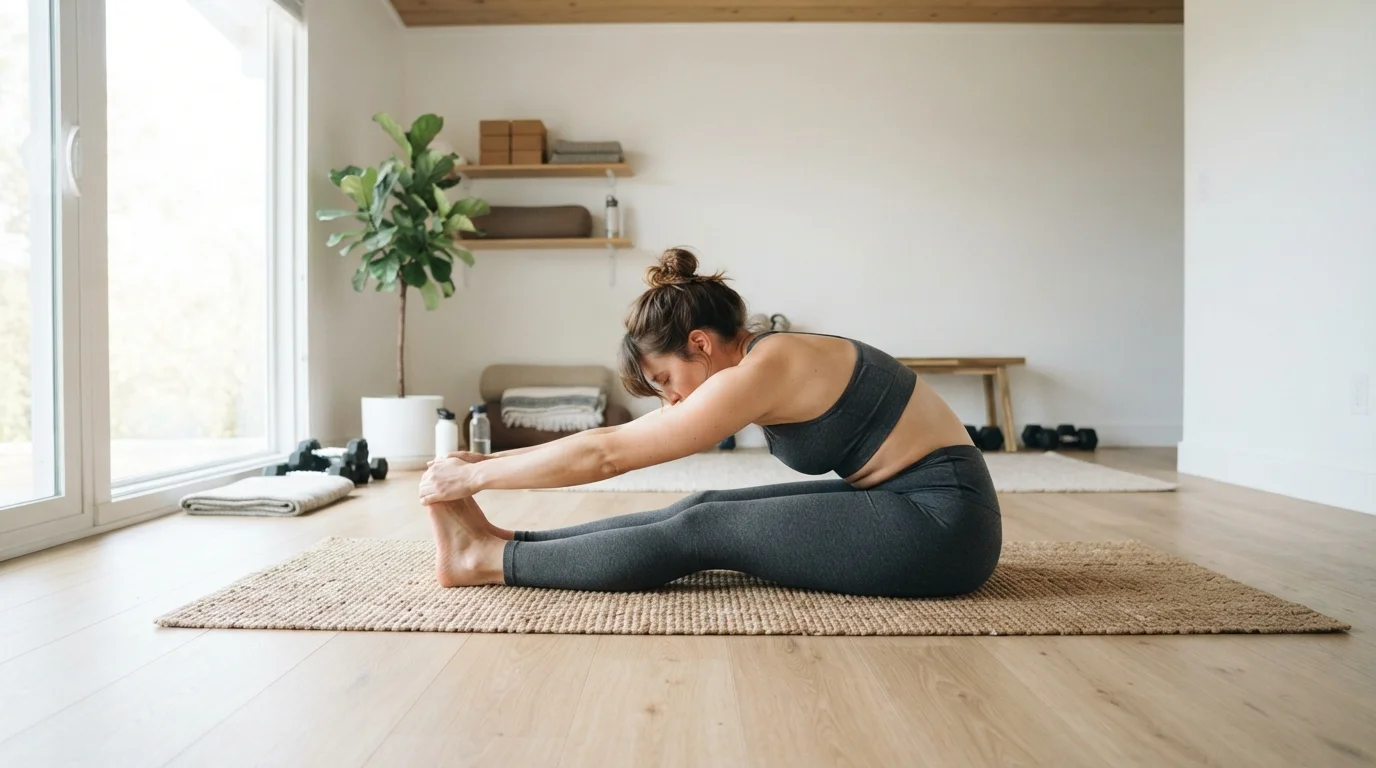
Flexibility training does not require special equipment, a gym membership, or lengthy sessions. A consistent 10-minute routine after your workouts - or on rest days - is enough to begin building meaningful improvements in range of motion.
Focus on the areas most likely to be tight based on your daily life: hip flexors and hamstrings if you sit for long periods, shoulders and chest if you do overhead work or desk work, and calves if you walk or run regularly. Hold each stretch for 20 to 30 seconds, breathe steadily, and avoid pushing into pain - a gentle pulling sensation is appropriate; sharp discomfort is not.
Flexibility training also pairs naturally with recovery and rest practices, making it an ideal bridge between harder training days. If you are new to movement altogether, our guide to stretching and warming up covers exactly where to begin.
This article is for informational purposes only and is not a substitute for professional medical or fitness advice. Consult a qualified healthcare provider before beginning any new exercise program, particularly if you have existing health conditions or injuries.