
Static Stretching vs. Dynamic Warm-Ups: Which Belongs Where in Your Routine

Key Takeaways
Option A
Static Stretching
The slow, sustained hold for post-workout recovery.
Best for: Best for improving long-term flexibility and aiding muscle recovery after exercise has ended.
Option B
Dynamic Warm-Up
The movement-based primer that prepares your body for effort.
Best for: Best for activating muscles, raising core temperature, and reducing injury risk before physical activity.
If you want to improve your range of motion and flexibility over time
Static Stretching
Holding stretches post-workout - when muscles are warm - is the most effective context for gradually lengthening muscle tissue and increasing long-term flexibility.
If you're about to begin a workout, run, or sport session
Dynamic Warm-Up
Dynamic movements progressively raise your heart rate, increase joint lubrication, and fire up the neuromuscular system so your body is primed for peak performance.
If you're a beginner building a structured routine from scratch
Dynamic Warm-Up
Starting every session with 5-10 minutes of dynamic movement builds a habit that reduces injury risk and makes each workout feel more manageable from the first rep.
If you feel tight or sore on rest days
Static Stretching
Gentle static stretching on recovery days can ease muscle tension and support overall flexibility without placing additional stress on the body.
Why the Order of Stretching Actually Matters
For decades, a standard pre-workout routine meant touching your toes and holding for 30 seconds before hitting the gym. Exercise science has since shifted that picture considerably. Research published in journals such as the Journal of Strength and Conditioning Research has repeatedly shown that prolonged static stretching performed immediately before exercise can temporarily reduce force production - meaning you may actually be weaker at the start of your workout if you hold stretches for too long beforehand.
This doesn't mean static stretching is bad. It means context is everything. Both static stretching and dynamic warm-ups are legitimate, evidence-supported tools - they simply serve different physiological purposes at different points in a session. As a beginner, understanding this distinction protects you from a common misconception that, as covered in common exercise myths, can quietly steer your training in the wrong direction.
This article provides general fitness information and is not a substitute for personalized guidance from a qualified health or fitness professional.
Static Stretching: What It Is and When to Use It
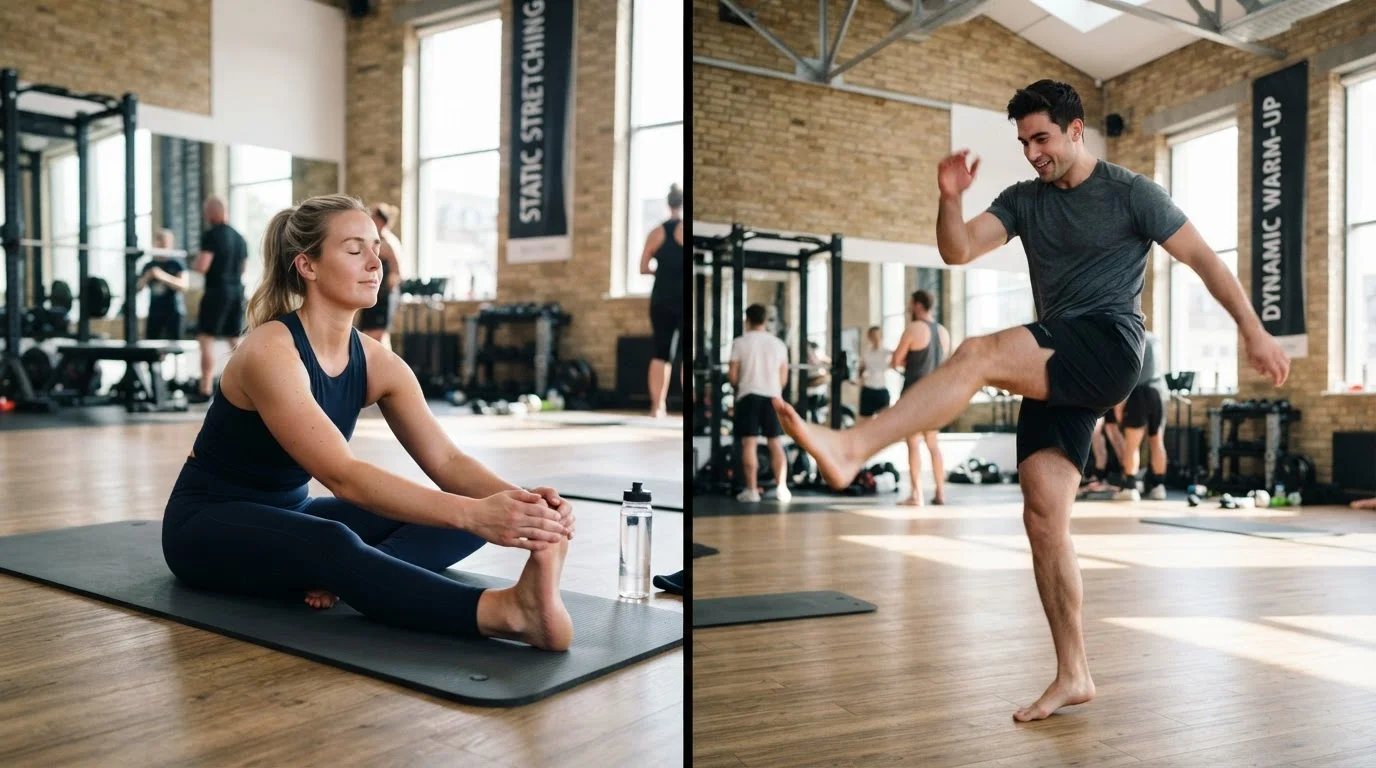
Static stretching involves moving a muscle to the end of its comfortable range and holding that position - typically for 15 to 60 seconds. Classic examples include a seated hamstring stretch, a standing quad hold, or a doorway chest opener. The goal is to lengthen the muscle over time and reduce chronic tightness.
The ideal window for static stretching is after your workout, during the cool-down phase. At this point, your muscles are warm, blood-filled, and more elastic - conditions that make tissue more receptive to being lengthened safely. Incorporating static stretches post-exercise may support flexibility gains and help signal the nervous system to shift out of its active, high-output state.
~8%
Reduction in muscle strength from prolonged pre-workout static stretching
A meta-analysis in the Scandinavian Journal of Medicine & Science in Sports found that static stretches held over 60 seconds before exercise were associated with meaningful short-term strength decreases.
5-10 min
Recommended dynamic warm-up duration
The American College of Sports Medicine (ACSM) recommends a warm-up of at least 5-10 minutes of low-to-moderate intensity dynamic activity before vigorous exercise.
If you do want to include static stretching before a session, keep individual holds brief - generally under 30 seconds - and follow them with dynamic movement before you begin your main activity. This approach is supported by guidance from organizations such as the American College of Sports Medicine (ACSM).
Dynamic Warm-Ups: What They Are and Why They Come First
A dynamic warm-up uses controlled, purposeful movement - rather than stationary holds - to prepare your body for exercise. Think leg swings, arm circles, walking lunges, hip rotations, and high knees. These movements gradually increase heart rate, raise muscle temperature, improve joint lubrication, and activate the neuromuscular pathways you'll rely on during your workout.
Unlike static stretching, dynamic warm-ups are active. They mirror the patterns of whatever activity follows them - a runner might do ankle circles and dynamic hip openers; a weightlifter might perform bodyweight squats and shoulder rotations. This specificity is part of what makes them effective: you're rehearsing movement patterns at a lower intensity before loading them.
| Criterion | Static Stretching | Dynamic Warm-Up |
|---|---|---|
| Movement type | Stationary hold | Controlled, flowing motion |
| Best timing | After exercise (cool-down) | Before exercise (warm-up) |
| Primary benefit | Long-term flexibility gains | Injury prevention and performance prep |
| Effect on muscle temperature | Minimal - works best when warm | Raises muscle temperature actively |
| Effect on power output | May temporarily reduce if held long pre-workout | Supports or enhances performance |
| Beginner ease | Simple, low coordination needed | Easy to learn basic patterns |
A typical dynamic warm-up lasts 5 to 10 minutes. For beginners, this structure also builds mental readiness - a short ritual that eases you into the session without feeling overwhelming. Skipping it entirely, especially for higher-intensity workouts, raises the risk of muscle strains and joint stress early in a session.
Building Your Routine: A Practical Framework
Putting it all together doesn't have to be complicated. A well-structured session for a beginner follows a clear arc:
- Dynamic warm-up (5-10 minutes): Start with low-intensity, full-body movements that progressively increase in range and pace. Focus on the joints and muscle groups you'll be using.
- Main workout: Strength training, cardio, sport, or whatever your primary session involves.
- Cool-down and static stretching (5-10 minutes): Gradually lower your heart rate, then hold static stretches targeting the muscles worked - especially any areas of chronic tightness.
This sequence respects your body's physiology at each phase. The dynamic phase primes; the static phase restores. Neither replaces the other, and both reward consistency over time. If you're unsure how this fits into your broader fitness plan, a certified personal trainer or physical therapist can help tailor the approach to your specific needs and goals.
Special Populations: Check With a Professional First
If you are pregnant, recovering from an injury, managing a chronic condition, or are new to exercise after a long break, the general framework above may need to be modified. Consult a qualified healthcare provider or certified fitness professional before starting or significantly changing any exercise routine. They can assess your individual needs and recommend a warm-up and stretching approach that is safe for you.