

| HIIT Typical Session Length | 15-30 minutes (American College of Sports Medicine guidelines) |
| LISS Recommended Duration | 30-60 minutes |
| HIIT Work-to-Rest Ratio (common) | 1:1 to 1:2 (General exercise physiology convention) |
| LISS Target Heart Rate Zone | ~50-65% of max HR |
| Minimum Cardio (general adults) | 150 min moderate / 75 min vigorous per week (U.S. Department of Health and Human Services Physical Activity Guidelines) |
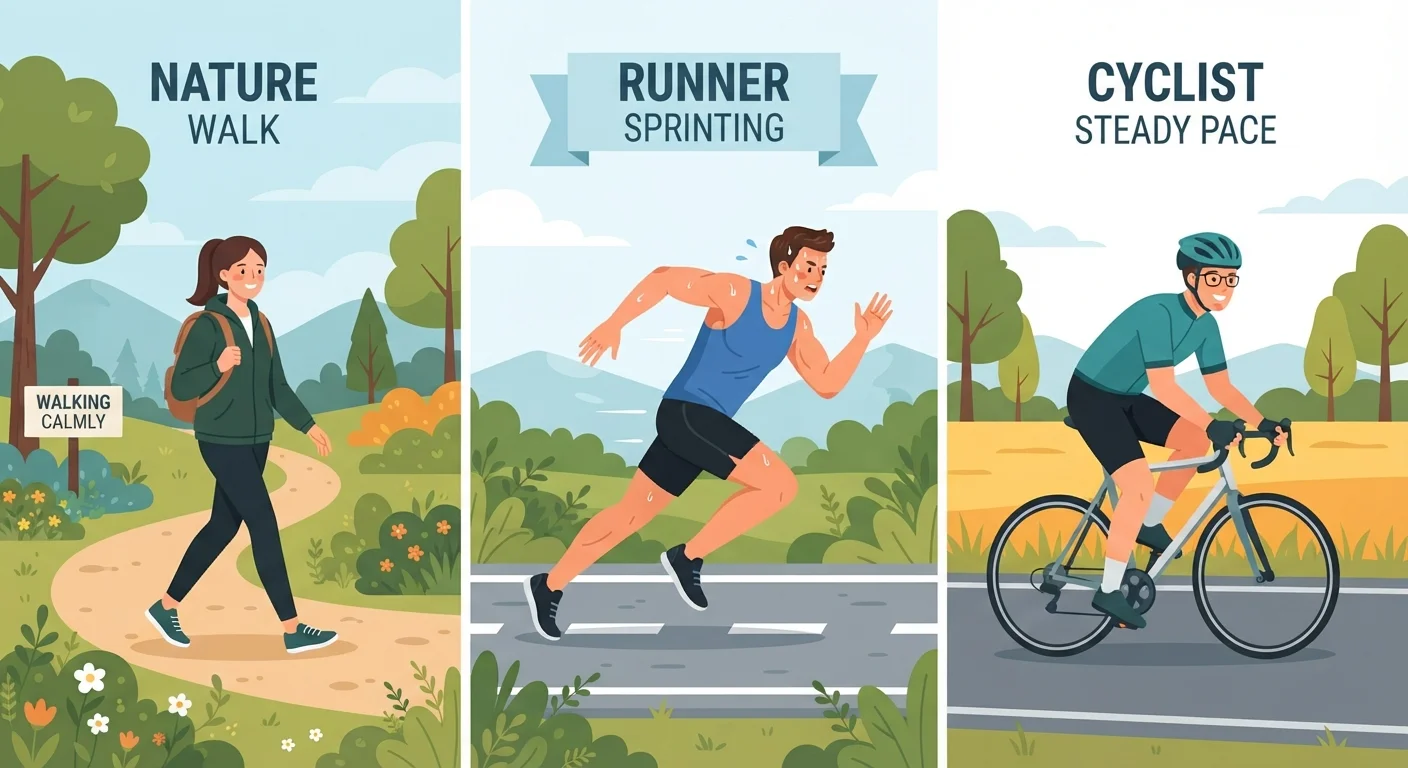
The Three Cardio Formats at a Glance
If you've spent any time reading about fitness, you've likely encountered acronyms like HIIT and LISS alongside the broader phrase steady-state cardio. These aren't just buzzwords - they describe genuinely different ways of training your cardiovascular system, each with its own demands, benefits, and ideal use cases.
Understanding what distinguishes them is one of the most practical pieces of knowledge a beginner can have. For a broader overview of where cardio fits within the full picture of exercise, see The Major Exercise Categories and What Each One Actually Does.
| HIIT Typical Session Length | 15-30 minutes (American College of Sports Medicine guidelines) |
| LISS Recommended Duration | 30-60 minutes |
| HIIT Work-to-Rest Ratio (common) | 1:1 to 1:2 (General exercise physiology convention) |
| LISS Target Heart Rate Zone | ~50-65% of max HR |
| Minimum Cardio (general adults) | 150 min moderate / 75 min vigorous per week (U.S. Department of Health and Human Services Physical Activity Guidelines) |
The key variable separating these three formats is intensity - specifically, how hard your cardiovascular system is working relative to its maximum capacity, often measured by heart rate zones.
HIIT: High-Intensity Interval Training
High-Intensity Interval Training (HIIT) alternates short bursts of near-maximum effort with brief recovery periods. A typical structure might be 20-40 seconds of hard work followed by 10-40 seconds of rest, repeated for 15-30 minutes total.
During the high-effort intervals, you're working at a level where holding a conversation is difficult. During recovery, the pace drops significantly so the body can partially recover before the next effort.
Why HIIT is popular
- Sessions are time-efficient - most last under 30 minutes
- Research suggests HIIT can improve aerobic capacity and metabolic function in relatively short periods
- Requires no equipment when built around bodyweight movements
Who should be cautious
Because HIIT places significant stress on joints and the cardiovascular system, it may not be the right starting point for complete beginners, those returning from injury, or people managing chronic health conditions. If you're new to exercise, building a base of moderate-intensity activity first is a sensible approach. Always consult a qualified healthcare professional before starting high-intensity training if you have any existing health concerns.
HIIT
High-Intensity Interval Training - a workout format alternating short bursts of near-maximum effort with recovery periods. Sessions are typically brief but physically demanding.
LISS
Low-Intensity Steady-State cardio - exercise performed at a consistent, comfortable pace where conversation remains easy. Walking and light cycling are common examples.
Steady-State Cardio
Cardiovascular exercise maintained at a relatively constant effort level for the duration of the session. It can range from low to moderately high intensity.
Heart Rate Zone
A range of heart rate values that correspond to different exercise intensities, usually expressed as a percentage of your estimated maximum heart rate. Zones help gauge workout effort.
Aerobic Capacity
The body's ability to take in, transport, and use oxygen during sustained physical activity. Higher aerobic capacity generally means better cardiovascular endurance.
Active Recovery
Low-intensity movement performed on rest days to promote blood flow and reduce muscle soreness without adding significant training stress.
LISS and Steady-State Cardio: The Lower-Gear Options
Low-Intensity Steady-State (LISS) and steady-state cardio are closely related and often used interchangeably, though there's a subtle distinction worth noting.
Steady-state cardio refers to any cardiovascular exercise performed at a relatively consistent effort level - your pace stays roughly stable throughout. LISS specifically refers to steady-state work done at a low intensity, typically a conversational pace where breathing is elevated but comfortable.
Examples include brisk walking, easy cycling, light swimming, or a relaxed jog maintained for 30-60 minutes. Your heart rate stays in a moderate zone - roughly 50-65% of your estimated maximum - for the duration.
The case for LISS
- Accessible for beginners and those with lower fitness levels
- Lower injury risk compared to high-intensity formats
- Supports recovery on days between more demanding workouts
- Sustainable as a long-term daily habit
Steady-state cardio at moderate-to-higher intensity - think a sustained run at a challenging but manageable pace - sits between LISS and HIIT on the effort spectrum. It builds aerobic endurance effectively and is a cornerstone of many distance-running and cycling training plans.
If you're exploring how different workout settings affect your consistency with these formats, Group Classes, Solo Training, and Outdoor Exercise: Weighing the Trade-Offs is worth reading.
Choosing the Right Format for Your Goals
None of these formats is universally superior - the best choice depends on your current fitness level, recovery capacity, schedule, and what you actually enjoy doing.
150 min
Recommended weekly moderate cardio for adults
According to the U.S. Department of Health and Human Services Physical Activity Guidelines for Americans.
~20%
Portion of weekly training HIIT is typically capped at
Exercise physiologists commonly recommend limiting high-intensity sessions to avoid overtraining and allow adequate recovery.
| Format | Intensity | Session Length | Best For |
|---|---|---|---|
| HIIT | High (near-max effort) | 15-30 min | Time efficiency, fitness variety |
| LISS | Low (conversational pace) | 30-60 min | Beginners, active recovery, daily habit |
| Steady-State | Moderate-to-high (sustained) | 20-60 min | Aerobic base building, endurance |
A practical starting point for most beginners is LISS - build the habit of moving consistently before adding intensity. Once a comfortable aerobic base exists, introducing steady-state sessions at moderate effort, and eventually some HIIT intervals, creates a well-rounded program.
For a fuller picture of how cardio compares with strength training over time, Aerobic vs. Resistance Training: What Each Does for Men's Long-Term Health offers a useful contrast. And if terms like RPE, heart rate zones, or intervals are still unfamiliar, The Fitness Terms Every Beginner Should Know Before Starting is an ideal companion read.
This article is for general informational and educational purposes only and does not constitute medical advice. Consult a qualified healthcare professional before beginning any new exercise program, especially if you have an existing health condition.