

Key Takeaways
The Fibre Gap Is Real — And It Affects Most Women
Dietary fibre is one of those nutrients that rarely gets headlines, yet research consistently shows that the majority of women fall short of the recommended 25 grams per day. National dietary surveys in the United States routinely find average fibre intake among adult women closer to 12–15 grams daily — roughly half the target. This isn't a niche concern: low fibre intake is associated with poorer gut health, less stable blood sugar, and a higher risk of cardiovascular disease over time.
The reasons behind this shortfall are rarely a lack of willpower. They tend to be structural — rooted in food environment, busy lifestyles, and a few surprisingly common nutritional misunderstandings. Understanding those patterns is the first step to changing them. For a broader look at where women's diets tend to fall short, see this quick-reference guide to under-consumed nutrients.
~15g
Average daily fibre intake for adult women in the US
National dietary survey data consistently show average intake is roughly 12–15 grams, well below the recommended 25 grams per day.
25g
Recommended daily fibre intake for adult women
The Dietary Guidelines for Americans and most major health authorities recommend 25 grams of fibre daily for adult women.
8g
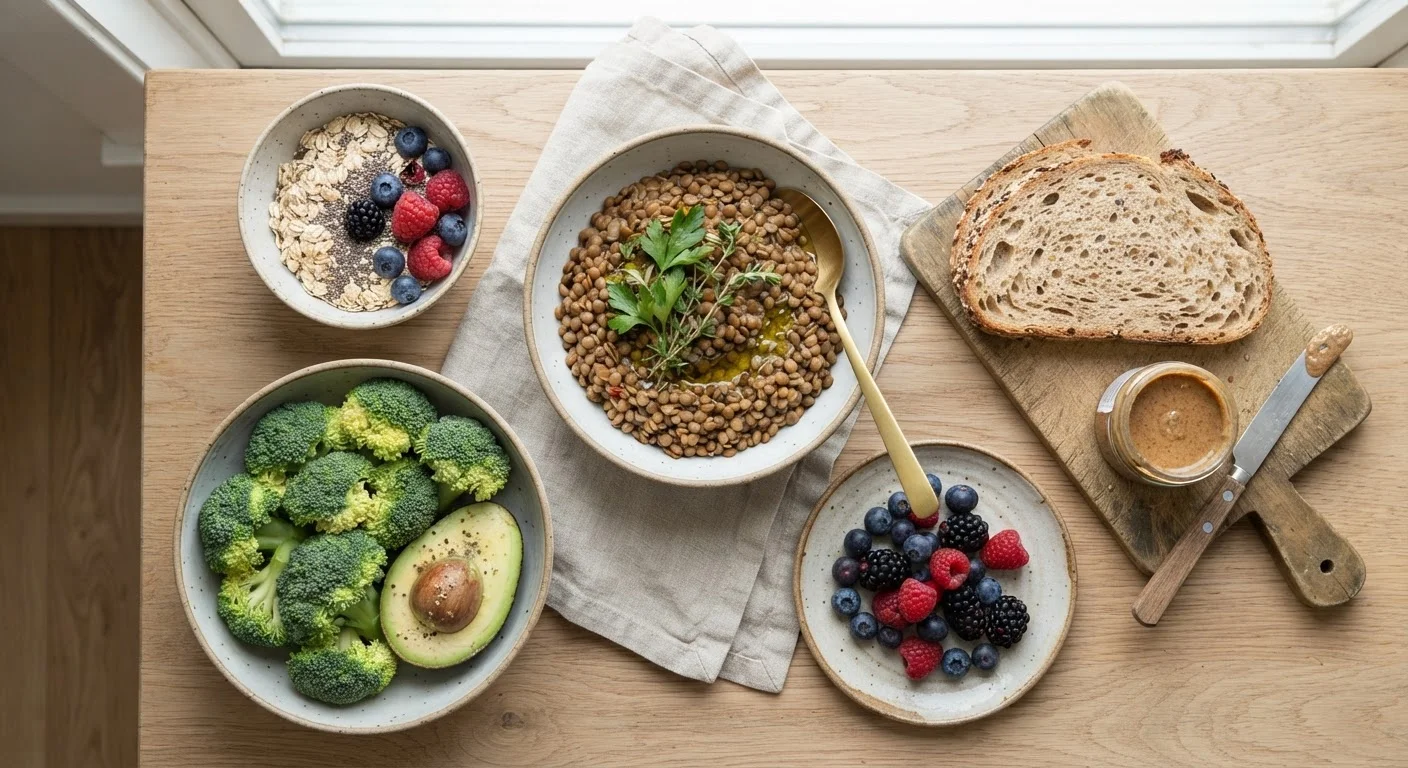
Fibre in a half-cup serving of cooked lentils
Legumes are among the most fibre-dense everyday foods, making them one of the most efficient ways to close the daily gap.
Common Mistakes That Widen the Fibre Gap
Below are the most frequent errors that quietly erode daily fibre intake — along with straightforward ways to correct them.
Relying heavily on refined grains instead of whole grains.
Why it happens: White bread, white rice, and regular pasta are widely available, cheaper, and deeply embedded in everyday meals. Many women don't realise how dramatically processing strips away fibre — a slice of white bread contains less than 1 gram, while a slice of whole grain bread can offer 2–3 grams.
Under-eating legumes, the most fibre-dense everyday food.
Why it happens: Beans, lentils, and chickpeas are often overlooked in Western diets, seen as unfamiliar, time-consuming to prepare, or associated with digestive bloating.
Treating fruit juice as equivalent to whole fruit.
Why it happens: Juice is marketed as a healthy choice and feels like a convenient way to include fruit. However, juicing removes the pulp where most of the fibre lives — a glass of orange juice has under 0.5 grams of fibre, while a medium whole orange provides around 3 grams.
Skipping vegetables at most meals.
Why it happens: Busy schedules, food preparation effort, and reliance on convenience or takeaway meals mean vegetables are often reduced to a side thought — or absent entirely — at lunch and dinner.
Increasing fibre too quickly and then stopping due to discomfort.
Why it happens: When the gut microbiome isn't accustomed to high fibre intake, rapid increases can cause bloating and gas. This discomfort leads many women to conclude fibre-rich foods don't agree with them, and they abandon the effort entirely.
This article is for general informational purposes only and does not constitute medical or nutritional advice. Please consult a qualified healthcare professional or registered dietitian before making significant changes to your diet, especially if you have a digestive condition or chronic health concern.