

Key Takeaways
Why Budget Eating Gets a Bad Reputation
Many people assume that eating nutritiously requires expensive specialty foods, organic produce, or elaborate meal plans. In practice, the foods most strongly linked to good health outcomes — vegetables, legumes, whole grains, and eggs — are among the most affordable items in any grocery store. The challenge isn't cost; it's knowing which principles actually hold up over time.
If you're new to thinking about food this way, our introduction to eating well from first principles covers the core building blocks before you start planning your grocery list.
“The healthiest diets around the world are built on simple, inexpensive staples — grains, legumes, and vegetables. Expensive food is not a prerequisite for good nutrition.”
— Walter Willett, Professor of Epidemiology and Nutrition, Harvard T.H. Chan School of Public Health
Core Practices for Nutritious, Affordable Eating
The following practices are grounded in dietary guidance from sources such as the USDA and consensus among registered dietitians. They're designed to be repeatable and flexible — not prescriptive rules that fall apart under real-life pressure.
Build meals around legumes and whole grains as your primary base.
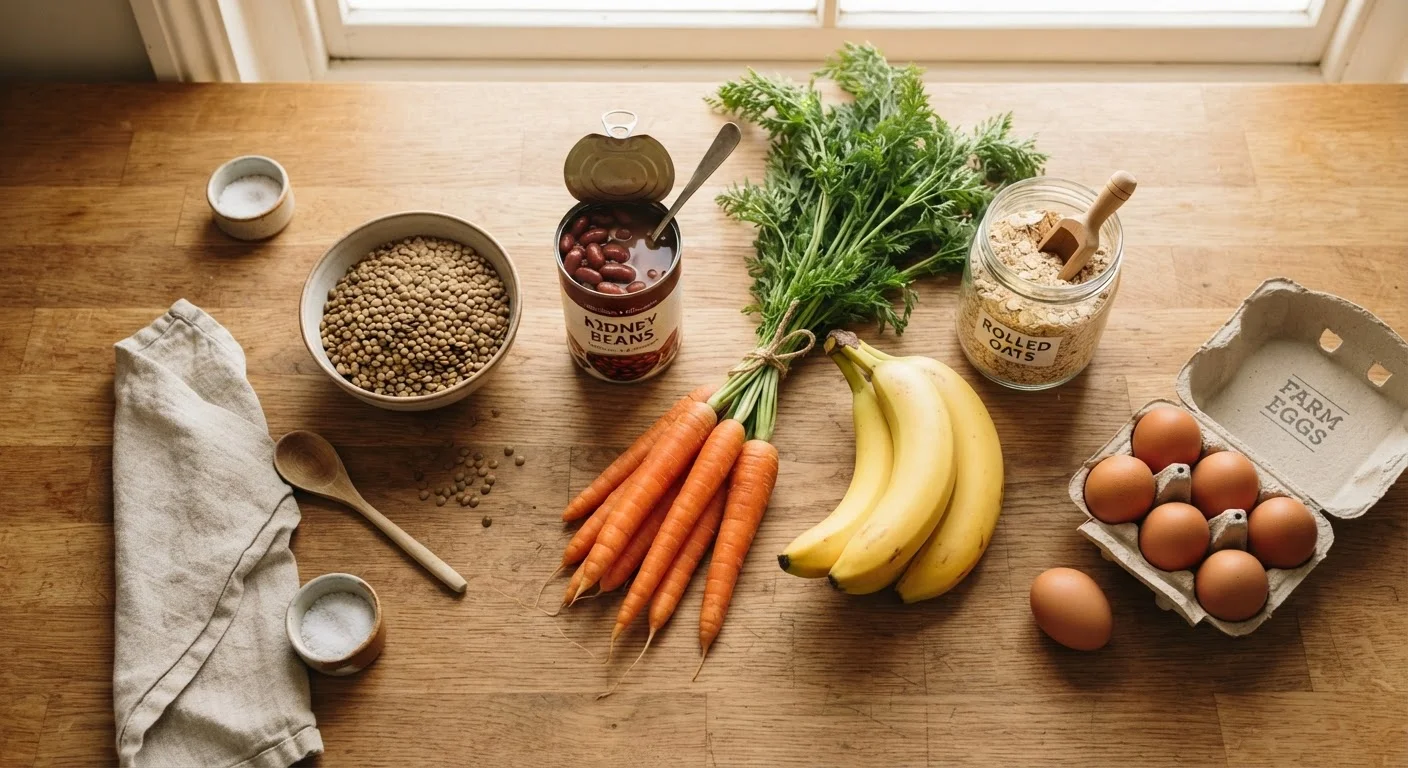
Dried or canned beans, lentils, chickpeas, brown rice, and oats are calorie-dense, nutrient-rich, and typically cost a fraction of animal proteins. They provide fiber, plant-based protein, and key micronutrients — making them one of the best nutritional investments per dollar. Relying on them as a foundation, rather than a side dish, restructures both your spending and your nutrient intake.
Choose frozen vegetables over fresh when fresh options are out of budget or season.
Frozen vegetables are harvested and frozen quickly, which preserves most of their vitamins and minerals. They're typically cheaper than fresh equivalents, have a much longer shelf life, and reduce food waste significantly. Using frozen produce removes the pressure of timing meals around perishable items.
Plan a loose weekly menu before grocery shopping.
Shopping without a plan is the most common driver of both food waste and overspending. A rough outline of four or five dinners — and how leftovers will be repurposed — allows you to buy only what you need and reduces the chance of reaching for costly convenience meals mid-week. It doesn't need to be detailed; even a basic list changes behavior meaningfully.
Use eggs as a versatile, affordable protein source.
Eggs are among the most nutritionally complete and affordable foods available in the US. They contain high-quality protein, healthy fats, B vitamins, and choline. Their versatility — scrambled, poached, baked into dishes — means they can anchor a meal at any time of day without requiring elaborate preparation.
Cook in batches and intentionally create leftovers.
Batch cooking — making larger quantities of a base ingredient like grains, beans, or roasted vegetables — dramatically reduces the time and effort of eating well during busy weeks. It also lowers per-meal cost because bulk preparation is more efficient than cooking individual portions. Leftovers repurposed across two or three meals stretch the value of every dollar spent.
Quick Actions You Can Take This Week
You don't need to overhaul your kitchen or your habits overnight. Small, consistent changes tend to last longer than ambitious resets. The actions below are low-effort entry points that can meaningfully improve both nutrition and spending.
For more ideas on realistic day-to-day upgrades, see our guide on realistic ways to upgrade everyday meals — many of those swaps cost little or nothing.
Putting It Together: A Sustainable Approach
Budget-friendly nutrition isn't about deprivation — it's about prioritizing foods that do the most work for your body and your wallet simultaneously. Legumes provide fiber and protein. Oats deliver sustained energy. Frozen vegetables retain most of their nutrients and rarely go to waste. These aren't compromises; they're evidence-informed choices.
$1.50
Average cost per serving of dried legumes
According to USDA Economic Research Service data, dried beans and lentils consistently rank among the lowest-cost protein sources available in US supermarkets.
40%
Of US food waste occurs at the household level
USDA estimates suggest that meal planning and intentional use of leftovers are among the most effective individual-level strategies for reducing household food waste and spending.
The broader principles of building lasting eating habits — from meal structure to mindset — are explored in our complete practical overview of healthy eating habits. And if weight management is a related goal, managing weight healthily without extreme dieting applies many of the same sustainable principles.
This article is for general informational and educational purposes only. It is not a substitute for personalized advice from a registered dietitian or qualified healthcare professional. Individual nutritional needs vary — please consult a professional before making significant changes to your diet, especially if you have a health condition or specific dietary requirements.