

Key Takeaways
Why a Meal Plan Makes Nutrition Easier
Eating well is less about willpower and more about preparation. When meals are decided in advance, you remove the daily stress of figuring out what to eat and reduce the chance of defaulting to whatever is fastest or most convenient — which often means less nutritious choices.
A weekly meal plan also helps you naturally cover more food groups without obsessive tracking. Planning a week's worth of dinners nudges you toward variety, which is one of the most reliable indicators of a nutritionally adequate diet according to dietary guidance from sources like the USDA.
Meal planning is especially useful if you're also building other health habits. If you're starting a fitness routine, pairing it with consistent meals supports your energy and recovery. Our beginner movement guide is a good companion resource once your eating routine feels more settled.
What you will need
Step-by-Step: Building Your First Plan
The following steps are designed for someone who has never created a formal meal plan before. Work through them in order. You only need to complete this process once fully — future weeks will be much faster once you have a rhythm.
Weekly planner or calendar app
Maps out which meals you'll eat on each day of the week.
Grocery list template or notepad
Converts your meal plan into a structured shopping list to avoid missing ingredients.
Food storage containers
Allows you to batch-cook and store meals in advance, saving time during the week.
Understand the three building blocks of a balanced meal
Before writing a single meal down, it helps to know what a nutritionally balanced plate looks like. Every main meal should include three key components:
- Protein — supports muscle, immune function, and satiety. Sources include chicken, fish, eggs, beans, lentils, tofu, and low-fat dairy.
- Carbohydrates — your body's primary energy source. Prioritize whole grains (brown rice, oats, whole-wheat bread, quinoa) over heavily processed options.
- Vegetables or fruit — supply fiber, vitamins, and minerals. Aim for variety and color across the week.
Healthy fats (olive oil, avocado, nuts) also play a role and are naturally present in many whole foods. You don't need to count grams — just aim to include all three components in most meals.
Take stock of your schedule and cooking capacity
Meal planning fails when it ignores your real life. Before choosing recipes, look at your week honestly. Identify your busiest days and your most relaxed ones. Ask yourself:
- How many evenings do I realistically have 30+ minutes to cook?
- Which days will I need something ready in under 15 minutes?
- Do I eat lunch at home, at work, or skip it entirely?
On hectic days, plan simple meals — a grain bowl, scrambled eggs with toast, or a hearty soup you made in advance. Reserve more involved recipes for days when you have the time and energy.
Choose five to seven meals and write them down
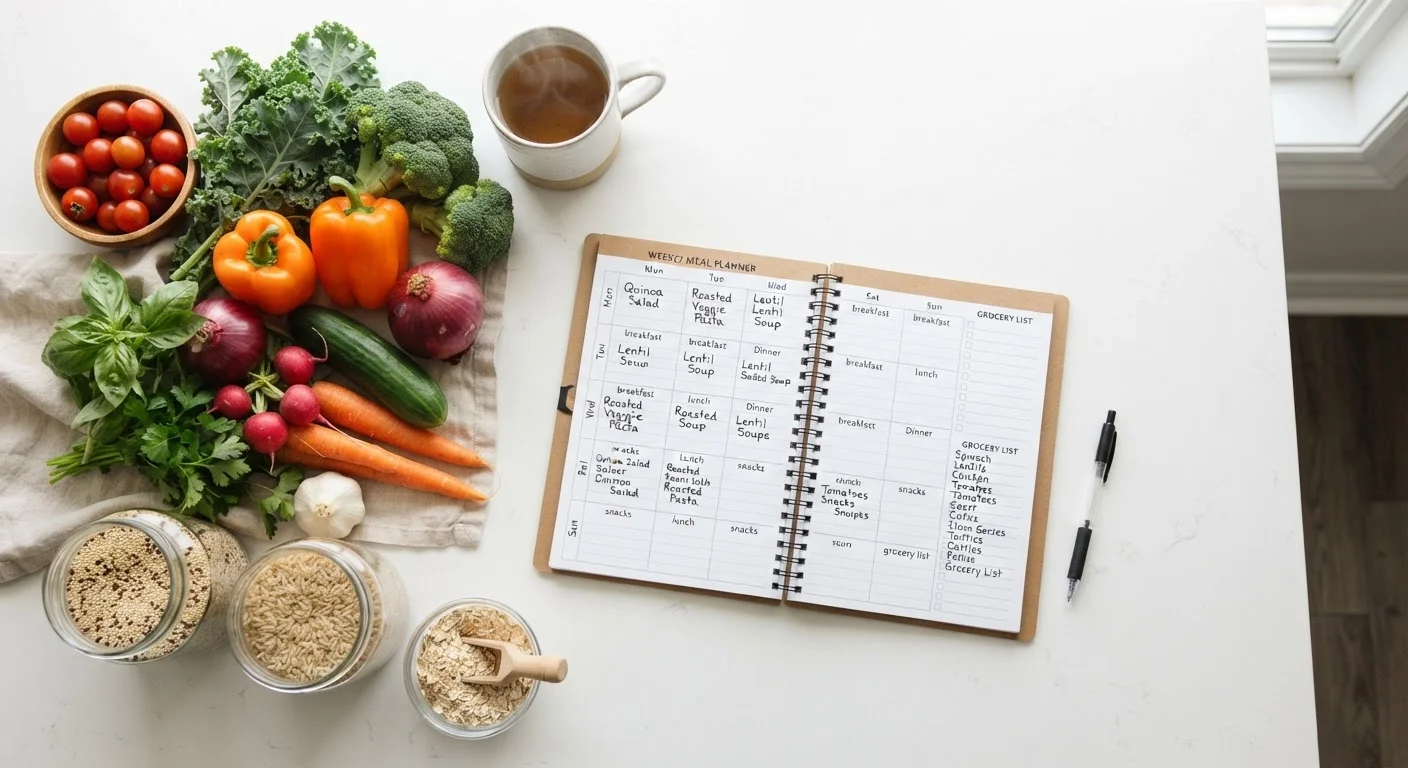
Start small. Pick five dinners for the week — you can plan breakfast and lunch later once the habit is established. Choose meals you already know how to make and genuinely enjoy. Write each meal next to the day you'll cook it, factoring in leftovers. For example, a large batch of roasted vegetables on Sunday can anchor lunches on Monday and Tuesday.
When selecting meals, aim for variety across protein types and vegetables across the week rather than eating the same thing daily.
Build your grocery list directly from the meal plan
Once your meals are written down, list every ingredient you'll need for each one. Check what you already have at home, then subtract those items. Organize your list by category (produce, proteins, grains, pantry staples) to make shopping faster and reduce forgotten items.
A well-constructed grocery list is the single most effective tool for sticking to your plan. When you buy only what you need, you reduce food waste and remove the decision fatigue of standing in front of an open fridge.
Do a short batch-prep session before the week starts
You don't need to cook entire meals in advance. Even 20–30 minutes of prep on Sunday (or whichever day works for you) makes the rest of the week dramatically easier. Useful batch-prep tasks include:
- Cooking a pot of grains (rice, quinoa, oats)
- Washing and chopping vegetables
- Hard-boiling eggs or marinating a protein
- Portioning snacks into containers
This small investment means faster assembly on weeknights and fewer moments where you abandon the plan because nothing is ready.
Review and adjust at the end of the week
After your first week, take five minutes to reflect. Which meals did you actually cook? Which ones got skipped and why? Did you feel satisfied, or were certain days leaving you hungry? Use these answers to refine your next week's plan. Meal planning is a skill that improves with repetition — the goal is progress, not a perfect adherence score.
For ongoing support with daily nutritional habits, see our practical daily nutrition checklist for beginners to audit whether your meals are covering the key nutritional bases.
Keep Your First Plan Deliberately Simple
Beginners often overplan — scheduling elaborate recipes every night and burning out by Wednesday. Aim for meals with five ingredients or fewer for at least half your plan. Simple meals you'll actually make are far more valuable than complex ones you won't. Variety can increase gradually over several weeks as the habit solidifies.
Once your first week is underway, the next challenge is keeping the habit going when your schedule gets unpredictable. Our guide to building an eating routine that survives a busy week covers practical strategies for exactly that. You can also explore broader healthy eating habits strategies on our hub page.
This article is for general informational and educational purposes only and is not a substitute for personalized medical or nutritional advice. Please consult a registered dietitian or qualified healthcare professional before making significant changes to your diet, especially if you have a health condition, are pregnant, or have specific nutritional needs.