

Key Takeaways
Why Busy Schedules Break Eating Habits First
Eating well is often one of the first things to slip when a week gets demanding. This is not a character flaw — it is a predictable outcome of how decision fatigue works. When your mental energy is stretched, food decisions migrate toward whatever requires the least effort in the moment, which is rarely the most nourishing option.
The goal of an eating routine is not perfection. It is reducing the number of decisions you have to make under pressure. A well-designed routine acts as a quiet infrastructure: most of the thinking happens in advance, so day-to-day eating becomes lower effort, not higher.
This approach pairs naturally with other consistency-building habits. If you are also working on your fitness schedule, the principles in setting a workout routine you can realistically stick to apply in parallel — small, repeatable structures beat ambitious plans that require ideal conditions. For a closer look at the trade-offs in planning meals ahead, meal planning's benefits and limitations is worth reading alongside this guide.
What you will need
How to Build Your Routine: Step by Step
The five steps below are designed to be adopted incrementally. You do not need to implement all of them at once — starting with steps one and two is enough to create a meaningful shift in how well your eating holds up under pressure.
Reusable meal prep containers
Store pre-portioned ingredients or cooked meals to grab quickly on busy days.
Weekly planner or notes app
Map out your meals and snack windows in advance to reduce in-the-moment decisions.
Pantry staples list
A written or saved list of go-to ingredients ensures you always have the basics on hand.
Audit your week before it starts
On Sunday evening — or whatever day precedes your busiest period — spend five minutes looking at your upcoming schedule. Identify your two or three most unpredictable days: late meetings, commutes, or long shifts. These are the sessions most likely to derail your eating, so they deserve a plan first.
You do not need to schedule every meal. Simply note when you will realistically eat and flag any gaps longer than four to five hours where hunger is likely to build unchecked.
Build two or three reliable 'anchor meals'
An anchor meal is a simple, repeatable meal you know how to make quickly and that reliably satisfies you. Think overnight oats for breakfast or a grain bowl with canned beans and whatever vegetables are in your fridge. These meals don't need to be exciting — they need to be consistent.
Research in habit formation consistently shows that reducing decision-making around routine tasks lowers cognitive load and increases follow-through. For more grounding in this approach, see the complete overview of healthy eating habits.
Do one short prep session per week
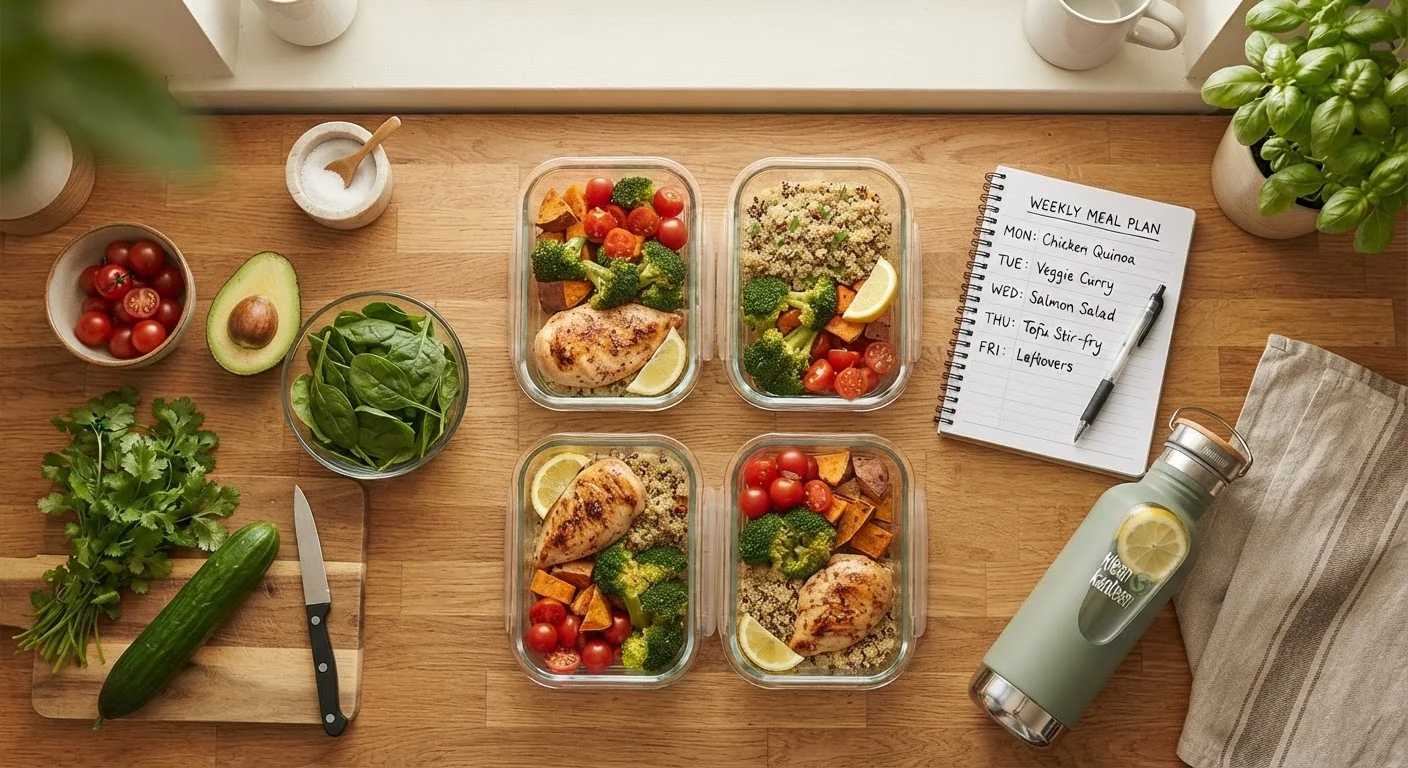
Choose a single 20–30 minute window to complete a minimal batch prep: cook a grain in bulk (rice, quinoa, or oats), wash and chop two or three vegetables, and hard-boil a few eggs or open and rinse a can of legumes. This is not full meal prep — it is ingredient staging.
Having prepped components on hand means building a nutritious meal takes minutes rather than starting from scratch. This dramatically lowers the effort barrier when energy is low at the end of a long day.
Stock five to eight pantry defaults
A small set of reliable pantry staples removes the need to improvise when the fridge looks bare. Useful examples include canned tomatoes, dried lentils or canned beans, whole-grain pasta, nut butters, rolled oats, canned fish, olive oil, and low-sodium stock. These are not superfoods — they are versatile, affordable, and shelf-stable ingredients that form the backbone of dozens of quick meals.
For a broader framework on what a balanced pantry looks like, the Balanced Diet Basics hub is a useful starting point.
Plan a recovery strategy, not just a plan
No eating routine survives a busy week intact every single week. The difference between people who maintain consistent nutrition habits and those who don't is rarely willpower — it is usually the presence or absence of a fallback strategy.
Decide in advance what a 'good enough' eating day looks like when things go sideways: a protein-rich snack carried in your bag, a reliable takeout option that includes vegetables and a protein source, or a simple two-ingredient meal you know by heart. Having a named fallback removes the mental negotiation when you are already tired and hungry. You can also pair this approach with regular reflection using the weekly healthy eating check-in.
Progress Over Perfection
One week where you managed three good meals a day on your busiest days is a success — even if the other meals were imperfect. Sustainable eating routines are built through consistent small wins, not flawless execution. Treat disruptions as data, not failure, and adjust your defaults accordingly.
This article is for general informational and educational purposes only. It is not a substitute for personalized advice from a registered dietitian or qualified healthcare professional. If you have specific dietary needs, a health condition, or concerns about your nutrition, please consult a qualified professional.