

Key Takeaways
Fight-or-Flight Response
The fight-or-flight response is your body's built-in alarm system. When your brain detects a threat — real or perceived — it triggers a cascade of physical and hormonal changes designed to help you confront danger or escape from it. This reaction happens automatically, often before you are even consciously aware of what is happening.
Formally called the acute stress response, it is mediated primarily by the sympathetic nervous system and the hypothalamic-pituitary-adrenal (HPA) axis, leading to rapid release of adrenaline (epinephrine) and cortisol.
What Happens in the Brain When You Sense a Threat
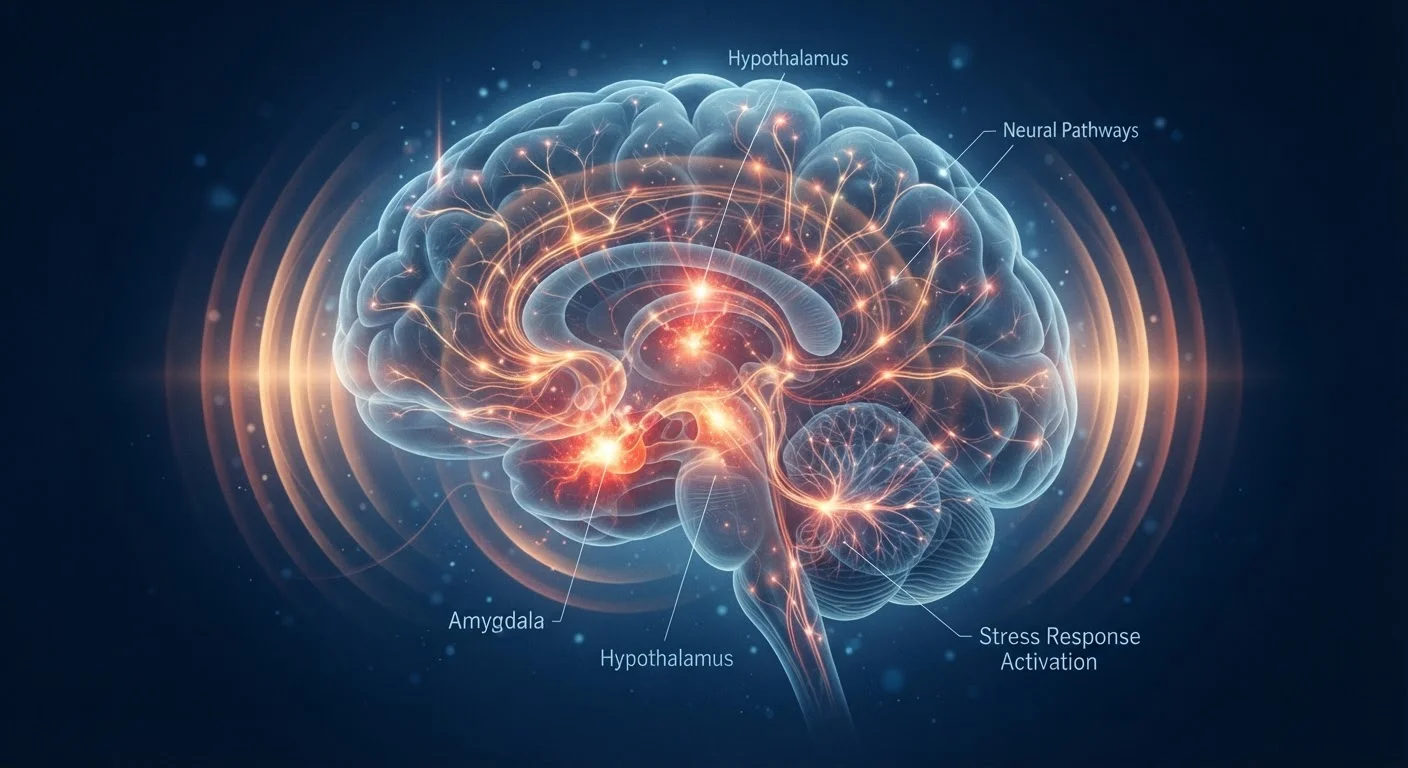
It starts with a small, almond-shaped region deep in your brain called the amygdala. Think of it as your internal smoke detector — constantly scanning your environment for anything that might mean danger. The moment it registers a potential threat, it fires off an emergency signal to the hypothalamus, which acts like a command center, communicating with the rest of the body through the autonomic nervous system.
This happens extraordinarily fast — in milliseconds, before the thinking part of your brain (the prefrontal cortex) has had any chance to assess whether the threat is real. That is exactly the point. Evolution prioritized speed over accuracy here, because hesitating in a genuinely dangerous situation could be fatal.
A Note on Individual Variation
Not everyone experiences the fight-or-flight response in the same way or to the same degree. Genetics, prior experiences, sleep quality, and overall health all influence how intensely the stress response fires and how quickly it resolves. If your stress response feels overwhelming or persistent, speaking with a healthcare provider or licensed mental health professional is a worthwhile step.
For a broader understanding of how stress and anxiety interact, the complete guide to stress and anxiety offers a thorough, beginner-friendly overview.
The Hormones Behind the Physical Symptoms
Once the alarm signal fires, your adrenal glands — located just above your kidneys — release two key hormones: adrenaline (also called epinephrine) and cortisol.
- Adrenaline acts within seconds. It causes your heart to beat faster, pushes blood toward your muscles and away from digestion, dilates your pupils, and sharpens your focus. The surge of energy you feel when startled? That is adrenaline at work.
- Cortisol follows more slowly and sustains the response. It releases stored glucose for energy and keeps your immune system and non-essential functions suppressed so that everything is directed toward immediate survival.
These changes explain nearly every physical sensation associated with stress: the pounding heart, rapid shallow breathing, shaking hands, dry mouth, and heightened alertness.
~30 seconds
Time for adrenaline to peak after threat detection
Physiological research indicates that circulating adrenaline levels can rise sharply within seconds and reach peak concentration in under a minute following an acute stressor.
1 in 5
Adults reporting frequent high stress levels
Surveys by organizations such as the American Psychological Association have consistently found that a substantial minority of adults experience stress at levels they describe as extreme or unmanageable.
20–60 min
Typical cortisol elevation window after a stressor
Endocrinology research suggests cortisol levels may remain elevated for 20 to 60 minutes or more following an acute stress event, depending on severity and individual biology.
Why Your Brain Can't Always Tell Modern Stress From Real Danger
Here is the challenge: the amygdala does not distinguish reliably between a predator and a performance review. A presentation in front of colleagues, a difficult phone call, or a threatening headline can all activate the same ancient circuitry. Your body prepares to fight or flee — even though neither response is actually useful in most modern stressful situations.
This mismatch between our evolved biology and contemporary life is a central reason so many people feel chronically on edge. When the stress response fires repeatedly without full recovery between episodes, the toll on the body accumulates. Research suggests that sustained cortisol elevation is associated with disrupted sleep, cardiovascular strain, and changes in mood regulation — though individual responses vary considerably.
If this pattern sounds familiar in your work life, our article on emotional resilience at work explores practical strategies for managing recurring pressure without burning out.
Recognize the Response Without Judgment
When you notice your heart racing or your breathing quickening in a stressful moment, try naming what is happening: "This is my stress response activating." Research in emotion regulation suggests that simply labeling a physiological state can reduce its intensity. You are not broken — your biology is doing exactly what it evolved to do.
Returning to Calm: The Parasympathetic Counterbalance
The nervous system has a built-in recovery mode called the parasympathetic nervous system — sometimes nicknamed the "rest-and-digest" system. Once the perceived threat passes, this system gradually slows your heart rate, deepens your breathing, restores digestion, and guides you back toward baseline. The vagus nerve, which runs from your brainstem to your abdomen, plays a key role in this process.
The good news: you can nudge this recovery along deliberately. Slow, controlled exhalation is one of the most well-studied ways to stimulate the vagus nerve and engage the parasympathetic system. This is the physiological foundation behind breath-focused stress management. Explore specific evidence-based methods in our guide to breathing techniques for calming the nervous system.
This article is for informational purposes only and is not a substitute for professional medical advice, diagnosis, or treatment. If you are concerned about your stress levels or mental health, please consult a qualified healthcare professional.