

Key Takeaways
Why Breathing Can Change How You Feel
Breathing is unusual among bodily functions: it happens automatically, yet we can also consciously control it. That dual nature is precisely what makes it a powerful lever for emotional regulation. When you are stressed, your sympathetic nervous system triggers faster, shallower breaths — part of the classic "fight-or-flight" response. By deliberately slowing and deepening your breath, you send a signal in the opposite direction, activating the parasympathetic nervous system and promoting what researchers describe as a "rest and digest" state.
A key mechanism involves the vagus nerve, a long nerve running from the brainstem to the abdomen that plays a central role in calming the body after stress. Slow, paced breathing — particularly with longer exhalations — appears to increase vagal tone (a measure of how effectively the vagus nerve functions). Higher vagal tone is associated with better emotional regulation and lower baseline anxiety, according to research in psychophysiology journals.
For a broader view of how everyday behaviour interacts with stress physiology, see our article on daily habits that can quietly raise or lower your stress levels. For deeper context on how stress and anxiety work in the body, the complete guide to understanding and coping with stress and anxiety provides a thorough foundation.
This Is General Information, Not Medical Advice
The techniques described here are general wellness practices for healthy adults. If you experience persistent anxiety, panic attacks, breathlessness, or any medical symptoms, please speak with a qualified healthcare professional before trying new breathing exercises. People with respiratory, cardiovascular, or other chronic conditions should seek individualised guidance.
Getting Ready to Practise
No specialist equipment is needed, but a few simple preparations improve your experience and results.
What you will need
Timer or clock
Tracks breath counts or hold durations so you can focus on breathing rather than counting seconds mentally.
Comfortable chair, mat, or flat surface
Provides stable, relaxed posture that supports deep diaphragmatic breathing.
Guided breathing app or audio
Offers paced audio cues that help beginners maintain timing without effort.
Consistent practice matters more than long sessions. Starting with just five minutes a day — even in a parked car or at your desk — is entirely valid. If you find breathwork interesting as part of a broader self-care approach, breathwork for beginners explores additional accessible ways to practise.
Step-by-Step: Three Research-Informed Techniques
The steps below guide you through a natural progression: settling the body, then practising two of the most studied breathing patterns. You can use them individually or move through all three in a single short session.
Find a comfortable, upright position
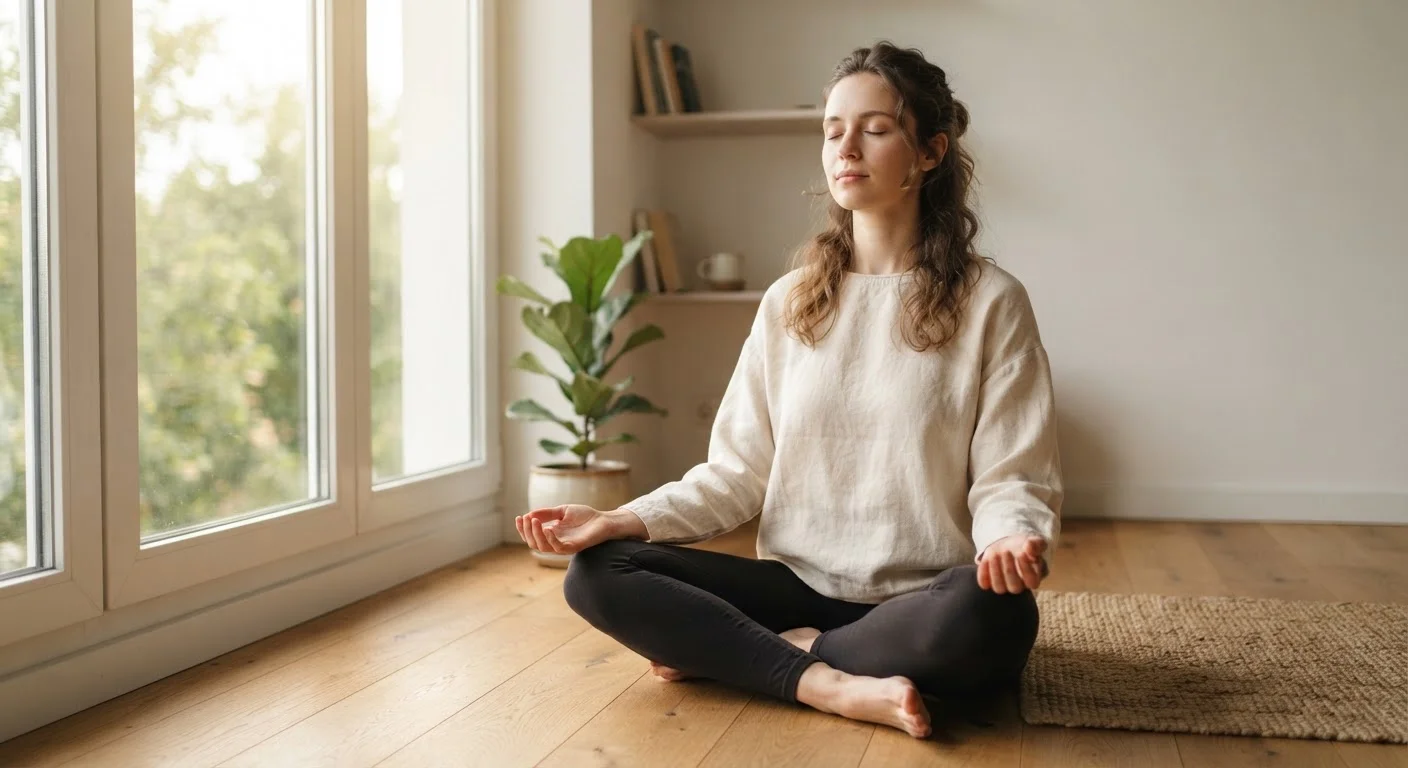
Sit in a chair with your feet flat on the floor, or cross-legged on a mat. Keep your spine gently tall — not rigid. Rest your hands on your thighs or lap. If lying down feels more natural, that is equally valid; just ensure your airway is open and unobstructed.
Begin with a natural breath reset
Before starting any counted pattern, take three easy, unpaced breaths. Exhale fully each time. This clears residual tension and gives your nervous system a moment to orient. Notice how your body feels without judging or changing it.
Try diaphragmatic (belly) breathing
Inhale slowly through your nose for about four counts, allowing your belly to expand outward. Exhale through your mouth or nose for four to six counts, letting your belly fall. Research published in clinical psychology literature suggests longer exhalations than inhalations more strongly activate the parasympathetic — or "rest and digest" — branch of the nervous system. Repeat for one to two minutes before progressing.
Practise box breathing (4-4-4-4)
Box breathing — used in clinical and military stress-management training — follows a four-part equal cycle: inhale for four counts, hold for four counts, exhale for four counts, hold empty for four counts. Repeat the box four to six times. The symmetrical pattern and breath holds are thought to help regulate carbon dioxide levels and steady heart rate variability.
Try the 4-7-8 technique
Developed from yogic pranayama traditions and popularised in wellness research contexts, the 4-7-8 pattern involves: inhale through the nose for four counts, hold for seven counts, exhale completely through the mouth for eight counts. The extended exhale and hold are proposed to promote deeper parasympathetic activation. Limit this to four complete cycles per session when starting out.
Close with a slow return to natural breathing
After your chosen technique, release all counting and simply breathe naturally for one minute. Notice whether your heart rate feels steadier, your jaw has unclenched, or your shoulders have dropped. This transition reinforces the association between the practice and a calmer physiological state.
Lightheadedness Is a Signal to Stop
Some breathing exercises can cause dizziness or tingling if you breathe too fast or too deeply. If you feel lightheaded at any point, return to your normal breathing rhythm and rest. Never force a count or hold breath beyond your comfortable range.
Pair Breathing With a Consistent Cue
Attaching your practice to an existing habit — such as morning coffee or sitting down after work — makes it far easier to maintain. Over time, the environmental cue alone can begin to trigger a calmer physiological state. Even two to three minutes daily is a meaningful starting point.
Maintaining the Practice and Knowing Its Limits
Breathing techniques work best as a regular practice rather than a crisis-only tool. Like physical conditioning, the benefits — including improved heart rate variability and reduced cortisol reactivity — accumulate over weeks of consistent use, according to stress physiology research. Pairing breathwork with other evidence-informed strategies amplifies results; mindfulness for stress is one complementary approach with a growing evidence base, while the science behind mindfulness and emotional regulation offers a balanced look at what research does and does not yet confirm.
It is equally important to recognise what breathing techniques are not. They are a supportive tool — not a treatment. If anxiety, panic, or chronic stress significantly disrupts your daily life, working with a licensed mental health professional is the most effective path. Breathwork can complement therapy, not replace it.
This article is for informational purposes only and does not constitute medical advice. Always consult a qualified healthcare professional for personal medical concerns, symptoms, or before making changes to any treatment or health routine.