

Key Takeaways
Our Verdict
Both guided and unguided mindfulness are evidence-informed tools that support mental well-being. Guided practice tends to ease the learning curve, while unguided practice can deepen autonomy and flexibility over time. There is no universally superior option — the best approach is the one you will actually return to.
| Best for | Recommended |
|---|---|
| Complete beginners or those prone to distraction | Guided Mindfulness |
| Experienced practitioners wanting full flexibility | Unguided Mindfulness |
| People practicing in varied settings throughout the day | Unguided Mindfulness |
| Those working through stress or anxiety with structured support | Guided Mindfulness |
What Guided and Unguided Mindfulness Actually Mean
Mindfulness is the practice of intentionally paying attention to the present moment — your breath, body sensations, or surroundings — without judgment. How you arrive at that state is where guided and unguided practice part ways.
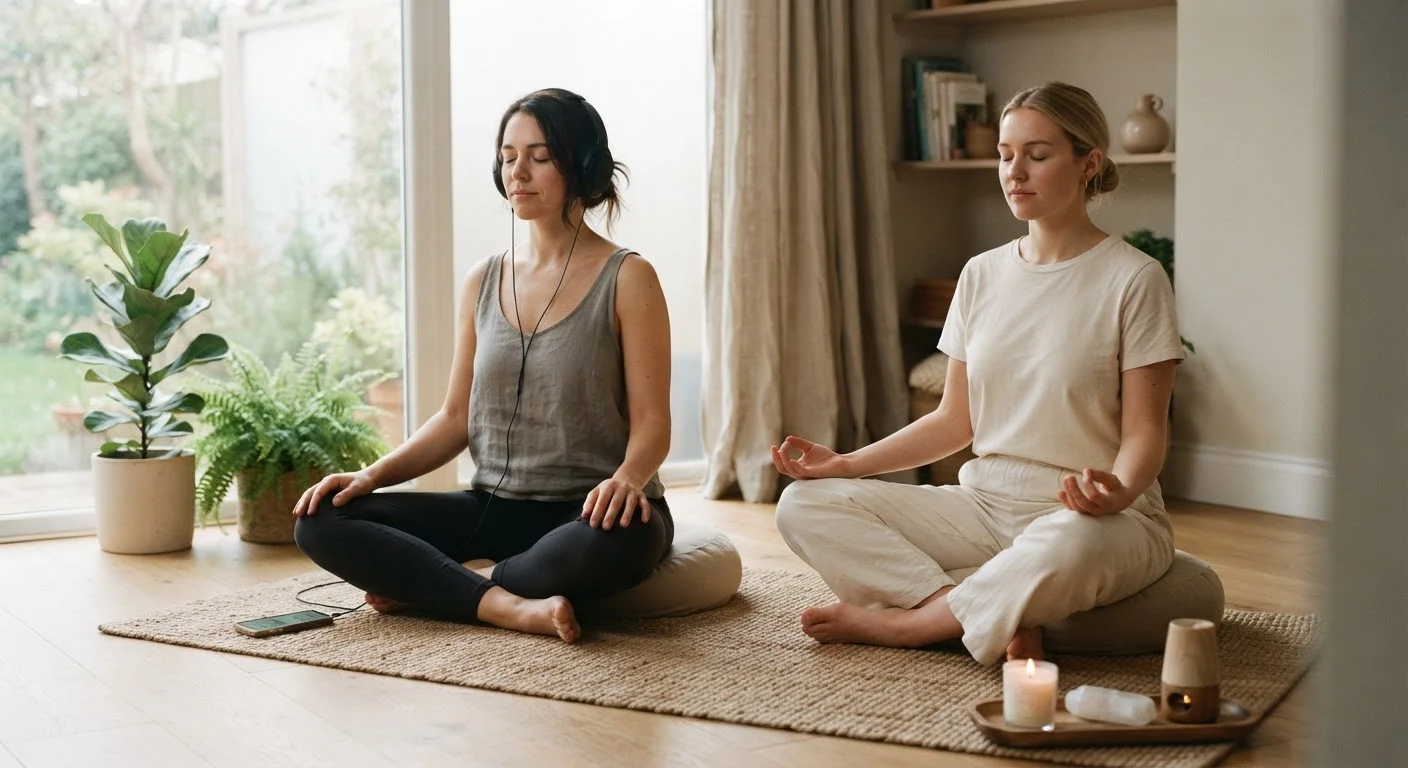
Guided mindfulness involves following a teacher, therapist, or recorded voice that directs your attention step by step. This might be an app-based meditation, a class, a podcast, or a video. The instructor cues your focus, names sensations to notice, and signals transitions between phases of the practice.
Unguided mindfulness means practicing in silence, without external prompts. You set your own intention, follow your own breath or awareness anchor, and manage the session length yourself. It requires a bit more self-direction but offers complete flexibility.
For a broader look at how mindfulness fits into everyday mental health, see the complete overview of mindfulness and mental well-being.
How Each Approach Affects Your Practice
Research on mindfulness-based interventions — including the widely studied Mindfulness-Based Stress Reduction (MBSR) program — typically uses guided formats, particularly in early stages. Studies suggest guided sessions help beginners sustain attention, reduce mind-wandering, and stay motivated. One reason: the external voice reduces the cognitive load of self-directing, freeing mental resources for actual noticing.
Unguided practice, by contrast, builds what researchers sometimes call metacognitive awareness — the ability to observe your own mental states without relying on external scaffolding. Longer-term meditators often report preferring silence because it feels less performative and more genuinely exploratory.
| Guided Mindfulness | Unguided Mindfulness | |
|---|---|---|
| Best suited for | Beginners, those needing structure | Experienced practitioners, self-directed learners |
| Requires | App, recording, or instructor | Timer or no tools at all |
| Cognitive load | Lower — instructor handles pacing | Higher — self-directed attention |
| Flexibility | Depends on available content | Fully flexible, anytime |
| Skill development | Builds foundational habits quickly | Deepens metacognitive awareness over time |
| Common challenge | Over-reliance on external voice | Mind wandering without cues |
Neither approach is inherently deeper or more "serious." What matters most to outcomes, according to available evidence, is consistency — practicing regularly, even briefly, over time.
If you're curious how this fits alongside other meditation styles, our article on formal meditation vs. everyday mindfulness explores how structured sessions compare with informal mindful moments throughout your day.
Choosing the Right Style for Where You Are Now
If you are new to mindfulness, guided sessions are generally the gentler entry point. Having an instructor's voice keeps your mind from wandering too far before you've built the habit of returning attention. Apps, free online recordings, and community classes all offer accessible starting points — no special equipment needed.
Try a Hybrid Approach First
You don't have to choose permanently. Many people find it helpful to start each session with a brief guided recording — just five minutes — then sit in silence for a few minutes more. This eases the transition from guided to unguided and lets you build confidence at your own pace. Short mindful moments throughout the day can also complement either style.
If you've been practicing for a while and find guided sessions feel restrictive or distracting, that's a normal signal to experiment with silence. You might start by following a guided session and then sitting quietly for a few minutes afterward before opening your eyes.
It's worth noting that some people find unguided silence uncomfortable, particularly early in practice. This doesn't mean mindfulness isn't working — it often means the mind is becoming more aware of its own busyness. For a reassuring introduction to those early challenges, starting a mindfulness practice from scratch offers practical framing for beginners.
Some mental health conditions may warrant extra care before beginning mindfulness. If you have a trauma history, anxiety disorder, or other psychological concerns, it may be worth reading about conditions that may need professional guidance first — and consulting your healthcare provider.
This article is for general informational purposes only and does not constitute medical or psychological advice. Always consult a qualified healthcare professional for guidance tailored to your personal situation.