

Key Takeaways
Hydration and Physical Performance
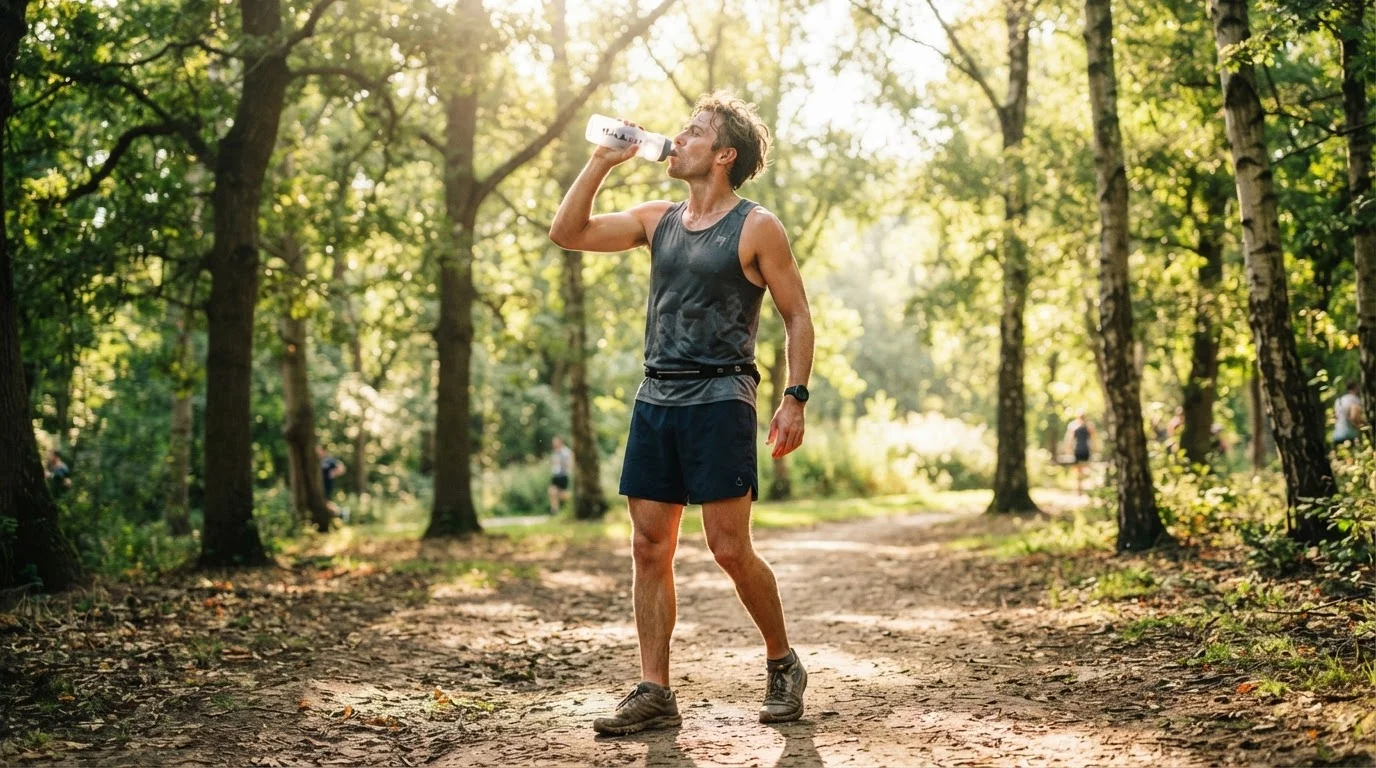
Hydration refers to the body's state of having enough water to carry out its normal functions. During physical activity, adequate fluid intake directly supports muscle function, cardiovascular efficiency, and mental focus. Even mild fluid loss can reduce how well and how safely you perform — whether you're lifting weights, running, or playing recreational sport.
Exercise-induced dehydration as low as 2% of body mass has been shown in research to measurably impair both aerobic capacity and cognitive performance, with greater deficits as fluid loss increases.
Why Hydration Matters More Than Most Men Realise
Water makes up roughly 60% of the adult male body. It's involved in nearly every physiological process — transporting nutrients, regulating body temperature, lubricating joints, and enabling muscle contractions. During physical activity, all of these demands intensify at the same time as you're actively losing fluid through sweat.
The result is that dehydration doesn't need to be dramatic to hurt your performance. Studies have consistently found that losing as little as 2% of body weight through fluid loss — about 1.4 kg for a 70 kg man — can reduce endurance, impair strength output, and slow reaction time. By the time many men feel thirsty, they're already at that threshold.
This makes hydration less of a nice-to-have and more of a foundational physical health habit, one that pays dividends whether you're training seriously or simply trying to stay active and feel well. For a broader look at how nutrition and fluid intake work together, see Men's Nutrition: An End-to-End Resource.
~2%
Body weight fluid loss that impairs performance
Research in sports science journals consistently identifies this threshold as the point at which measurable declines in strength, endurance, and cognition occur.
60%
Water's share of the adult male body
The U.S. National Academies of Sciences, Engineering, and Medicine cite approximately 60% as the average water content of the adult male body.
1–2 L/hr
Sweat rate range during intense exercise
Sweat rates vary widely by individual, intensity, and environment, but sports medicine references commonly cite this range for moderate-to-high-intensity exercise in average conditions.
How Dehydration Affects Strength, Endurance, and Recovery
Physical performance depends on several systems that are all sensitive to fluid balance. Here's how dehydration disrupts each one:
- Muscle function: Muscles are roughly 75% water. Fluid loss reduces their ability to contract efficiently, contributing to early fatigue and reduced peak power.
- Cardiovascular strain: As blood volume drops, the heart has to work harder to deliver oxygen to working muscles. Heart rate rises, perceived effort increases, and sustainable output falls.
- Thermoregulation: Sweating is how the body dissipates heat. But if you're dehydrated, this system becomes less effective, raising the risk of heat-related illness during intense or hot-weather exercise.
- Recovery: Rehydrating after exercise helps restore glycogen (the fuel stored in muscles), supports protein synthesis, and reduces post-exercise soreness. Inadequate recovery hydration can extend the time before you're ready to perform again.
Men who engage in mobility or flexibility training should note that hydration also supports connective tissue health — well-hydrated joints move more freely and are somewhat more resilient to strain. See our guide on flexibility and mobility in men for more on keeping joints and connective tissue healthy.
“Dehydration is probably the most common cause of early fatigue during exercise. Most people have never actually trained in a properly hydrated state, so they don't know what their real capacity is.”
— Lawrence Armstrong, Professor of Kinesiology and researcher in hydration science at the University of Connecticut
Practical Ways to Stay Hydrated Throughout the Day
Hydration isn't just about what you drink during exercise — it's a continuous process that starts well before you lace up your shoes. Here are evidence-informed habits that support consistent fluid balance:
- Use urine colour as a guide. Pale yellow (similar to lemonade) generally indicates adequate hydration. Dark yellow or amber suggests you need more fluid. This is a free, immediate feedback tool most men overlook.
- Drink before you're thirsty. Thirst is a real signal, but it lags behind actual need — especially in older men, who tend to have a blunted thirst response. Building drinking into your routine rather than waiting for thirst is more reliable.
- Front-load before exercise. Arriving well-hydrated to a workout is more effective than trying to catch up during it. A glass or two of water in the hours before activity is a practical starting point.
- Account for sweat rate. Men typically have higher sweat rates than women. Hot weather, high intensity, and longer sessions all increase losses. Adjust accordingly rather than applying a fixed daily target.
- Consider electrolytes for long sessions. During exercise lasting more than 60–90 minutes, sodium lost in sweat matters. Food and beverages that include electrolytes — rather than plain water alone — can help maintain fluid balance more effectively.
For a deeper look at fluid needs and what actually drives them, our article on hydration beyond the eight-glasses rule challenges some common myths and offers a more personalised framework.
Build Hydration Into Your Routine
Keeping a water bottle visible on your desk, in your bag, or in your car makes drinking throughout the day far more consistent than relying on memory or thirst. Pairing fluid intake with existing habits — morning coffee, meals, pre-workout warm-up — reinforces the behaviour without requiring extra effort. Small, consistent habits across the day are generally more effective than large volumes consumed all at once.
This article is for general informational purposes only and does not constitute medical advice. Always consult a qualified healthcare professional with any questions about your health or physical activity programme.